Last updated November 18, 2026


Free written scope consultation - allowances, timeline, and change-order rules on paper before a single trade is scheduled
How Long Does Driveway & Pavers Take? Timelines and What to Expect
Most contractors tell you a paver driveway takes 3 to 5 days. What they don’t tell you is that the jointing sand needs roughly 72 hours to cure before you can park a full vehicle load on it, and that clock restarts if it rains. The question worth asking isn’t “how many days is the crew on-site?” It’s “how many days until I can drive on it and stop worrying about it?” Those are three different milestones, and blurring them together is how homeowners end up moving a car too early and watching sand wash out of fresh joints. In this guide we break the paver driveway timeline into every distinct phase, from demolition to final cure, and show how site conditions in Boulder City stretch or shrink that schedule.
Quick Answer
A paver driveway in Boulder City typically takes 3 to 5 days of crew time for a standard double-car driveway, but the full usable timeline runs closer to 6 to 9 days once you account for base compaction, edge restraint, sand curing, and weather. Add 1 to 2 weeks of front-end planning for permits, material delivery, and scheduling, and a realistic first-call-to-final-cure window is about 3 to 5 weeks. Larger estate driveways and sites with concrete demolition or caliche removal push that further.
Styles & brands we work with
- Kitchen remodeling
- Bathroom remodeling
- Home additions & ADU
- Roofing
- Windows & doors
- Driveway & pavers
- Fence
Table of Contents
- The Three Milestones Nobody Separates
- The Full Phase-by-Phase Timeline
- What “Site Conditions” Actually Means in Days
- Cure and Set Times for Sand in Boulder City Heat
- How Project Size Scales the Timeline (It’s Not Linear)
- A Realistic Planning Buffer From Estimate to Done
- How Timeline Choices Affect Cost
- What Happens After the Crew Leaves
The Three Milestones Nobody Separates
When we quote a timeline, we give three numbers, not one. The first is crew completion: the day the last paver is set, edge restraint is anchored, and joints are swept. The second is foot-traffic ready: the day you can walk across it and move patio furniture back. The third is full-vehicle ready: the day you can park a truck on it without compressing fresh sand or shifting a paver. These land days apart, and the gaps are where miscommunication happens.
Here’s the distinction that matters most. A paver surface looks finished the moment the crew sweeps the final sand. But polymeric sand has to hydrate and set before it locks the joints, and that process depends on temperature, humidity, and moisture. In a low-humidity, high-heat climate like Boulder City’s, the surface water evaporates fast, which pulls moisture out of the sand before it can fully activate. That’s why a product label that says “ready for traffic in 24 hours” can be optimistic here. The binder needs a slow, thorough soak, and in the desert it can be a fight to keep enough water in the joint long enough for the polymer to do its job.
So when we say a Boulder City paver driveway is done “in about a week,” we mean: crew on-site 3 to 5 days, foot traffic after a light watering and a day of rest, full vehicle loads after about 72 hours of cure on the joints. If it rains, the joint sand needs to re-hydrate and re-cure, and the vehicle-ready clock restarts. Plan around the weather, not around the crew’s calendar.
The Full Phase-by-Phase Timeline
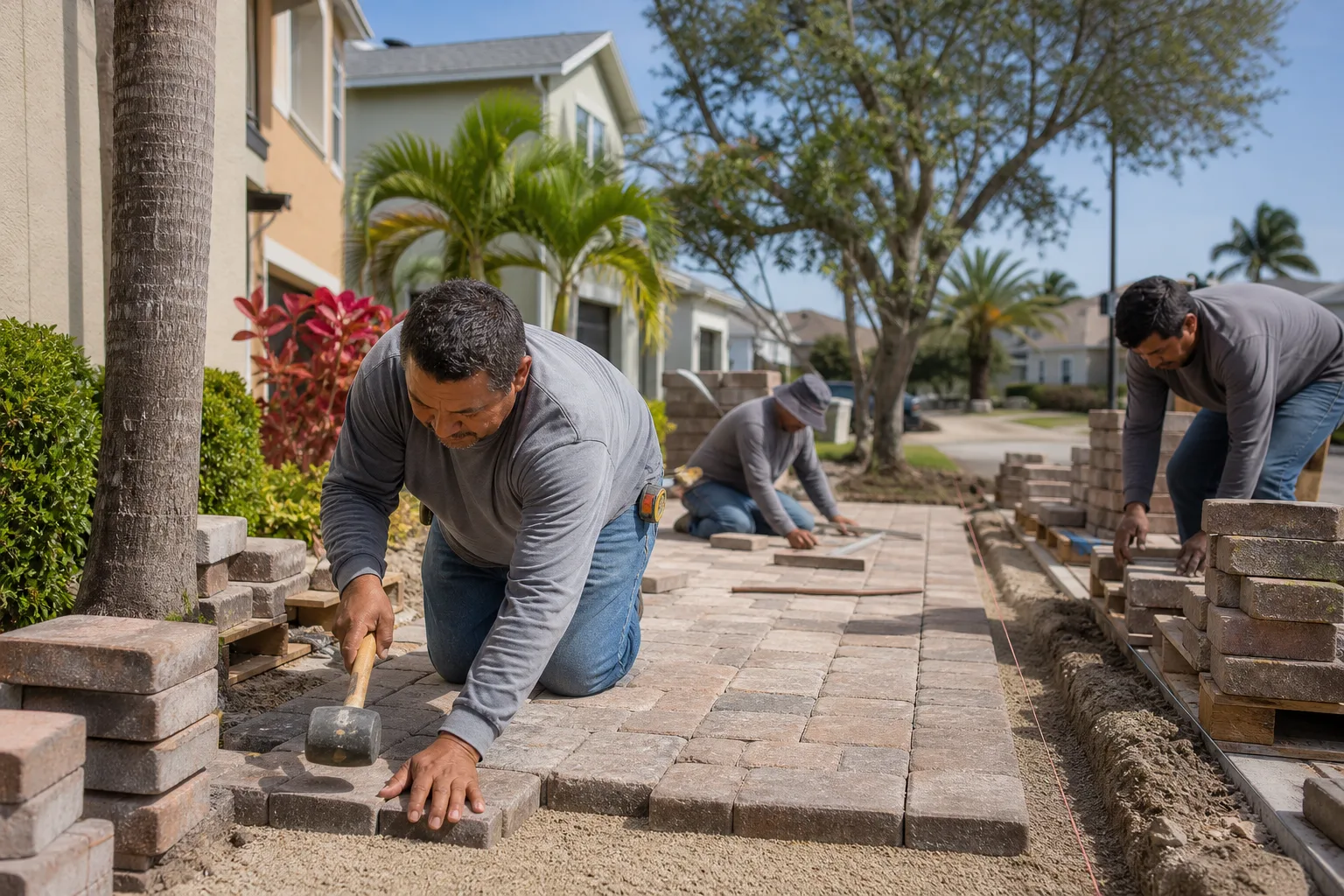
Every paver driveway, from a compact single-car pad to a sweeping estate approach, moves through the same sequence. The phases don’t change. What changes is how long each one takes based on access, soil, and square footage. Here’s the breakdown we work from on a typical Boulder City project.
- Site layout and protection (half a day). Marking utilities, staking the perimeter, and protecting landscaping and irrigation lines. This is where we catch a sprinkler head that runs under the future driveway.
- Demolition and excavation (1 to 2 days). Removing existing concrete or asphalt, then digging down to the subgrade. Depth depends on base thickness, which depends on expected loads and soil.
- Base installation (1 to 2 days). Hauling in and spreading compacted aggregate base, usually in lifts. Each lift gets watered and compacted before the next goes down.
- Compaction and grading (half a day). Final compaction pass, then checking slope and drainage so water moves off the driveway and away from the house, not toward the garage door.
- Edge restraint (half a day). Anchoring the border that holds the paver field in place. Skipping or rushing this is a leading cause of edge spread and paver migration.
- Paver laying (1 to 2 days). Setting the pattern and cutting to fit at edges, curves, and around obstacles. Field laying moves fast; cuts and details take time.
- Cutting and detailing (half a day). Wet saw cutting for clean edges, then tuck-pointing or restraining as the design requires.
- Joint sand application (half a day). Sweeping polymeric sand into the joints, compacting, topping off, and activating with a controlled watering.
- Cure (2 to 3 days). The joint sand hydrates and sets. This is the phase most homeowners underestimate.
Add those up and a standard Pacific-size double-car driveway lands in the 3 to 5 day crew window, plus the cure. Notice that the actual paver-laying – the part you can see – is only about a quarter of the total. The base and compaction phases are where a driveway is either built to last or quietly failing before you ever park on it.
What “Site Conditions” Actually Means in Days
“Site conditions” is a phrase contractors throw around like it explains itself. It doesn’t. When we use it, we’re usually talking about three specific things in Boulder City, each of which adds measurable days.
Existing concrete demolition
Breaking out an old driveway sounds simple until you hit the rebar or a slab that’s 6 inches thick instead of 4. A clean 800-square-foot slab demo and haul-off runs about a day. If the concrete is heavily reinforced, or if it was poured over an old layer, that can stretch to two. Add extra time for disposal: hauling concrete out of Boulder City means trucking, and disposal yards have their own schedules.
Caliche rock
Anyone who’s dug a hole in this part of Clark County knows caliche. It’s a calcium-carbonate hardpan that sets up like weak concrete, and it stops a trencher or an excavator cold. A routine excavation becomes a rock-breaking job, adding a full day or more depending on how much of the footprint is caliche. We can’t always predict it from a surface look, so if a site is known for it, we budget the extra day up front instead of springing it on you mid-job.
Irrigation rerouting
Grass where a driveway is going means sprinkler zones that have to be capped, rerouted, or re-headed so the remaining landscape still gets water. That’s usually half a day for a simple reroute, but a maze of zones and valves can take longer. Catching it during the estimate is the difference between a clean handoff and a homeowner discovering a dead side yard a month later.
Cure and Set Times for Sand in Boulder City Heat
The product label on a bag of polymeric sand is written for a generic climate. Boulder City is not a generic climate. Summer afternoons routinely push past 100°F with humidity in the teens, and that combination changes how joint sand behaves.
Here’s the practical difference. Polymeric sand needs a thorough watering to activate the binder, and it needs the joint to stay damp long enough for that binder to set. In high heat and low humidity, surface moisture is gone in minutes. That creates a crust on top of the joint while the sand underneath hasn’t fully hydrated – and the result is a weak joint that can weep or erode with the first heavy wash. Slabs and pavers also hold heat, so a surface that was watered at 2 p.m. can be pulling water back out of the joint by 2:15.
What that means for your timeline:
- Plan sand activation for cooler hours. Early morning watering gives the polymer more time to hydrate before the sun bakes the surface.
- Expect a mist-and-wait approach. In peak summer, the joint may need a second light application of water within the first day to get full activation.
- Extend the vehicle-ready clock. Where 24 hours might work in a humid climate, we treat 72 hours as the reliable minimum here, and longer in the depth of summer.
- Rain resets the clock. An unexpected shower can mobilize uncured sand. Once it re-hydrates and re-sets, restart the cure count.
This is a case where the desert works against a fast finish. It’s also why we don’t promise “drive on it tomorrow.” That promise would be easy to make and expensive to keep.
How Project Size Scales the Timeline (It’s Not Linear)
You’d think doubling the square footage doubles the time. It doesn’t, and the reason is setup and equipment repositioning. Each job has fixed costs in time that don’t scale with size – mobilizing equipment, staging materials, laying out the pattern, and tearing down. A small driveway pays a high per-square-foot time cost for that fixed overhead; a large one spreads it out.
But large jobs hit a different ceiling: material handling and access. Huge driveways mean moving pallets of pavers repeatedly, and rotating a skid steer in a tight Boulder City lot takes longer than covering open ground. Curves, borders, and multiple patterns add cutting time that grows faster than area.
Rough bands we plan around:
- Single-car driveway pad (about 200 to 250 sq ft): crew time of 2 to 3 days, but the front-end logistics and cure push total usable time to nearly a week.
- Standard double-car driveway (about 400 to 600 sq ft): 3 to 5 days crew time, which is the most common range we quote.
- Large estate or multi-bay driveway (700+ sq ft with details): 5 to 8 days crew time, more if there are curves, borders, or multiple material types like a Belgard or Unilock field with a contrasting border.
The takeaway: don’t price your timeline off your neighbor’s smaller driveway. The non-linear scaling means a project that looks 30 percent bigger can take 40 to 60 percent longer once details and access are counted.
A Realistic Planning Buffer From Estimate to Done
If you’re planning a paver driveway in Boulder City, the calendar between your first call and a fully usable driveway is usually three to five weeks, not one. Here’s the honest front-end breakdown.
Materials. Pavers, base aggregate, and edge restraint come through the Henderson and greater Las Vegas supply chain. Standard colors ship fast; specialty lines like Tremron or ActiveYards, or a specific Belgard profile, can take longer to source. If you’ve picked a premium paver with a longer lead time, that alone can be a week or two.
Permits. Some driveway work triggers permitting depending on scope and whether you’re changing the approach or drainage. Pulling permits and scheduling inspections adds days, but it’s non-negotiable for a driveway that has to pass final inspection.
Scheduling windows. Good crews book out. Peak season in a growing metro means a start date weeks out, not days. Build that into your plan rather than assuming you can get on a calendar next week.
Weather contingency. Rain, wind, and heat all interact with cure times. A realistic buffer leaves room for at least one weather delay without throwing off the whole project.
A planning sequence that works:
- Get a written, line-item estimate with a clear phase timeline (not just a total day count).
- Confirm material selection and lead time before locking a start date.
- Check whether permits are needed and who pulls them.
- Schedule delivery and crew start together, so pavers don’t sit on the curb for a week.
- Block an extra week in your calendar for cure and weather.
If you’re weighing other hardscape and exterior projects alongside the driveway, the same buffered approach applies to Driveway & Pavers in Boulder City and to fence or addition work you may be sequencing at the same time.
How Timeline Choices Affect Cost
Timeline and budget are connected, and understanding the connection helps you ask better questions at the estimate. Here’s how the pieces usually interact.
- Rushing cure doesn’t save money. Skipping the full cure to hit a deadline risks sand erosion and joint failure, and the repair bill that follows dwarfs any saved day.
- Demo and caliche add cost and time together. Rock-breaking and extra haul-off are line items, not surprises, when they’re scoped up front.
- Premium materials can add lead time. A specialty paver profile may cost more and arrive later. That’s a real planning variable, not a sales pitch.
- Larger jobs cost less per square foot in labor but more in total. Non-linear timing means the per-square-foot labor rate improves with size even as the total climbs.
This is why we quote up-front pricing with no change orders. The number you see is the number you pay, and your timeline is built on a real scope, not a guess that grows once the crew unloads. If you’re financing a larger project, 0% financing for 18 months and $1,000 off projects over $10,000 change the math on what you can build now versus later. For a complete picture of what a driveway runs in this market, the Groundwork Construction Co. of Boulder City home is a good starting point before you move to a specific quote.
What Happens After the Crew Leaves
The job doesn’t end when the crew’s equipment rolls off. The post-crew period is when the driveway actually becomes usable, and a few habits make the difference between a surface that holds up for years and one that sheds sand.
- Keep vehicles off until the cure is done. Respect the 72-hour vehicle-ready window, and longer in extreme heat.
- Watch where the water goes. Make sure downspouts and runoff don’t dump onto the fresh surface during the first rain.
- Avoid heavy point loads early. Ladder feet, jack stands, and heavy equipment can concentrate load before the joints are fully set.
- Rinse and top off, don’t power-blast. After the first season, a light rinse and occasional joint sand top-off keep the surface sealed and stable. A high-pressure wand aimed at joints can erode uncured or weakened sand.
If something looks off in the first weeks – a paver sitting proud, a joint that keeps washing out, edge restraint loosening – that’s what the follow-up visit is for. Under the 730-Day Done Right Promise, if it’s not done right, we make it right. Built to last, backed in writing.
Common Mistakes to Avoid
- Confusing “paver laying done” with “driveway ready.” The surface looks finished the second the crew sweeps, but the joint sand behind it needs days to cure. Moving the car onto it early is the fastest way to erode your investment.
- Ignoring caliche until excavation day. Boulder City sits on hardpan that can turn a one-day dig into two. If you’re comparing bids, ask each contractor how they handle caliche and whether it’s in the scope.
- Skipping or rushing edge restraint. Edges are what keep the field from migrating outward. A well-laid field with weak restraint will spread at the borders within a season.
- Watering joint sand at the wrong time of day. In peak summer heat, a midday watering evaporates before it activates the polymer. Early-morning watering gives the binder time to work.
- Booking a start date you can only meet by skipping base compaction. Compaction passes take time. A base that’s rushed to hit a date is a base that settles under load.
- Not planning for rain. An unexpected shower during the cure window can undo days of work. Build a weather buffer into your calendar, not your hopes.
- Choosing a paver pattern before checking lead time. A specialty pattern or premium profile may look great on paper and push your start back weeks. Confirm material availability before you lock a date.
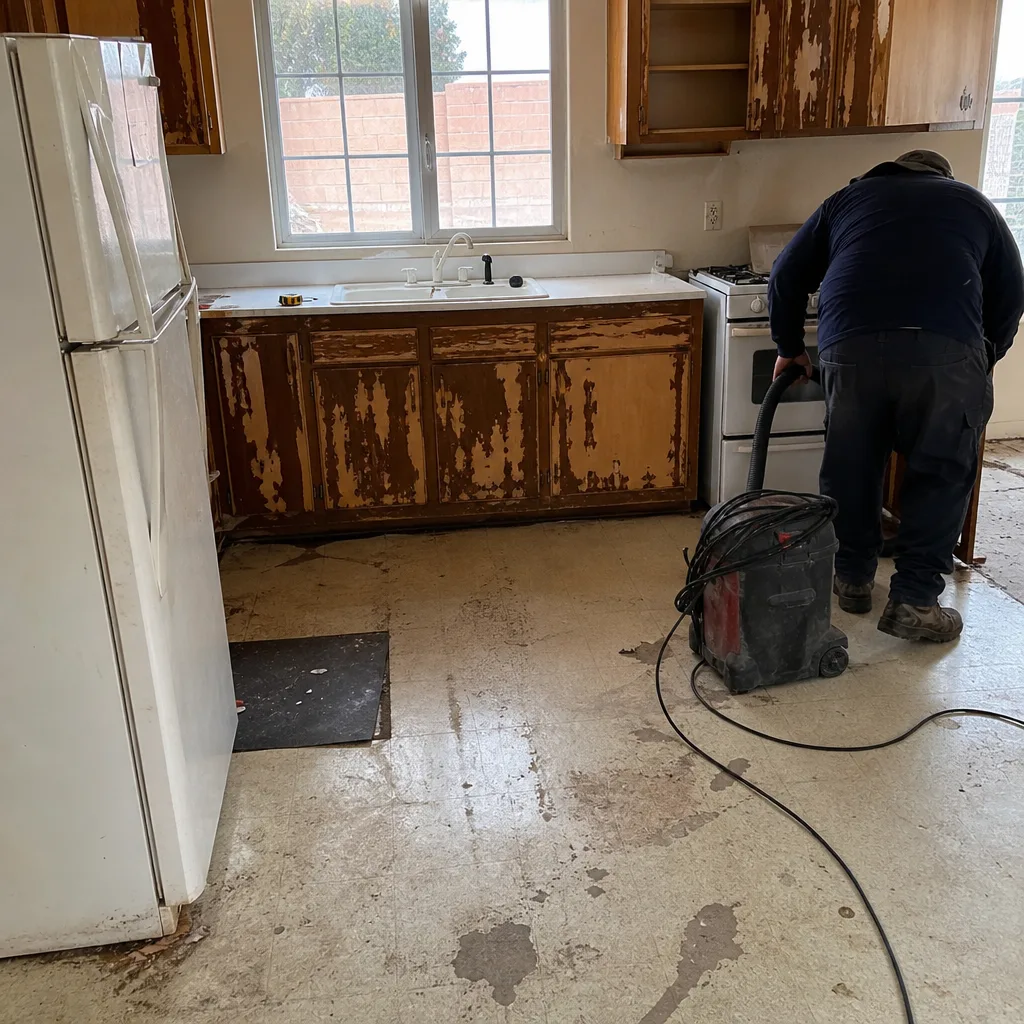
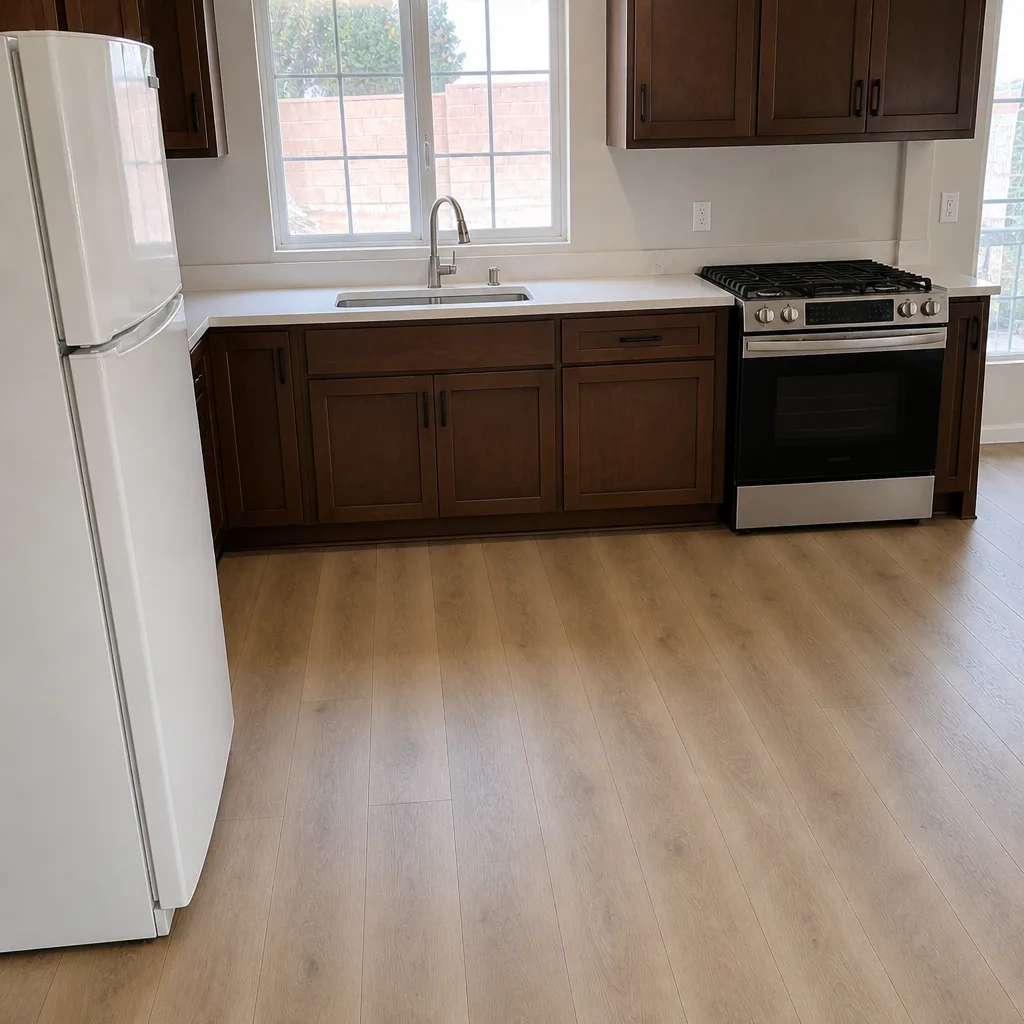
See the difference
 Before
 After
 Before
 After
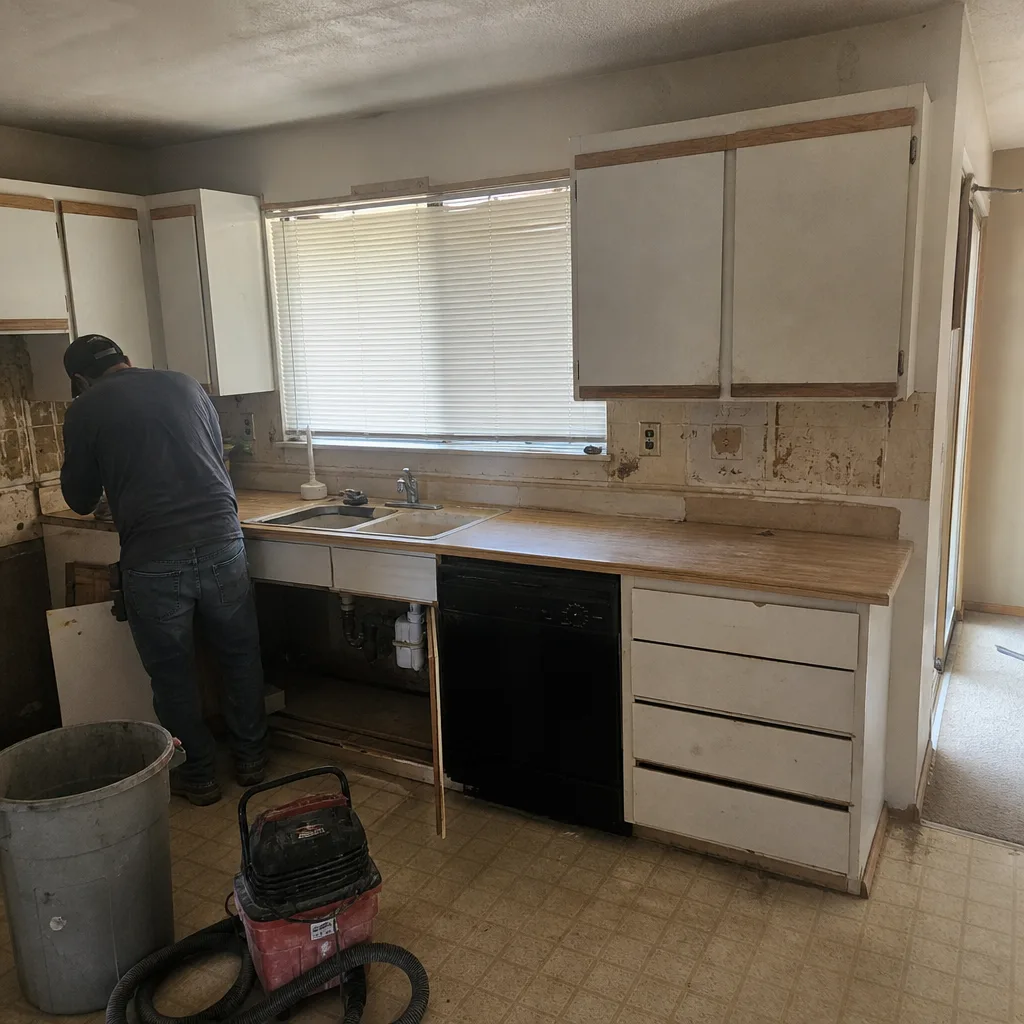 Before
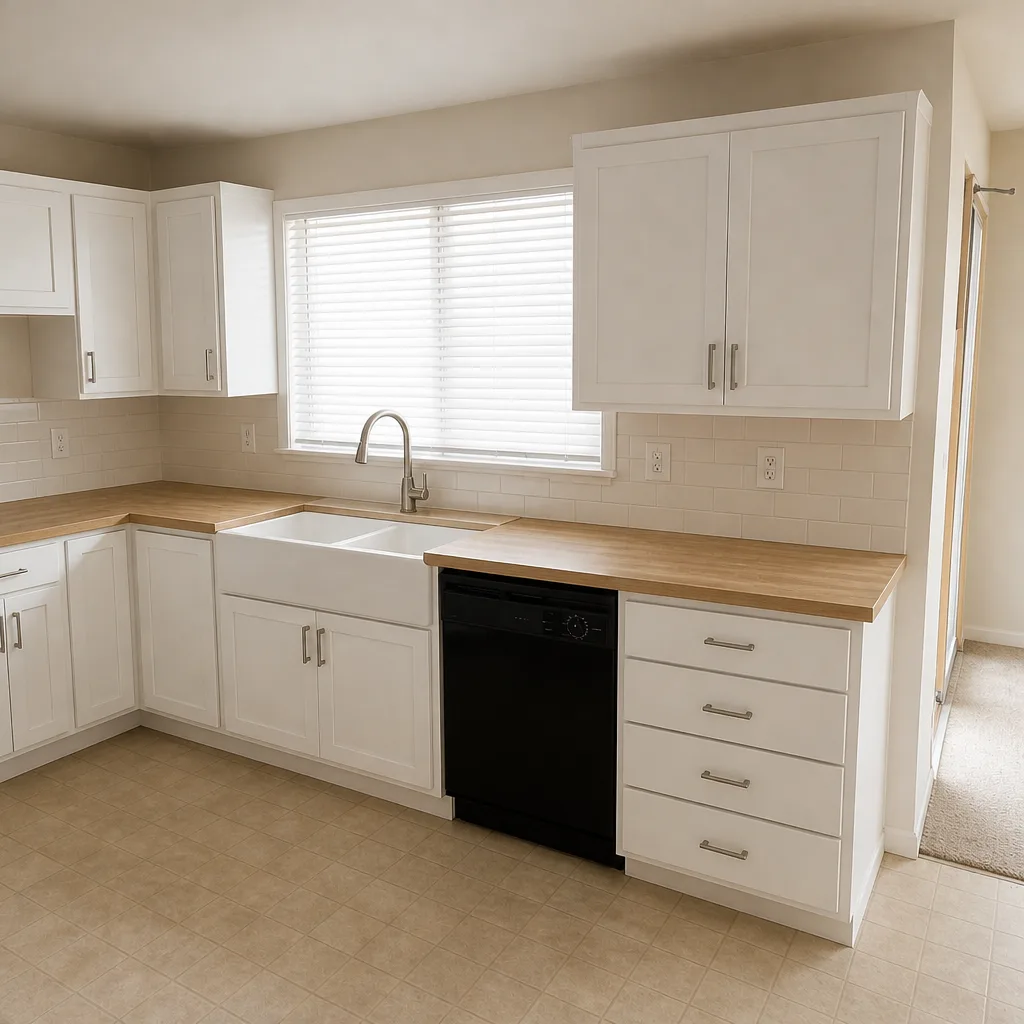 After
When to Call a Professional
Some of this work, like filling a settled joint or rinsing a surface, is reasonable to handle yourself. But a driveway is a compacted, edge-restrained system, and several parts of it are genuinely risky or skill-dependent. Call a professional if you’re facing caliche that needs breaking, existing concrete that needs demolition, or any grading question where water might run toward your foundation. Slope and drainage mistakes are expensive to fix after the pavers are down. If you’re pulling the whole sequence together – driveway plus fence plus an addition – sequencing all of it on one schedule is its own skill, and that’s where a single contractor from foundation to finish line pays for itself. Groundwork Construction Co. of Boulder City offers free estimates in Boulder City and answers the phone with a live person 24/7 – call (888) 282-1693.
Frequently Asked Questions
A standard double-car paver driveway takes 3 to 5 days of crew time, and a full 6 to 9 days from demolition to full-vehicle-ready once base compaction, joint sand cure, and weather are counted. Add planning and material lead time, and the first-call-to-usable window is usually three to five weeks. Call (888) 282-1693 for an exact timeline on your specific site.
No. You can walk on it the next day, but full vehicle loads should wait until the joint sand has cured, which we treat as a minimum of about 72 hours in Boulder City’s heat and low humidity. Parking too early compresses fresh sand and can push pavers out of level.
Yes, rain during the joint sand phase resets the cure clock. Once the sand re-hydrates and re-sets, the vehicle-ready window restarts from there. That’s why we build a weather buffer into every timeline instead of promising a rigid day count.
Pricing depends on footage, base depth, and material, and we quote it line-item so you see exactly what you’re paying for. That’s the one honest way to answer, because a small pad and an estate approach are different jobs. Call (888) 282-1693 for a free estimate and a written number you can plan around.
Yes. Where a permit is required, we pull it and manage the inspection, and the work has to pass final inspection before we call it done. That’s part of what up-front pricing with no surprises means – the scope is real, and the paperwork is handled.
Most Boulder City projects run three to five weeks from the first estimate to full-vehicle-ready, assuming standard material availability and normal weather. Specialty pavers or a peak-season schedule can extend that. Call (888) 282-1693 and we’ll give you a realistic date range, not a guess.
The Bottom Line
The number that matters isn’t the crew’s day count – it’s the day you can drive onto the surface and stop worrying. In Boulder City that means 3 to 5 days of crew time, roughly 72 hours of joint sand cure on top of it, a bit more in summer heat, and a weather buffer you don’t skip. Add planning and material lead time and you’re looking at three to five weeks. Build the timeline on real phases, respect the cure, and the driveway you get is one that holds its joints and edges for the long haul. For a full picture of how a driveway fits with the rest of your exterior, see our Fence Installation in Boulder City and Home Additions & ADU in Boulder City pages, or ask us to sequence it all on one schedule from foundation to finish line.
When you’re ready to price your project, call (888) 282-1693 for a free estimate. We answer with a live person 24/7, we quote up-front with no surprises, and every project is covered by the 730-Day Done Right Promise.
Written by the team at Groundwork Construction Co. of Boulder City.