Free written scope consultation - allowances, timeline, and change-order rules on paper before a single trade is scheduled
Styles & brands we work with
- Kitchen remodeling
- Bathroom remodeling
- Home additions & ADU
- Roofing
- Windows & doors
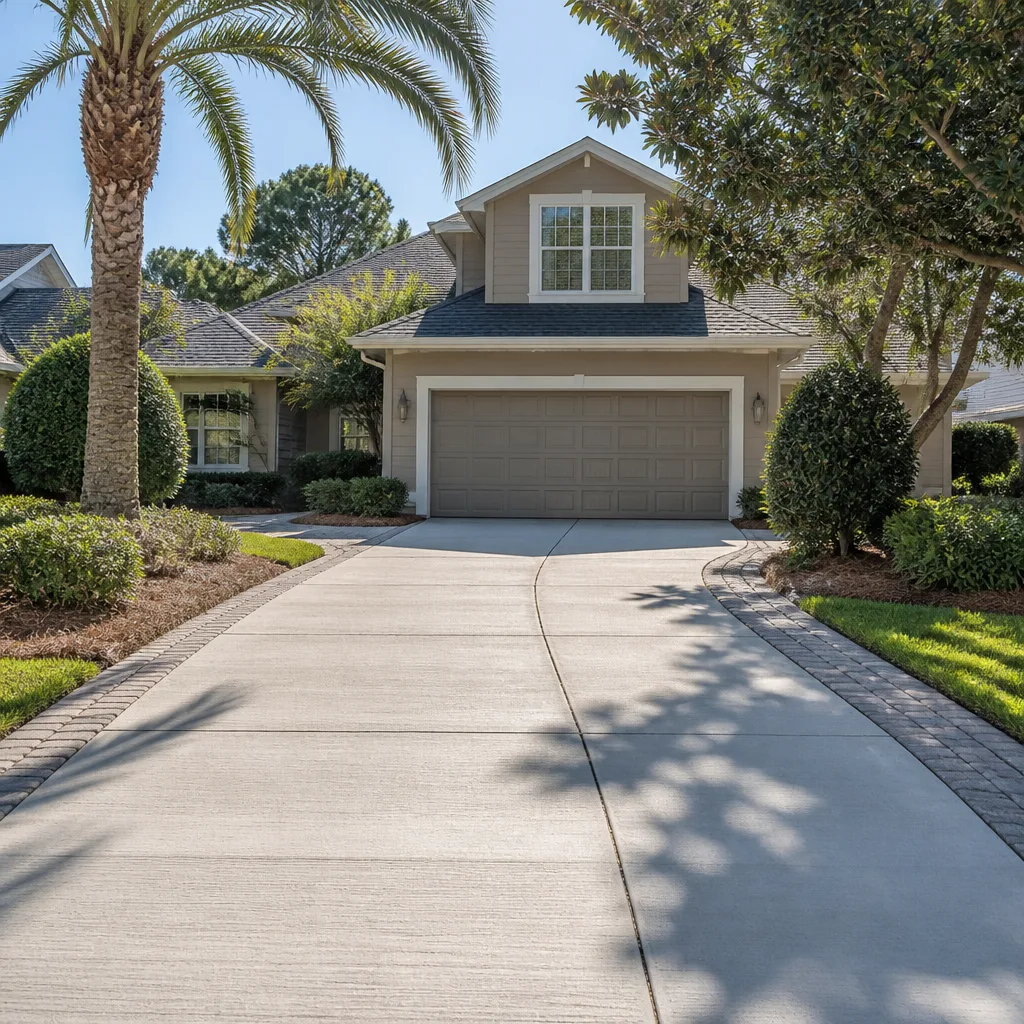
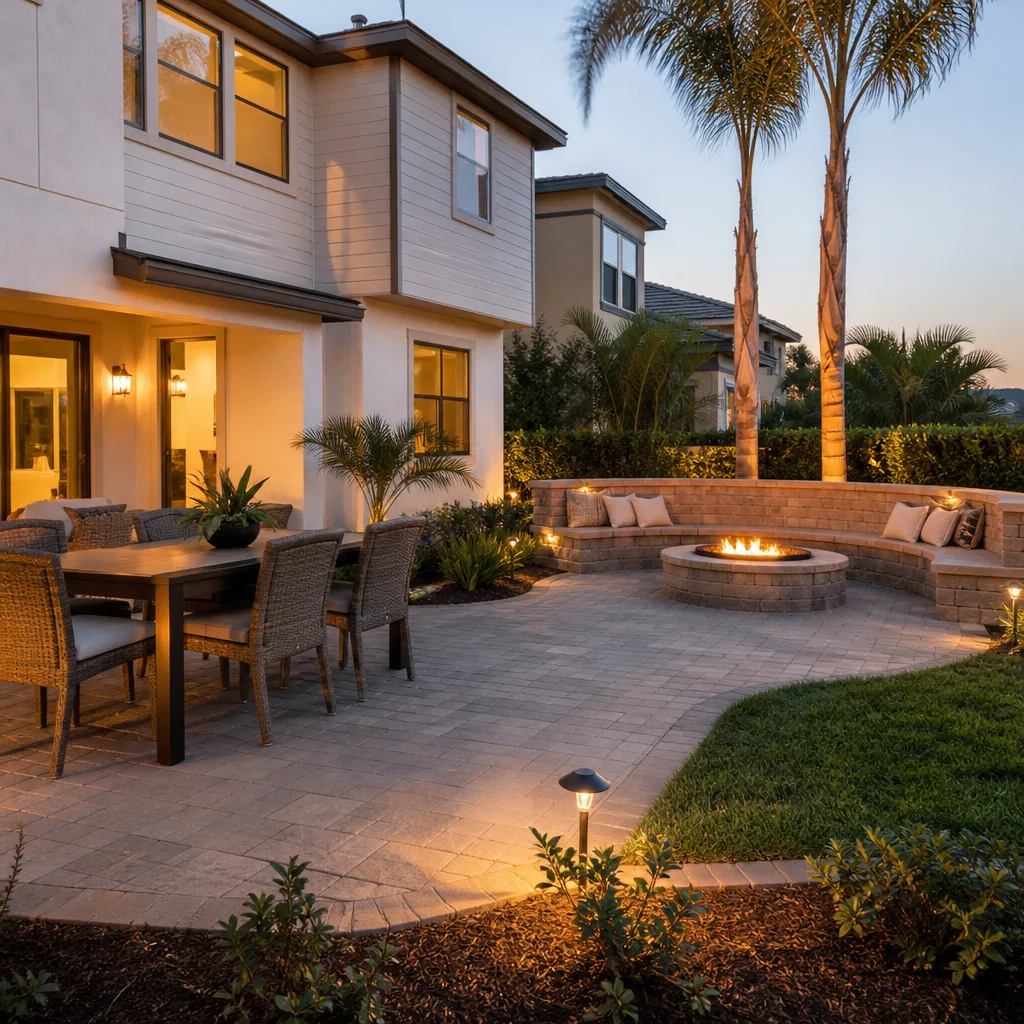
- Driveway & pavers
- Fence
See the difference
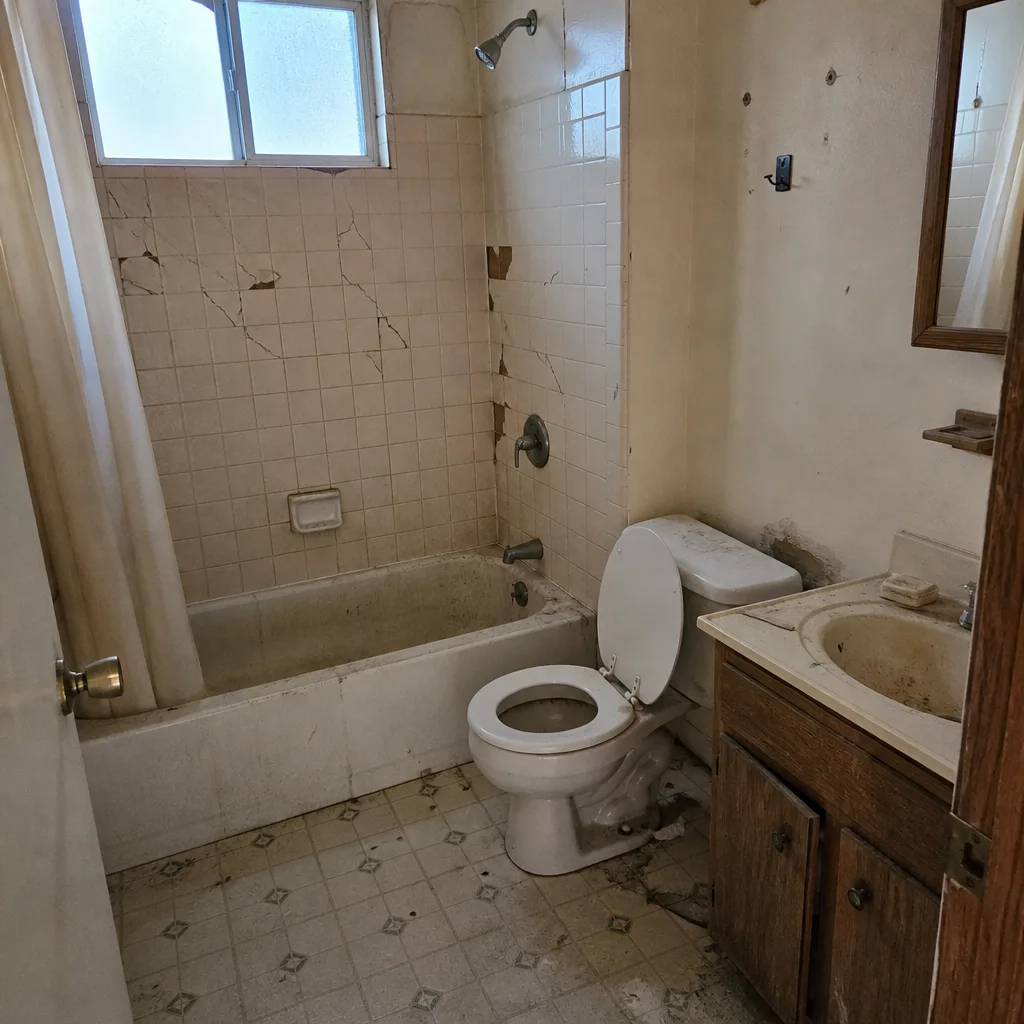 Before
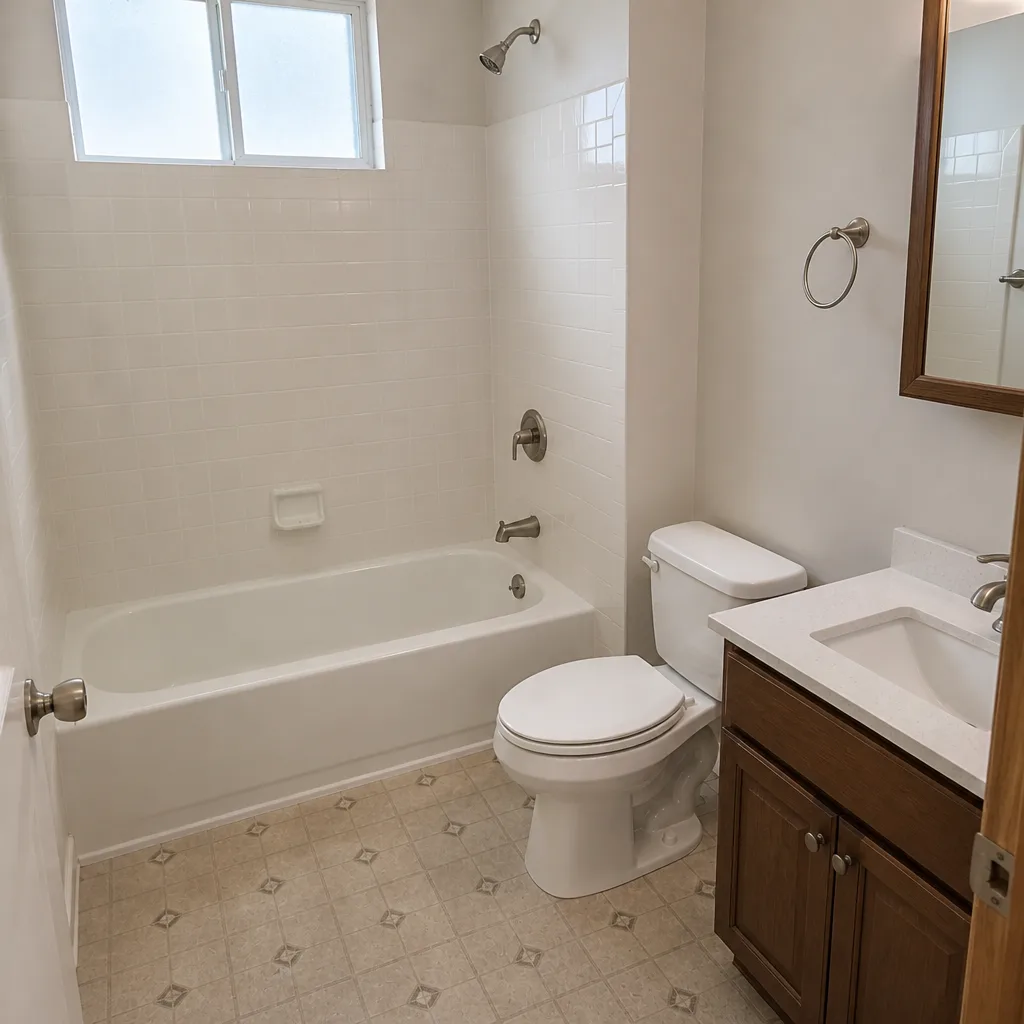 After
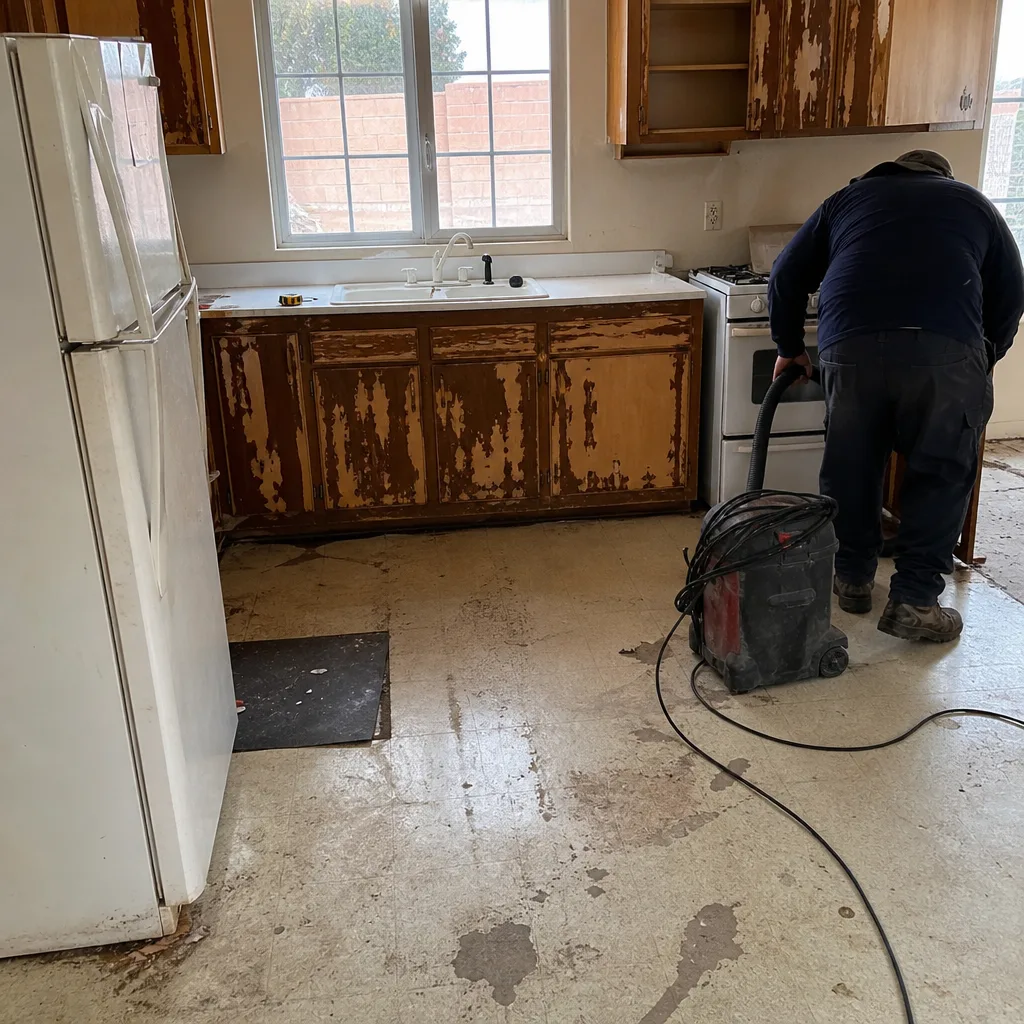 Before
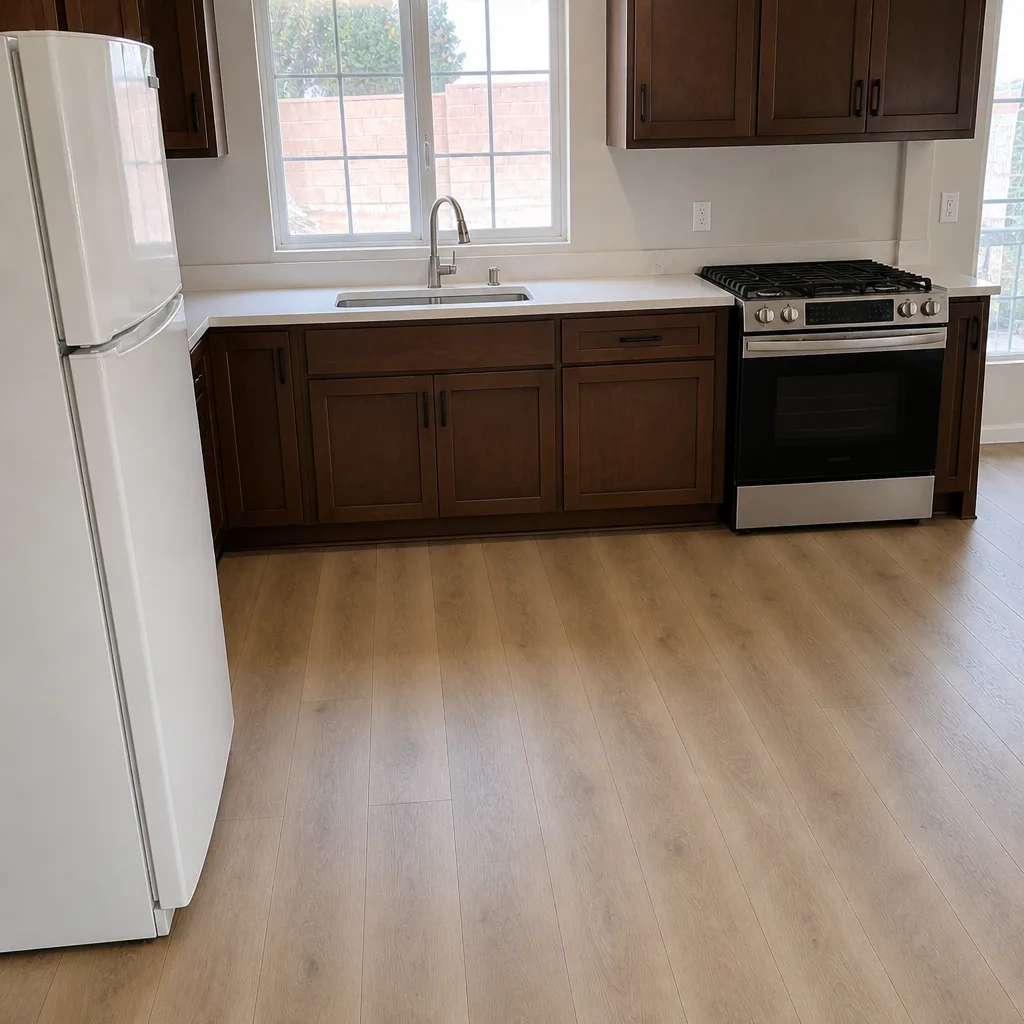 After
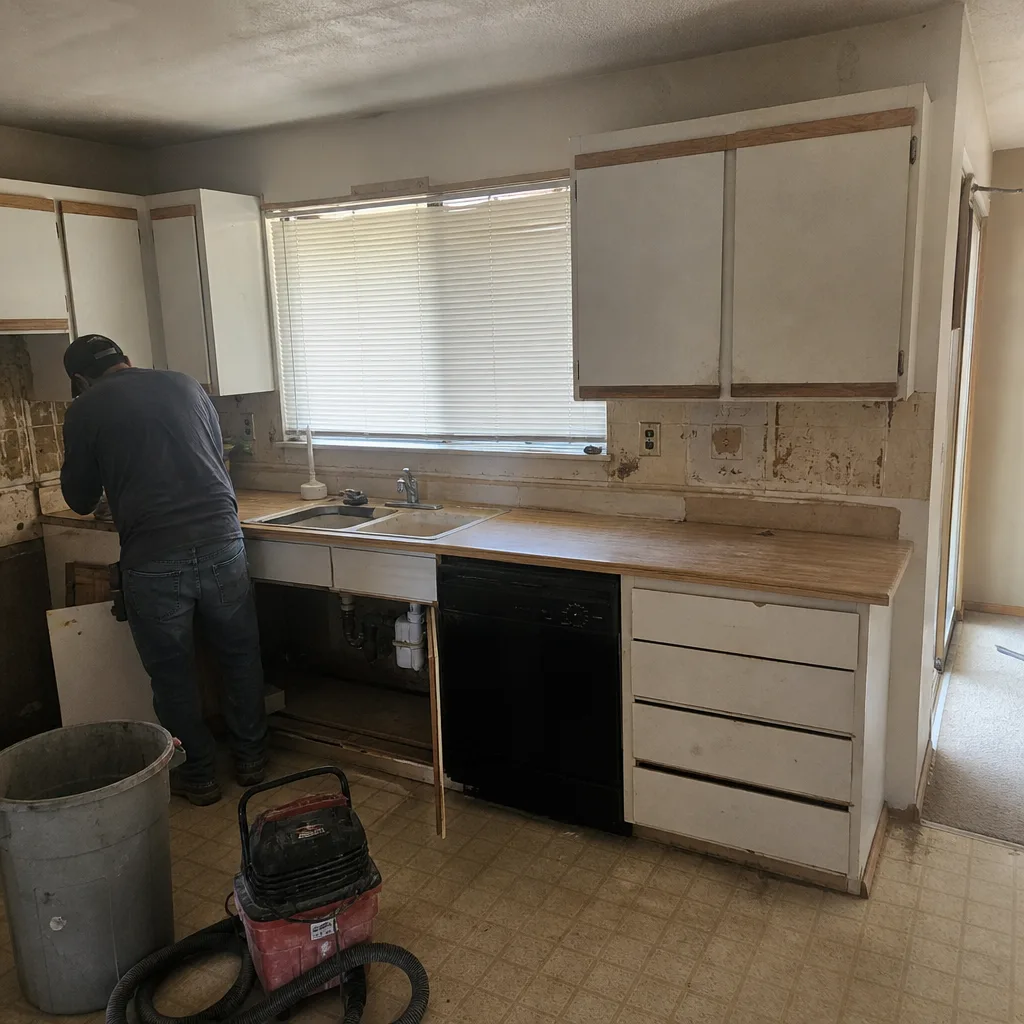 Before
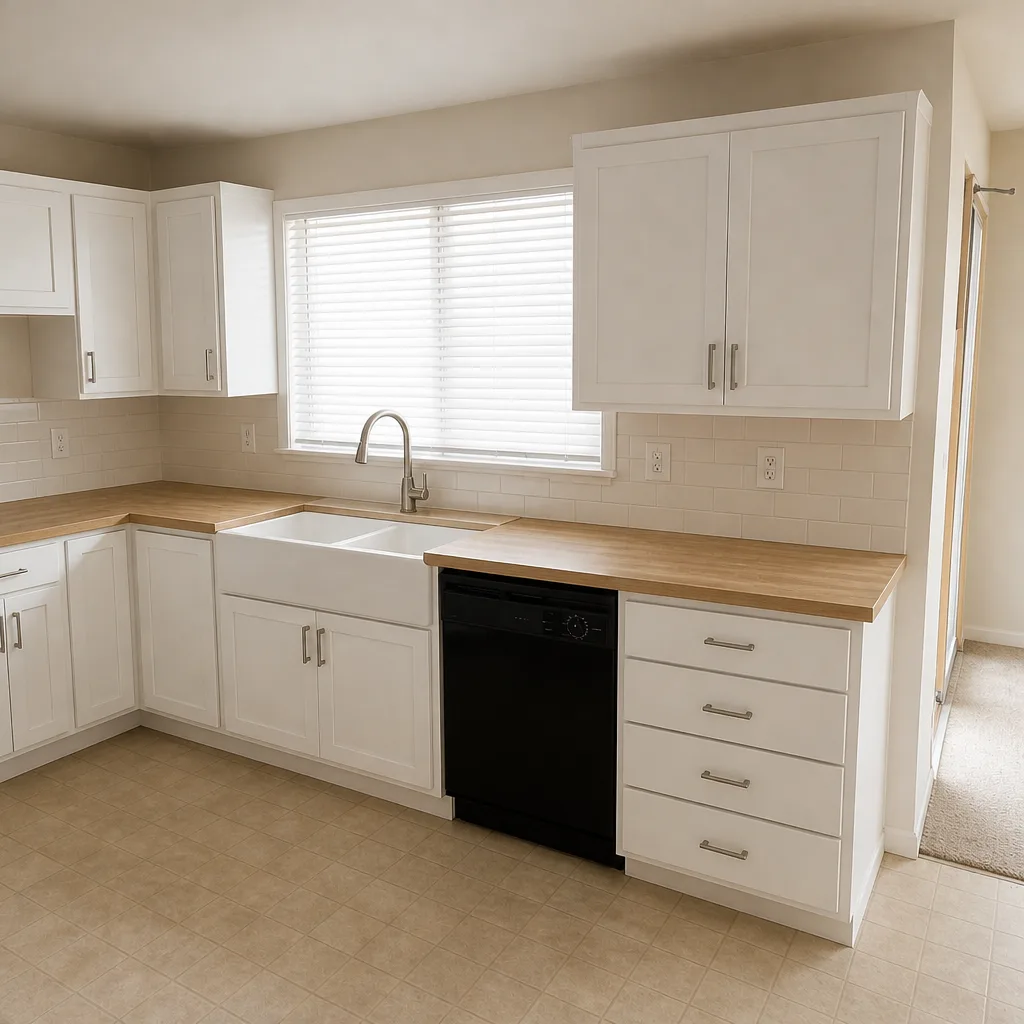 After
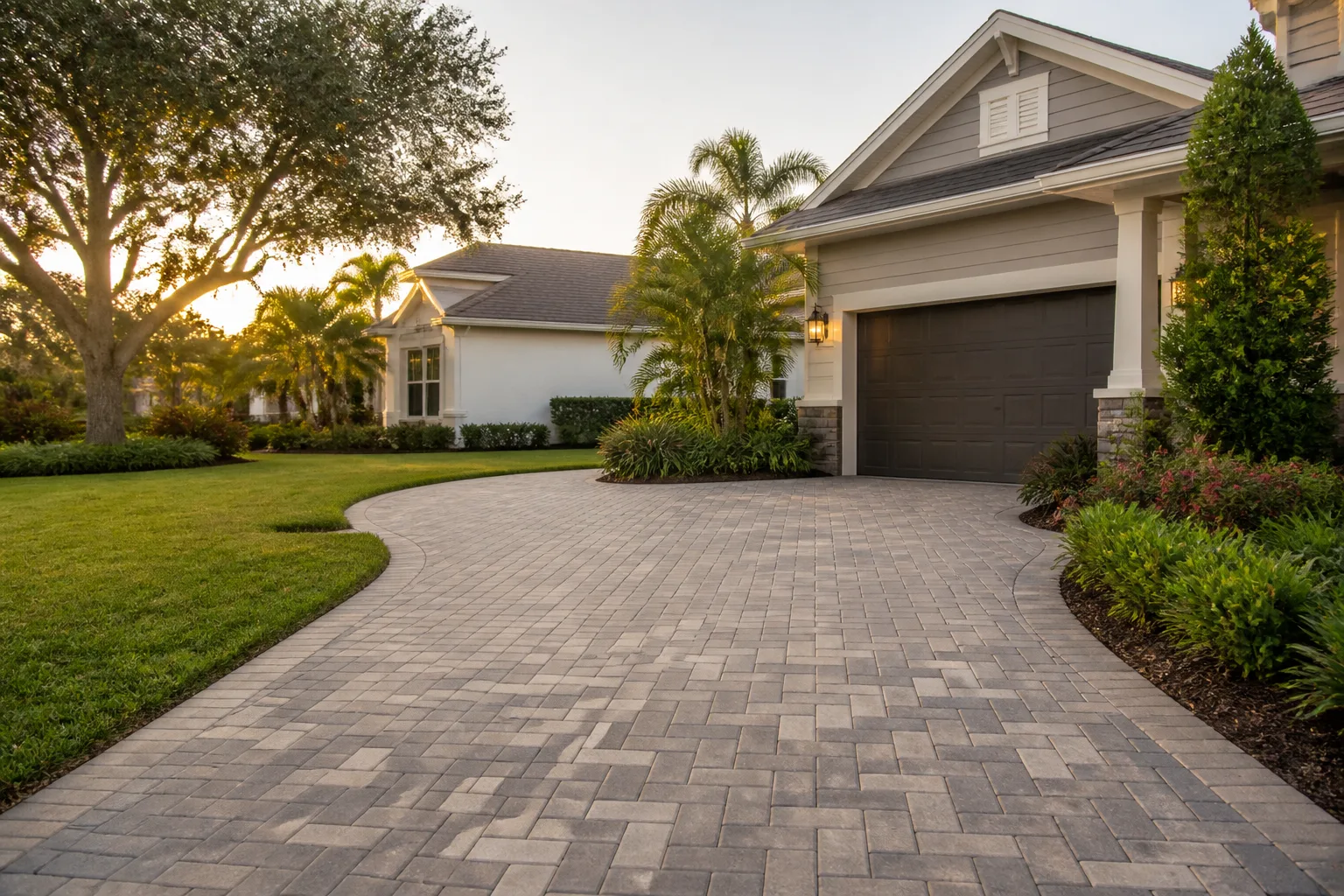
How Long Does a Paver Driveway Last in Boulder City, NV?
Quality concrete or natural stone pavers last 40 to 50 years or more. But the paver units aren’t what fails in Boulder City – the base and jointing system underneath them is, and without proper engineering that system can fail in as little as 5 to 8 years. The pavers themselves will almost certainly outlive the sand joints, the sub-base, and possibly the house. The real question is whether everything holding them up was built for Mojave conditions. Call (888) 282-1693 and we’ll walk your driveway and tell you exactly what you have under there.
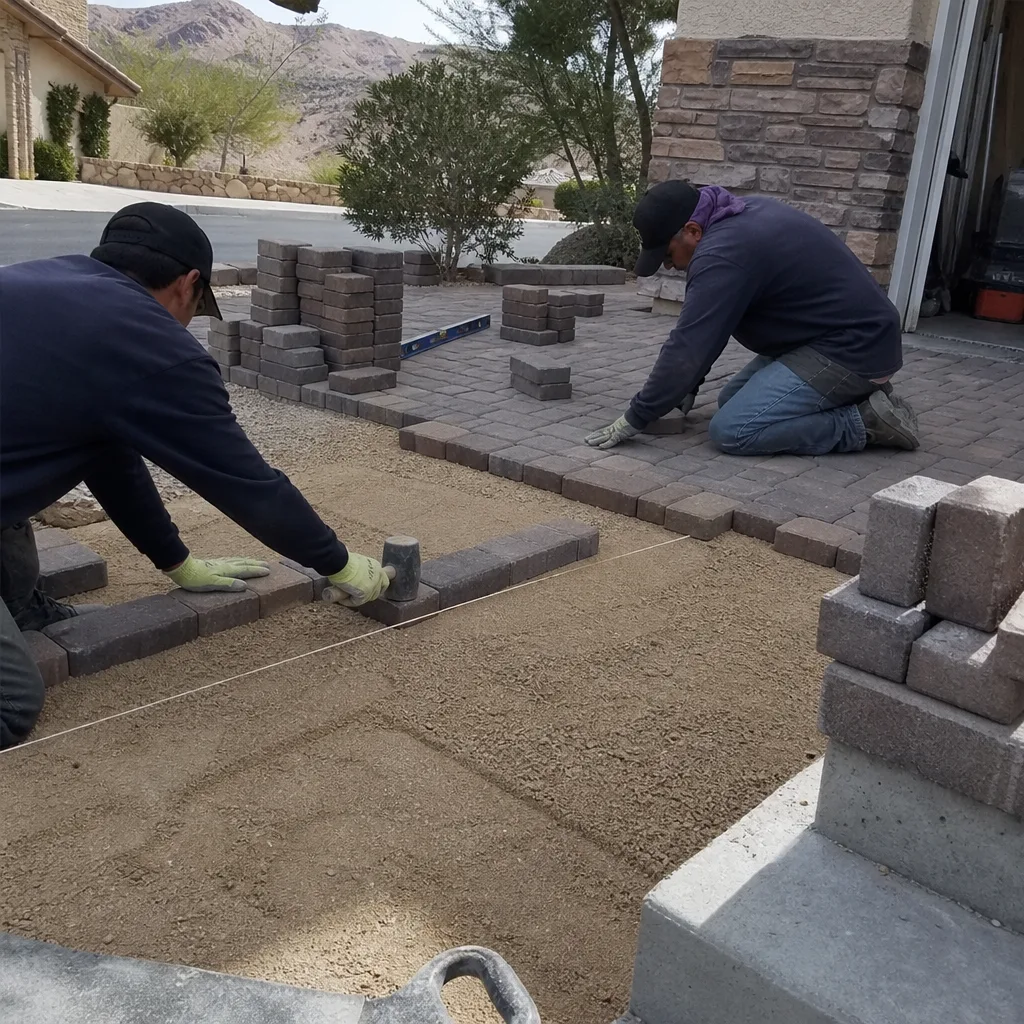
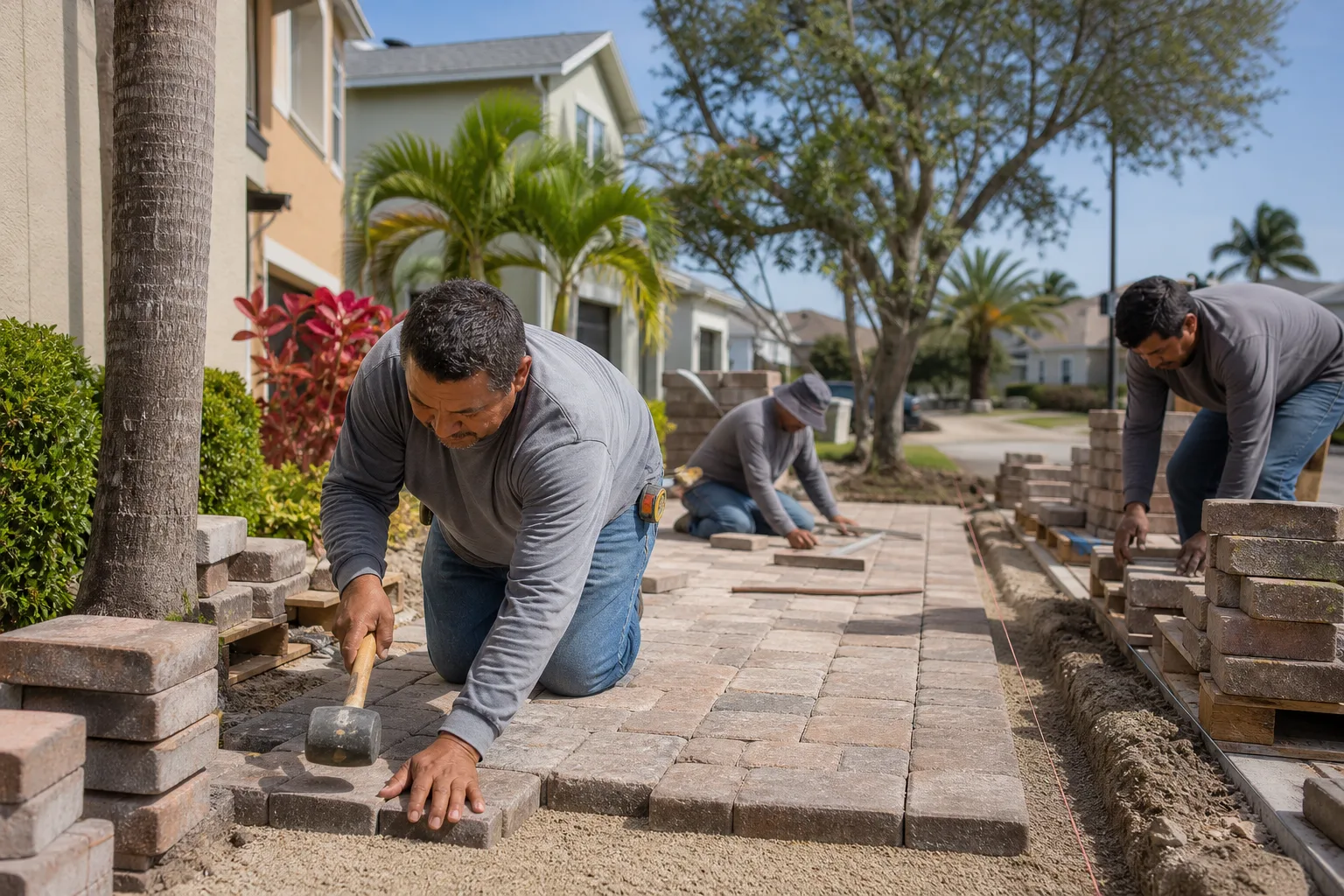
Two Lifespans, Not One
Most articles answer this question with a single number and move on. That number was built on moderate-climate data – places with mild freeze-thaw cycles and steady rainfall. Boulder City doesn’t work that way.
Here’s how we separate it:
- The paver unit itself: 40 to 50+ years for a good concrete paver or natural stone. This is the durable part. It does not rot, it does not crack from UV, and it shrugs off the sun that bleaches everything else on your property.
- The installation system: the compacted sub-base, the bedding layer, and the jointing material. This is where lifespan actually gets decided, and it’s entirely dependent on prep. Built right, it holds for decades. Built for the lowest bid, it starts moving in 5 to 8 years.
That gap is the whole story. A paver driveway in Boulder City failing at year seven isn’t a paver problem. It’s a base problem.
Why Boulder City Soil Shortens the Life of the System
Boulder City sits at roughly 2,300 to 2,500 feet near Lake Mead, and the desert soils here are expansive. They shrink and swell with moisture. Even with our low annual rainfall, a single monsoon event can saturate the top 18 inches of soil. When that moisture moves in and out seasonally, the ground beneath your driveway rises and falls.
A 4-inch compacted base – which is a perfectly reasonable spec in Flagstaff or a wetter climate – allows 1 to 2 inches of differential movement in Boulder City over a decade. One section lifts, another settles, and the pavers follow. That’s when you start seeing the ripples, the sunken tire tracks, and the joints opening up. The pavers didn’t wear out. The ground under them moved and nothing was built to absorb it.
This is where most bids go wrong. Contractors price for the market they know, not the geology they’re standing on. When we quote a Driveway & Pavers project here, the base depth and compaction are engineered for shrink-swell soil, not pulled from a generic playbook. That’s a line item some bids don’t even mention – and it’s the one that decides whether your driveway lasts 8 years or 40.
150°F Surface Days and What They Do to Jointing Sand
Summer highs in Boulder City routinely hit 100 to 110°F, and the surface of a paver driveway in direct sun runs hotter than the air – 150°F surface days are common, not extreme. Standard polymeric sand loses binding strength after that kind of repeated thermal cycling. The joints start to crumble, weeds find the gaps, and water gets into the bedding layer, which is the last thing expansive soil needs.
We specify high-temperature polyurea jointing instead. It holds its integrity through Boulder City summers where ordinary polymeric sand gives up. It’s a small material upgrade on a bid sheet that makes a large difference in how long the whole system holds together.
The other thing thermal cycling does is push individual pavers against each other and against the edge restraint. If the edge isn’t locked down properly, the whole field can creep. We see this most on driveways where the restraint was set shallow or omitted at the apron – the pavers fan out at the street first.
Pavers Give You an Exit Door Concrete Doesn’t
Say the soil does move enough to require intervention. With pavers, a crew lifts the affected units, re-grades the base underneath, and re-lays the same pavers. You keep your material. You fix the actual problem. That’s a repair.
With poured concrete in the same soil, movement means a crack or a heave. The fix is demolition and a full replacement. There’s no lifting a slab and putting it back.
That re-installation advantage is exactly why the base quality matters so much on a paver driveway. You’re investing in something that can be corrected without being thrown away – provided the install was good enough to make correction rare in the first place.
What It Costs in Boulder City
Upfront pricing, no surprises – here’s how the numbers typically land in this market, plus the repair end of things so you can weigh the decision:
| Project | Typical Range |
|---|---|
| Paver driveway installation | $7,000-$18,000 |
| Concrete driveway installation | $4,500-$12,000 |
| Asphalt driveway paving | $3,500-$9,000 |
| Driveway replacement | $5,000-$14,000 |
| Driveway sealing (pavers) | $250-$700 |
Paver patio work runs $3,500-$11,000 if you’re doing the whole hardscape at once. The base engineering, edge restraint, and jointing material are what separate a $7,000 driveway from an $18,000 one – and they’re also what determine whether you’re doing this again in a decade. If you’re comparing a paver driveway against alternatives, our concrete driveway installation in Boulder City page covers the trade-offs honestly.
Common Local Scenarios We See
Every driveway tells you something before we even knock on the door. These are the patterns that come up again and again in Boulder City:
- The 1930s Hoover Dam-era cottage with a narrow approach. The historic district has tight lots and housing stock built for a different era. Drainage and grade on these approaches need careful thought, because there’s nowhere for water to go but toward the house if it’s pitched wrong. Many of these homes also sit on pier-and-beam foundations, and the driveway apron has to shed water away from the structure.
- The 1990s infill driveway with shallow base. Fast-built spec homes east of the historic district often got the minimum base the code allowed, and after twenty-plus summers of thermal cycling the joints and edges are showing it.
- The driveway that fails at the apron first. That’s almost always a missing or shallow edge restraint at the street transition. It’s a small fix if caught early and a full re-lay if the creep has spread.
- The preservation-review situation. In the historic district, exterior work can trigger review under the town’s preservation ordinances. A paver driveway approach that reads as an alteration to a period property needs a plan that respects the review process. We know how Boulder City handles it.
Not sure which one you’re looking at? A short walk-through with us usually sorts it out. We’ll tell you whether the base is sound or whether the paver driveway is one monsoon away from needing help. Our technicians have up to 12 years of experience reading exactly this kind of movement.
Why the 730-Day Done Right Promise Matters Here
Our 730-Day Done Right Promise covers paver settlement, edge separation, or joint failure within two years – no service call fee, if it’s not done right, we make it right. That guarantee only means anything if the sub-base underneath it is actually built to handle Mojave soil. A company that lays a 4-inch base for Boulder City geology can’t afford to stand behind its work for two years. We can, because we build the base for the ground we’re on. That’s built to last, backed in writing.
Calls get answered by a live person 24/7 – no voicemail, no waiting until Monday. All technicians are background-checked and arrive in uniform. And because a large hardscape project is real money, we offer no-hassle upfront pricing, 0% financing for 18 months, and $1,000 off projects over $10,000. You can see the whole scope of what Groundwork Construction Co. of Boulder City does across our trades from the home and construction services we offer. If you’re weighing other outdoor improvements, we also handle vinyl fence installation and full concrete driveway installation work in the area.
FAQs
A well-built paver driveway in Boulder City lasts 40 to 50+ years for the pavers themselves, with the sub-base and jointing system holding up for decades if it was engineered for the area’s expansive desert soil. Poorly built installs fail in 5 to 8 years. Call (888) 282-1693 for an exact assessment of what you’re working with.
Yes, if the base is built correctly. Pavers handle Boulder City’s shrink-swell soil far better than poured concrete because individual units can be lifted and re-graded instead of demolished and replaced. Over a 40-year horizon, that re-installation advantage usually wins out. Call (888) 282-1693 for a free estimate comparing the two.
Sinking and shifting almost always trace back to the sub-base, not the pavers. In Boulder City, the 18 inches of soil under a driveway saturates during monsoon events and moves seasonally, and an under-specified base lets that movement reach the surface. Call (888) 282-1693 and we’ll tell you whether the fix is targeted or larger.
In most cases, yes. Because pavers are individual units, a crew can lift the affected ones, re-grade the base beneath, and re-lay the same pavers – keeping your material intact. That’s the repair you can’t do with a cracked concrete slab. Call (888) 282-1693 to find out how much of your driveway we can keep.
If you’d rather have it looked at, Groundwork Construction Co. of Boulder City offers a no-pressure assessment in Boulder City – call (888) 282-1693 for a free estimate.
Written by the team at Groundwork Construction Co. of Boulder City, serving Boulder City, NV.