Last updated November 18, 2026

Free written scope consultation - allowances, timeline, and change-order rules on paper before a single trade is scheduled
The Complete Fence Installation Guide for Boulder City Homeowners
Boulder City has some of the most specific fence ordinances in Clark County, and the city’s unusually high HOA coverage means two separate approval processes are required for most residential properties. That’s before you ever pick up a shovel. Then there’s the ground: much of this city sits on caliche hardpan that will bend a standard auger or stall a two-man crew on a hot afternoon. And the sun here doesn’t just fade a fence, it eats one. This guide covers the code, the materials, the rock, the wind, and the paperwork so you can budget a Boulder City fence with your eyes open instead of learning the hard way after the posts are in. We’re writing this to be the guide we wish every homeowner had before they signed a fence contract.
Quick Answer
A residential fence in Boulder City is generally limited to 6 feet in height in the side and rear yard and 4 feet in the front, requires a permit for anything over the standard height or on a corner lot’s sight-triangle area, must be built from the property line inward, and needs HOA architectural approval before any work starts. Materials matter most here: powder-coated steel, vinyl, and composite hold up against Mojave UV where standard pressure-treated pine typically fails in 4 to 5 years. Budget $3,500 to $9,500 for a typical 150-linear-foot residential fence, with caliche removal and HOA-required design upgrades pushing the number higher.
Styles & brands we work with
- Kitchen remodeling
- Bathroom remodeling
- Home additions & ADU
- Roofing
- Windows & doors
- Driveway & pavers
- Fence
Table of Contents
- Boulder City Fence Code: Height, Setbacks, and Permits
- Material Performance in Mojave Conditions
- The Caliche Problem: What’s Under Boulder City Yards
- Wind Load and Post Depth for Boulder City’s Gap Winds
- HOA Approval: Documentation and Timelines
- What Fence Installation Costs in Boulder City
- The Installation Process, Step by Step
- Maintenance Calendar for Desert Fences
Boulder City Fence Code: Height, Setbacks, and Permits
Boulder City enforces its own municipal code on fences rather than deferring to Clark County, and that distinction trips up contractors who work mostly in Henderson and Las Vegas. The rules are specific and, in a few places, stricter than surrounding jurisdictions. Before you order materials, know what your zone allows.
The general residential framework:
- Front yard: fences typically capped at 4 feet, and must sit behind the front setback line rather than at the sidewalk.
- Side and rear yards: generally 6 feet maximum. Anything taller needs a variance, and a variance means a public hearing timeline.
- Corner lots: a sight-triangle clears the area near the corner so drivers and pedestrians can see each other. Fences in that triangle are usually limited to 3 feet or must be visually open (chain-link or wrought-iron style) so sight lines are preserved.
- Property lines: the fence faces you and sits entirely on your side of the line. Never build on a neighbor’s parcel, even by a few inches, without a recorded easement.
- Permits: a permit is generally required for fences over 6 feet, retaining-wall-backed fences, masonry walls, and any fence in a special zone such as near the historic district. Standard 6-foot residential wood or vinyl fences often don’t need a permit, but always confirm with the city before construction.
The historic district downtown, near the Boulder Dam Hotel and the older homes off Nevada Way, has additional design review for visible fencing. That’s a separate submittal from the standard permit. If your property is in that overlay, plan for an extra few weeks. Building without the correct approval in Boulder City can mean removing a fence you just paid for.
Material Performance in Mojave Conditions
The single biggest mistake we see in Boulder City fence budgets is choosing material by up-front price instead of lifespan. Standard pressure-treated pine, the default budget pick in wetter climates, degrades fast here. The UV index in Boulder City runs high most of the year, and the wood’s moisture swings between baked-dry summers and occasional winter rain. A standard pine privacy fence typically shows warping, cracking, and gray-out within 4 to 5 years, and the fasteners rust or pull loose around the same time.
How the main materials actually behave here:
- Powder-coated steel and aluminum: the strongest performer against UV. Color holds for decades, no moisture absorption, no rot. Higher material cost, minimal maintenance. Best choice for wind-exposed lots and long-term ownership.
- Vinyl: excellent UV resistance when you buy a quality formulation with UV stabilizers in the compound. Cheap vinyl chalks and yellows. Good privacy option, no painting, but it can get brittle in extreme heat and needs proper post spacing.
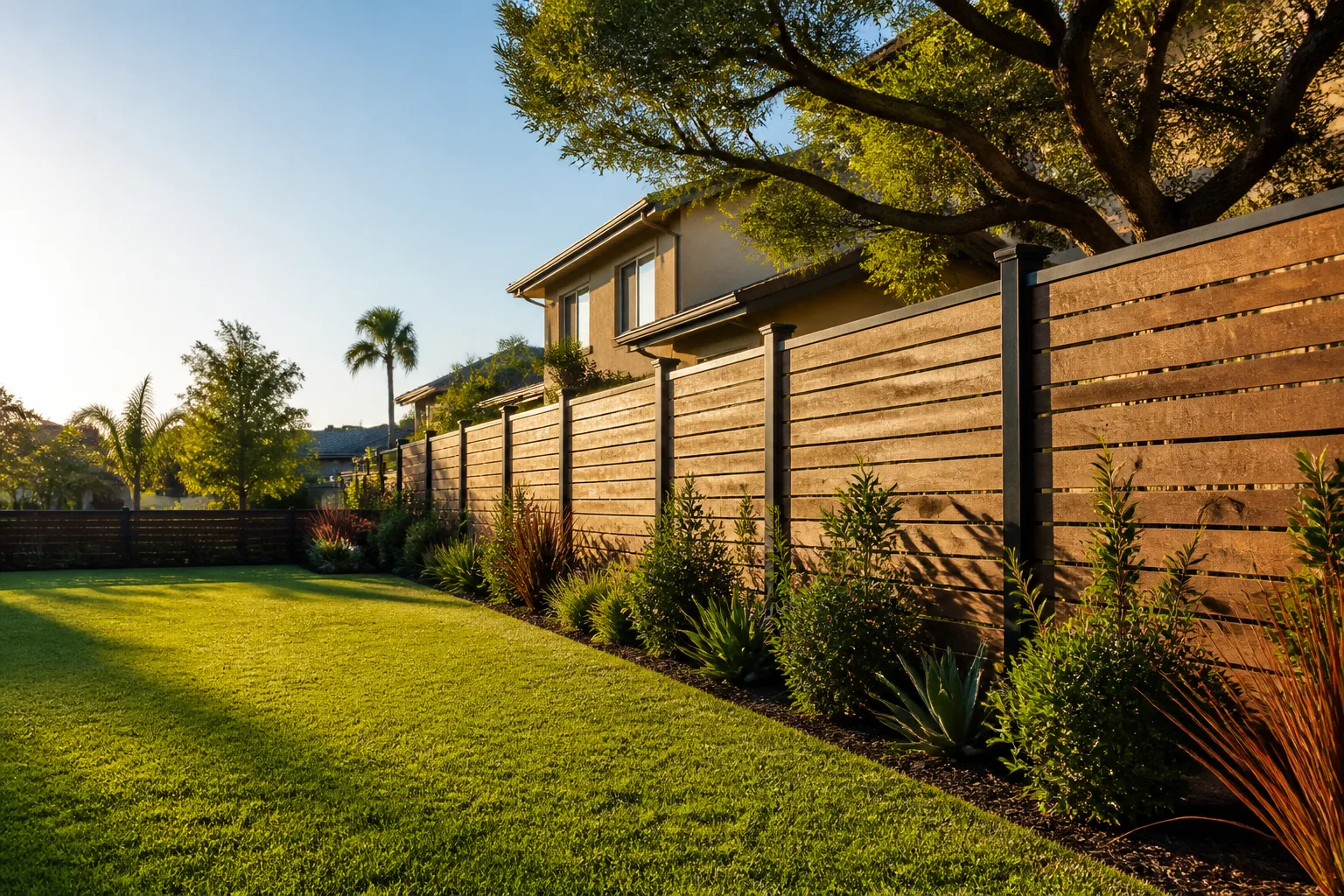
- Composite: the wood-look middle ground. Holds color well, resists rot and insects, and doesn’t splinter. Brands built with Boral and similar manufacturers’ composite lines perform well in desert sun. Pricier than pine, cheaper than steel.
- Pressure-treated pine: the budget route. Fine for a quick privacy screen or a short-term rental yard, but plan on replacing boards within 5 years and the whole fence within 8 to 10. Seal and stain every 18 to 24 months if you want it to last that long.
- Masonry and block: used for perimeter and street-facing walls here. Heavy, permit-driven, and needs an engineered footing, but essentially permanent.
For most Boulder City homeowners who plan to stay put, the math favors vinyl, composite, or steel. The upfront savings on pine is usually wiped out by replacement, restaining, and hardware fixes within a decade. Whatever you pick, buy material rated for high-UV exposure and ask your supplier for the UV stabilizer detail, not just the color warranty.
The Caliche Problem: What’s Under Boulder City Yards
Ask any Boulder City contractor what slows a fence job, and caliche is the answer. Caliche is a natural calcium-carbonate hardpan that forms just below the surface across much of the Mojave, and it can range from a crumbly layer to something that rings a shovel like concrete. It’s why a homeowner who budgeted a Saturday post-hole dig can end up three days into the project with a broken auger.
How to know before you dig:
- Do a test hole. Before material is ordered, dig or auger one post location near the fence line to your planned depth (typically 24 to 36 inches). What comes up tells you what the whole run will be like.
- Identify the layer. Soft caliche breaks up with a digging bar. Hard, cemented caliche needs a rotary hammer, a heavier auger, or a mini-excavator with a breaker attachment.
- Check depth against the hardpan. If the caliche starts at 12 inches, a post set 24 inches deep is only 12 inches into real soil. That’s a shallow post, and shallow posts are how fences lean, rack, and blow over. The post has to be backfilled with concrete and, in many cases, over-dug by two or three times the post diameter to reach stable soil and hold footings.
We’ve seen Boulder City yards where every post hole needed a rotary hammer to break the cap, adding a full day of labor and a rock-breaking charge to the estimate. A fence bid that ignores caliche is a bid that will change mid-job. Ask your contractor directly: “Have you dug in this neighborhood, and did you charge for rock?” A straight answer tells you a lot.
Wind Load and Post Depth for Boulder City’s Gap Winds
Boulder City sits at elevation near the edge of the Eldorado Valley, and the gap winds that funnel through the Boulder City ridge are no joke. A 6-foot privacy fence acts as a sail, and a fence engineered for a mild climate will test your patience the first winter it catches a 50 mph gust. Wind load engineering is the difference between a fence that stands for decades and one that leans after a single blustery week.
What a properly engineered Boulder City fence includes:
- Post depth that respects your soil. Standard practice is 24 to 36 inches below grade, but exposed, windward lots benefit from deeper footings and wider concrete collars. A post should be set with an engineered footing that matches the wind zone and your actual soil type.
- Post spacing at 6 to 8 feet. Wider spacing means more panel catching wind on each post. 6-foot centers are stronger when wind is a real concern.
- Concrete, not just dirt. Post holes should be backfilled with a proper concrete mix, not gravel or native soil alone. Native soil in the Mojave compresses and settles; concrete holds.
- Wind-rated hardware. Galvanized or stainless fasteners, through-bolts on gate hangers, and reinforced corner posts and gate posts. Skimping on hardware is a common shortcut that shows up two winters later.
- Breathable or open sections on windward runs. A solid 6-foot privacy fence is a solid wall to the wind. In the most exposed corners of a yard, mixing in an open or lattice panel section relieves pressure and saves the fence.
A solid gate at the end of the run needs extra engineering. Gate posts take the most stress on any fence, and in Boulder City a standard gate post without sufficient footing is the part that sags first. If your fence includes a driveway gate, expect to oversize both gate posts and their footings.
HOA Approval: Documentation and Timelines
Here’s the part of the Boulder City fence project that catches more homeowners than the caliche. Boulder City has unusually high HOA coverage, and most residential properties sit inside an active association. That means the city permit and the HOA architectural review are two separate approvals, both running on their own clock, and the fence can’t break ground until both clear.
What your HOA will typically want before approval:
- A site plan showing the fence line on a survey or plot plan, with dimensions and distance from property lines.
- Material and color specification. Brand, product line, and color sample (or a physical sample board).
- Fence height and style with a photo or rendering matching the neighborhood’s architectural standards.
- Gate and access details if the fence includes a side-yard or driveway gate.
- A contractor’s proof of license and insurance, sometimes requested before the board signs off.
Timelines vary widely by association. Some approve in a week at an architectural committee meeting. Others meet monthly and take 30 to 60 days end to end. The best move is to read your CC&Rs first, call the management company for the submission form and meeting schedule, and have the documentation ready before a contractor ever schedules a dig day. In our experience, HOA approvals are the most common reason a Boulder City fence project stalls, and it always comes down to incomplete paperwork.
What Fence Installation Costs in Boulder City
Fence pricing in Boulder City runs a bit higher than Las Vegas metro averages because of two local factors: caliche and wind-engineered footings. Both add labor and concrete. The numbers below reflect what we typically see for a standard residential run of roughly 150 linear feet.
Line-item cost ranges:
- Pressure-treated pine privacy fence: $3,000 to $5,000 for 150 linear feet. Lowest upfront, shortest life. Plan on $500 to $1,000 of staining and repair work every couple of years.
- Vinyl privacy fence: $4,500 to $7,500. Strong UV performance, minimal upkeep, good long-term value.
- Composite privacy fence: $5,500 to $9,000. Wood appearance, excellent desert performance. Boral and comparable composite lines are worth pricing.
- Powder-coated steel or aluminum: $7,500 to $13,000 for a 150-foot run. The most durable option for exposed, windward lots.
- Masonry block wall: $20 to $45 per linear foot, so $3,000 to $6,750 for a short run, before engineered footings and permit fees.
- Caliche removal and rock breaking: $300 to $1,200 as an add-on, depending on how deep and how hard the hardpan runs.
- Permits and HOA filing: typically $100 to $500 depending on scope and whether design review is required.
- Gate installation: $400 to $1,200 for a standard walk gate, $1,500 to $4,000 for a driveway gate with oversized posts.
The number you see at bid time should be the number you pay. A written, line-item quote that separately prices materials, labor, caliche removal, permits, and HOA filing is the one document that prevents a $2,000 surprise mid-project. Ask for it in writing. Boulder City is a market where a corner lot with a sight-triangle fence can run several hundred dollars more than a standard lot, so get the correct site details into the bid from day one.
The Installation Process, Step by Step
A Boulder City fence installation, done properly, follows a predictable sequence. Here’s how it unfolds, and about how long each stage takes.
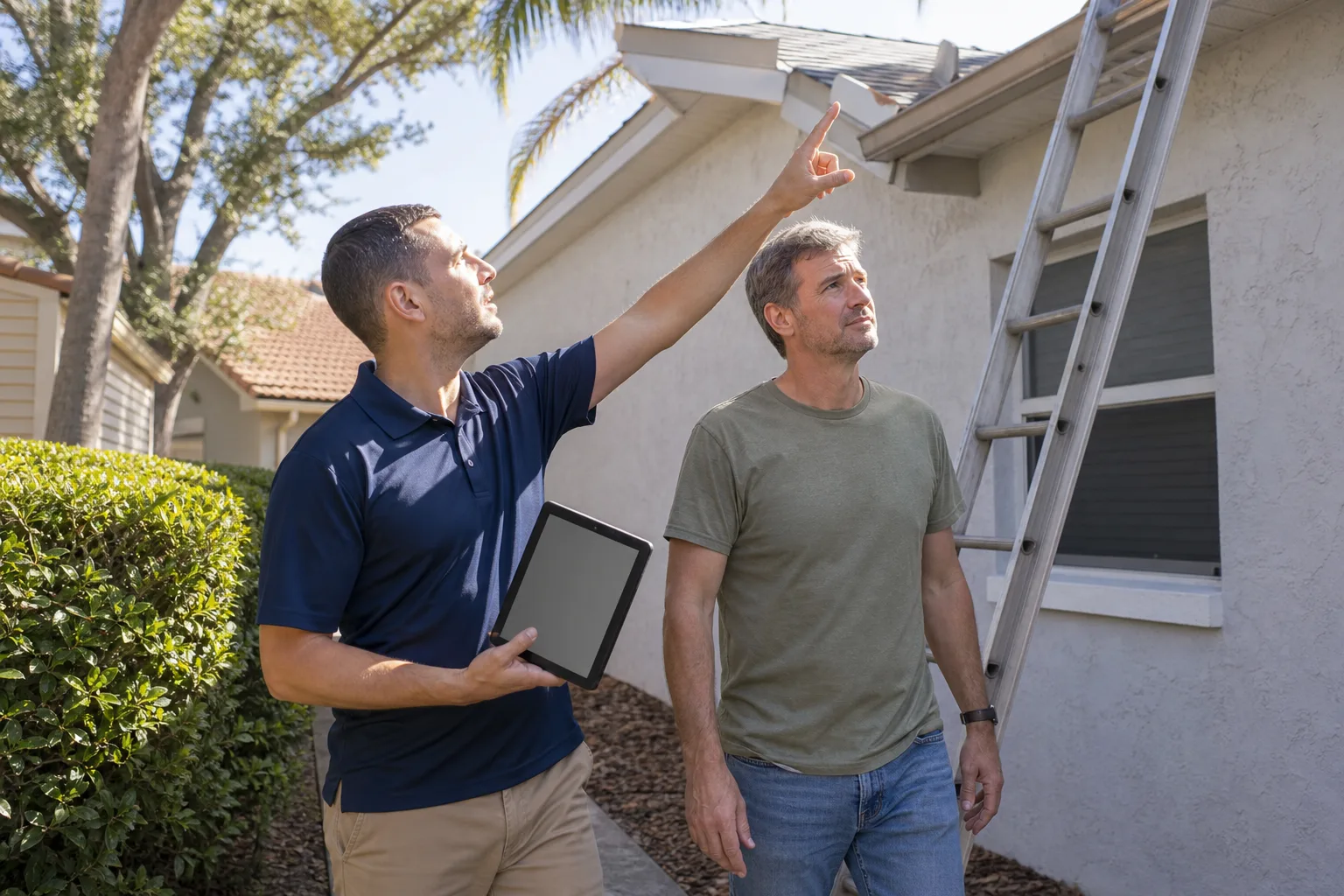
- Site assessment and code check (1 to 3 days). Your contractor confirms the property line, checks zoning and the sight-triangle on corners, and pulls the record of any HOA requirements. A survey or plot plan helps here.
- HOA submission and approval (2 to 8 weeks). This is the big schedule variable. Documentation goes to the architectural committee and waits for its meeting.
- Permit filing (1 to 4 weeks, if applicable). Runs in parallel with the HOA if possible. Some Boulder City projects can’t start this until HOA clears.
- Test hole and caliche check (same day). A single auger hole near the fence line determines whether the crew brings a rotary hammer or a mini-excavator on day one.
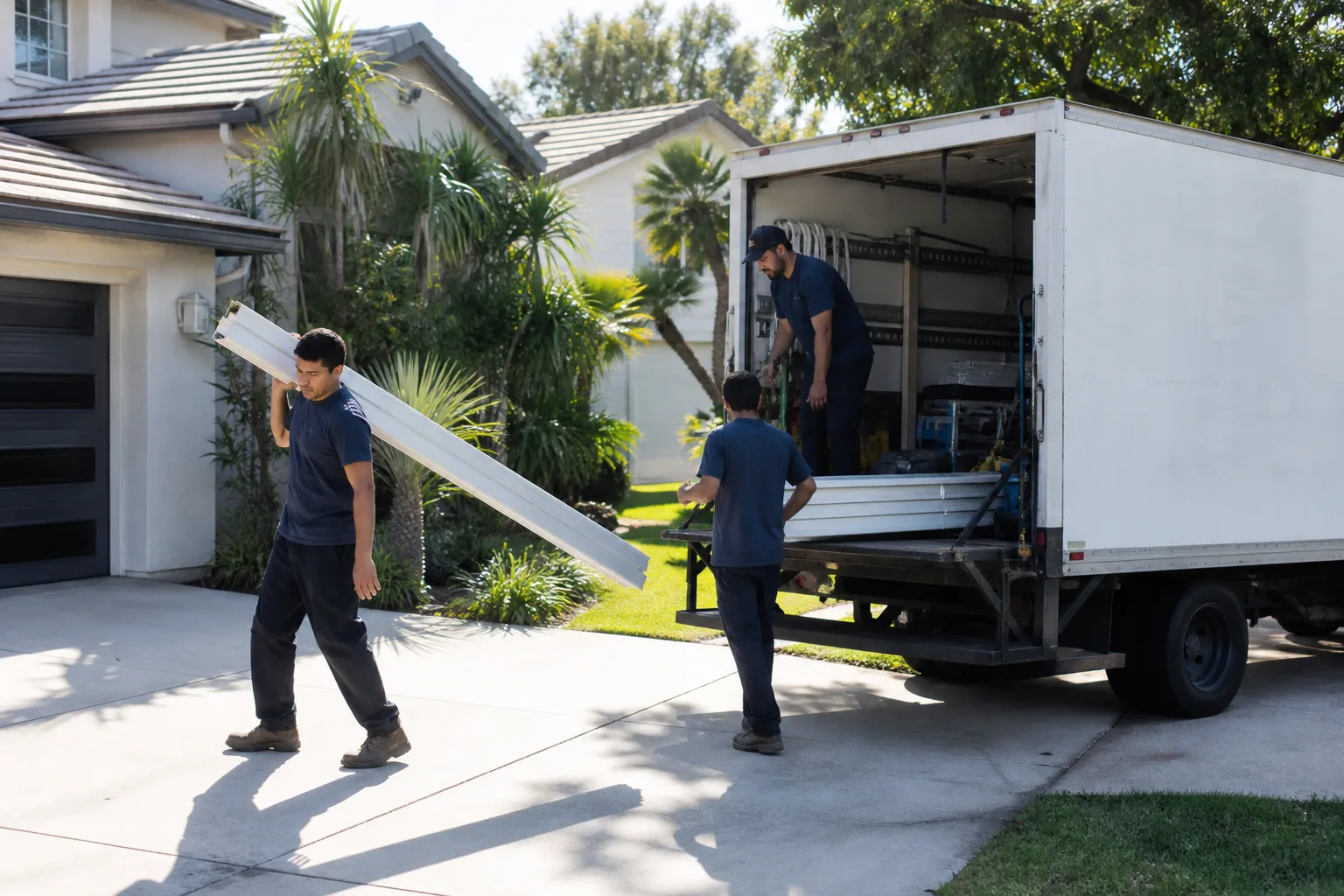
- Layout and post setting (1 to 2 days). String line, spacing, footing depth, concrete pour. Concrete cures 24 to 48 hours before panels go on.
- Panel and gate installation (1 to 3 days). Rails, pickets or panels, gate hardware, corner bracing.
- Final walkthrough and cleanup (same day). Verify plumb, level, gate swing, footing cleanup, and that the installed fence matches the approved plan.
From the first call to a finished fence, a Boulder City project typically takes 3 to 10 weeks, driven almost entirely by HOA and permit timing. The actual construction is usually a 3 to 6 day job on a standard residential run, longer if caliche is heavy. Planning the paperwork early is what saves the calendar.
Maintenance Calendar for Desert Fences
A desert fence still needs upkeep, just different upkeep than a fence in a wet climate. Here’s what to do, and when, in Boulder City.
- Every spring: Walk the fence line, check for leaning posts, loose fasteners, and gate sag. Wind exposure is the biggest stressor here, so a spring check catches problems before summer heat.
- Every summer: Rinse vinyl and composite with a hose and mild soap. Dust accumulation on desert fences is real. Inspect for sun-fade on outward-facing pickets.
- Every fall: Test the gate for swing and alignment. Tighten through-bolts and gate hardware. In wind-exposed Boulder City yards, hardware loosens over the season.
- Every 18 to 24 months (wood only): Clean, inspect, and re-seal or stain. Skipping this in the Mojave is how a pine fence dies in year four.
- Every 3 to 5 years: Check post bases for cracking concrete, footing exposure, or erosion. Caliche yards can shift seasonally with summer heat, and a small footing crack is cheap to fix and expensive to ignore.
The good news: a properly engineered fence in Boulder City, built for UV and wind, needs very little. Most of our steel, vinyl, and composite installs are maintenance-light compared to what a standard pine fence demands here.
Common Mistakes to Avoid
- Building before HOA approval. Boulder City’s HOA coverage means most properties need a signed approval before a single post goes in. If your committee later rejects the design, you’re removing and rebuilding a fence you just paid for.
- Skipping the test hole. Caliche varies block to block. A contractor who quotes without digging one hole near your fence line is quoting blind, and the change order that follows is often several hundred dollars.
- Choosing pine on the desert’s budget. Pine and other standard pressure-treated wood fail fast in Boulder City’s UV. The savings are real up front, but most people replace the fence within a decade and spend more than if they’d bought vinyl, composite, or steel the first time.
- Ignoring corner lot sight-triangles. A corner lot fence that blocks the sight line will be flagged during inspection. If you’re on a corner, plan the reduced-height or open-style section into the design from the start.
- Under-sizing gate posts and footings. Driveway gates take the wind load of the whole run. Standard gate posts without oversized footings sag within a couple of seasons in Boulder City.
- Building on the neighbor’s side of the line. Property line disputes are the most expensive fence problems. A survey is worth what it costs. In historic district homes especially, setbacks get tricky.
- Skipping the written line-item quote. A bid that doesn’t separate caliche, permits, HOA filing, and materials is a bid that changes mid-job. Get the numbers itemized before you sign.
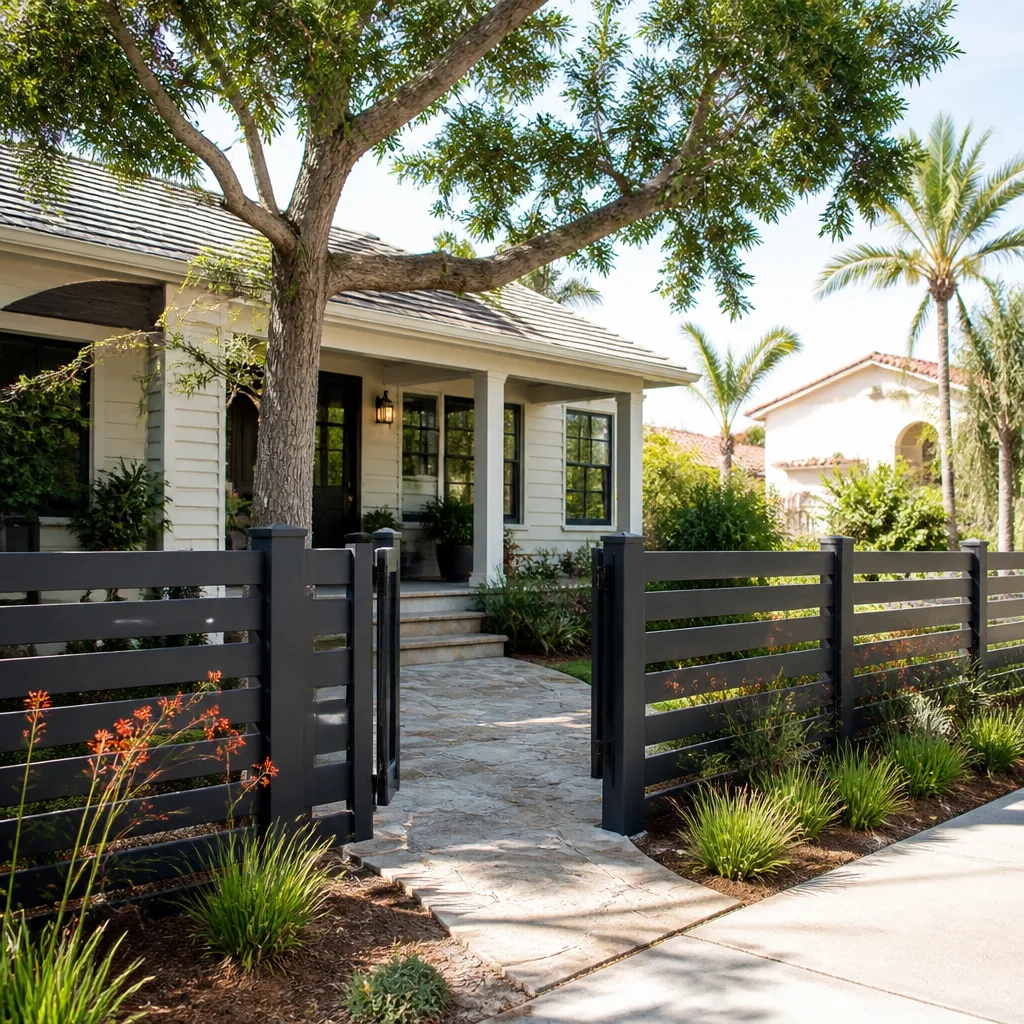
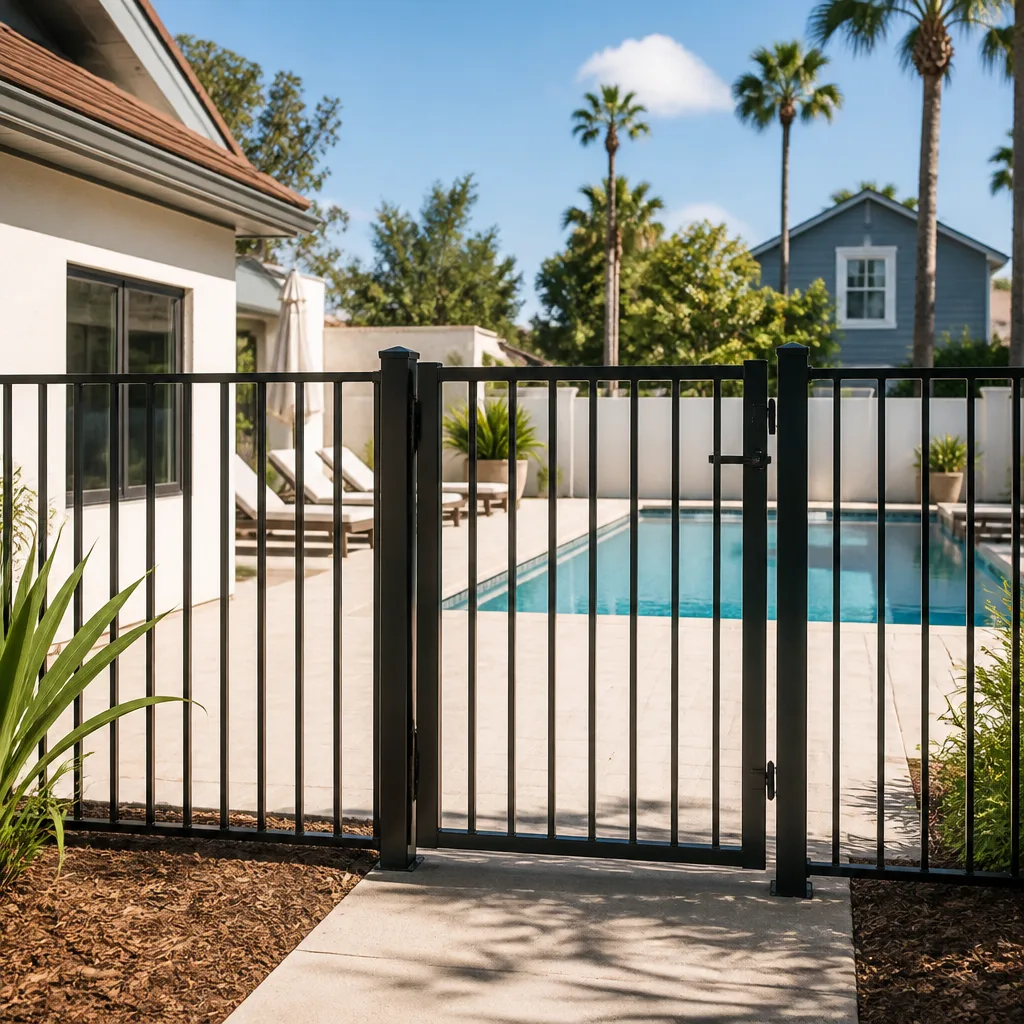
See the difference
 Before
 After
 Before
 After
 Before
 After
When to Call a Professional
Some fence projects are genuinely DIY-friendly: a short garden border fence, a simple low chain-link, or a decorative trellis. But a full residential installation on a Boulder City lot with caliche, wind exposure, a corner sight-triangle, and HOA review is not a weekend project. Call a professional when you’re facing any of these: your yard has hard caliche that stalls an auger, your property is on a corner or in an HOA with architectural review, you want a masonry wall or a driveway gate, or your planned fence line is anywhere near the sight-triangle or historic district overlay rules. Those are exactly the scenarios where the paperwork and footing engineering are the whole job, and where a shortcut on day one becomes a rebuild on day 400.
If you’re ready to compare fence materials and get an engineered, line-item quote that includes caliche and HOA filing from the start, we can walk the property and give you a clear written number. See our Fence Installation in Boulder City page for the full scope, and call (888) 282-1693 for a free estimate. Every fence we install is covered by the 730-Day Done Right Promise, projects over $10,000 qualify for $1,000 off, and 0% financing for 18 months is available if you’d like to spread a larger install across a year and a half.
Frequently Asked Questions
A typical 150-linear-foot residential fence in Boulder City costs about $3,500 to $9,500, with material being the biggest variable: pine runs the low end, powder-coated steel and composite the high end, and caliche removal adds $300 to $1,200 on top. Get a written line-item quote before you commit, and call (888) 282-1693 for an exact number on your property.
Often no for a standard 6-foot residential fence, but yes for fences over 6 feet, retaining-wall-backed fences, masonry walls, and any fence inside the historic district or a special overlay. Corner lots have sight-triangle restrictions that can require a lower or open-style section. Confirm with the city before construction; getting it wrong means removing the fence.
Caliche is a calcium-carbonate hardpan just below the surface that can be as hard as concrete, and it forces contractors to bring heavier equipment, dig wider footings, or over-dug posts to reach stable soil. The right response is a test hole before bid time, not a change order mid-job.
Powder-coated steel and high-quality vinyl perform best in Boulder City’s UV, with composite a strong wood-look third. Standard pressure-treated pine routinely fails in 4 to 5 years here because of UV and moisture swings. If longevity is the goal, spec materials with UV stabilizers, not just a color warranty.
Construction itself usually runs 3 to 6 days for a standard residential fence, but the full project typically spans 3 to 10 weeks because HOA review and permits run on their own calendars. Starting the HOA submission early is the best way to shorten the schedule.
Most likely yes. Boulder City has unusually high HOA coverage, and architectural review is a separate process from the city permit. Your association typically wants a site plan, material and color specification, height and style detail, and proof of contractor license and insurance. Timelines run from one week to 60 days.
The Bottom Line
A Boulder City fence is a project against three forces: UV, caliche, and two separate approval processes. The city’s municipal fence code limits height, governs corner lot sight-triangles, and requires permits for anything above standard height or in the historic overlay, while most HOAs require their own architectural review before work can start. Under the surface, caliche can stall a dig or force deeper, wider footings, and the gap winds through the ridge demand eng