Last updated November 18, 2026


Free written scope consultation - allowances, timeline, and change-order rules on paper before a single trade is scheduled
The Complete Bathroom Remodeling Guide for Boulder City Homeowners
Boulder City’s water hardness regularly tests above 300 mg/L, which the industry classifies as “very hard.” That single number changes almost everything about a bathroom remodel here. It calcifies standard fixture finishes, degrades cheap grout sealer, and clogs low-flow showerheads within about 18 months if the material selections don’t account for it. Most bathroom remodeling guides were written for Seattle or Portland, where soft water and mild summers make material planning a lot more forgiving. This guide is built for this zip code. We’ll cover which materials survive Lake Mead water, how Boulder City permitting and inspections actually get sequenced, why ventilation is a longevity decision rather than an afterthought, and what a realistic budget looks like in this market.
Quick Answer
A bathroom remodel in Boulder City typically runs $18,000 to $45,000 for a full gut renovation of a standard hall or primary bath, with the widest cost swings coming from tile selection, shower system complexity, and whether the layout moves. Budget another 10 to 15 percent above what a Las Vegas contractor would quote for the same scope, because the local subcontractor pool is smaller and materials come in from Las Vegas suppliers. The two decisions that protect your investment most in this climate are hard-water-rated finishes and a ventilation system sized for desert heat cycles.
Styles & brands we work with
- Kitchen remodeling
- Bathroom remodeling
- Home additions & ADU
- Roofing
- Windows & doors
- Driveway & pavers
- Fence
Table of Contents
- Why Hard Water in Boulder City Changes Your Material Choices
- Boulder City Permits and Inspections: What Gets Triggered and When
- Ventilation in a Desert Climate: Why Standard CFM Ratings Fall Short
- What Bathroom Remodels Actually Cost Per Square Foot in Boulder City
- The Three Scope Decisions That Drive Cost Variance
- How to Sequence a Bathroom Remodel Around Inspection Scheduling
- Material Selection Guide for Hard Water Environments
- How to Choose a Remodeling Contractor in Boulder City
Why Hard Water in Boulder City Changes Your Material Choices
Boulder City’s water supply is pulled from the Colorado River system by way of Lake Mead, and the mineral content is high. Water hardness in this area commonly sits between 250 and 350 mg/L, which means calcium and magnesium deposits build up on every wet surface faster than they would in most of the country. Chrome fixtures in this water develop a chalky film within a year. Unsealed cement grout in a shower starts to look cloudy and stained within 12 to 18 months. Low-flow showerheads with small orifice holes clog solid within a season if they don’t have accessible screens.
What we’ve learned from bathrooms we’ve renovated across Boulder City is that the material choices matter more than the installation quality over the long run. A perfect tile install with the wrong grout will fail faster than an average install with the right one. Here’s what actually holds up:
- Epoxy grout over cement grout. Epoxy doesn’t absorb water, doesn’t support mold, and resists mineral staining. It costs roughly 30 to 50 percent more per square foot than cement grout, but it buys you years of trouble-free service in this water. For a typical shower surround, that’s $400 to $800 extra.
- PVD or brushed nickel finishes over polished chrome. Physical vapor deposition finishes resist mineral etching far better than chrome plating. Kohler and Moen both offer PVD finishes at moderate price premiums, and they hold up in hard water where chrome falls apart.
- Porcelain over natural stone in wet areas. Travertine and limestone look great in a showroom, but Boulder City’s water etches and stains them if they aren’t resealed twice a year. Porcelain with a matte or textured finish delivers a similar look without the maintenance schedule.
- Shower filters or whole-house softening. A point-of-use shower filter runs $50 to $150 installed and dramatically extends fixture life. A whole-house softener is $2,000 to $4,500 and makes every wet surface in the house easier to maintain.
- Sealed grout lines after install. Even the best grout benefits from a penetrating sealer applied after full cure. On a shower surround this adds about $150 to $300 and is money well spent.
If your intent is a long-horizon renovation, this is the same principle we apply across Groundwork Construction Co. of Boulder City home projects: pick materials that match the environment they’ll live in, not the ones that photograph best.
Boulder City Permits and Inspections: What Gets Triggered and When
Any bathroom remodel in Boulder City that moves plumbing rough-in, changes electrical circuits, or alters wall framing requires a building permit. Cosmetic work like replacing a vanity top, repainting, or swapping a like-for-like fixture in the same spot generally doesn’t. The line most homeowners don’t anticipate is plumbing. Moving a drain line even 8 inches triggers a plumbing permit and inspection. Adding a new electrical circuit for a heated towel bar or a spa-style shower valve triggers an electrical permit. Adding a new exhaust fan where none existed also triggers one, and that’s the one people forget.
The Boulder City building department operates on a smaller schedule than Clark County’s main offices in Las Vegas, and inspection windows can run three to five business days in busy seasons. That scarcity is why sequencing matters. A typical bathroom remodel triggers this inspection order:
- Rough plumbing inspection. After new supply and drain lines are run but before walls close. This one is on the plumber, and it must pass before tile board goes up.
- Rough electrical inspection. After wiring is run for outlets, lighting, and the exhaust fan circuit, but before insulation and drywall.
- Framing inspection. Only required if walls were moved or opened. If you’re keeping the existing footprint, this often doesn’t get triggered.
- Insulation inspection. Sometimes combined with framing. Not always required in an interior bathroom, so confirm with your contractor.
- Drywall or tile backer inspection. Depends on jurisdiction. Some inspectors want to see the board before tile goes on; others only inspect the waterproofing.
- Final inspection. After every fixture is set, the fan is wired, and the room is functionally complete. This is the inspection that gets your certificate of occupancy or final sign-off.
The reason this matters to your budget: every inspection adds a day or more of calendar time, and each failed inspection can add three to five. Contractors who don’t schedule inspections tightly will lose a week per project in Boulder City where they might not in Henderson. That’s a scheduling cost baked into your quote.
Ventilation in a Desert Climate: Why Standard CFM Ratings Fall Short
Bathroom exhaust fans are rated in CFM, or cubic feet per minute. Typical guidance says to move 1 CFM per square foot of bathroom. For a 50-square-foot bathroom, that’s a 50 CFM fan. Here’s why that’s insufficient in Boulder City. During summer, ambient temperatures hit 115°F, and the air is extremely dry. When a family runs a hot shower for 15 minutes, the bathroom fills with humid air, and in a space that’s sealed against the heat with tight-fitting doors and windows, that humidity has nowhere to go. Standard 50 to 80 CFM fans remove enough air in mild climates but can’t pull humidity out fast enough in a hot, sealed room.
What we specify for Boulder City bathrooms is a fan rated at 110 CFM minimum for a hall bath and 130 to 150 CFM for a primary bath with a walk-in shower. The fan should also stay on a timer, not a wall switch. Humidity lingers for 20 to 30 minutes after a shower ends, and the fan needs to be running for that entire window. A 20-minute mechanical timer (about $40) does more for tile longevity than any other single choice in your bathroom.
- Fan CFM: 110 minimum for hall baths, 130 to 150 for primary baths with walk-in showers.
- Sone rating: Under 1.0 sone is quiet enough that people actually use it. Anything above 2.0 sones gets turned off early.
- Ducting: 4-inch rigid duct, insulated, vented straight to the exterior. Flex duct collapses, traps moisture, and kills fan performance.
- Timer switch: Mechanical 20-minute timer over a standard switch. This is a $40 upgrade that prevents thousands in tile and grout damage.
- Makeup air: Make sure the bathroom door has an undercut of at least 1 inch or a transfer grille. A sealed door starves the fan and it can’t pull the humidity out.
If your current fan is a builder-grade unit from the 1990s, it’s probably moving 50 CFM at best and likely has a partially disconnected flex duct in the attic. Replacing it during a remodel costs $200 to $400 including the fan, timer, and labor. Skipping it is the single most common mistake we see.
What Bathroom Remodels Actually Cost Per Square Foot in Boulder City
Bathroom remodel costs per square foot in Boulder City run $250 to $550 for a full renovation. That’s higher than comparable work in Las Vegas for two structural reasons. First, the local subcontractor pool is smaller. There are fewer licensed plumbers, tile setters, and electricians working this side of the valley, so schedule slots and pricing reflect that. Second, most materials have to be delivered from Las Vegas suppliers. Boulder City doesn’t have a full-service tile warehouse or a plumbing supply house with deep inventory, so every order carries a transport cost that contractors pass through. Expect 10 to 15 percent above the same scope in Henderson.
Here’s a realistic line-item breakdown for a full gut renovation of a standard hall bathroom (roughly 50 square feet) in Boulder City:
- Demolition and haul-away: $800 to $1,800
- Plumbing rough-in and fixture install: $2,200 to $4,500 (higher if you move the toilet or shower drain)
- Electrical rough-in and finish (fan, lighting, outlets): $1,200 to $2,800
- Permits and inspection fees: $400 to $900 depending on scope
- Tile backer and waterproofing (shower + floor): $1,000 to $2,200
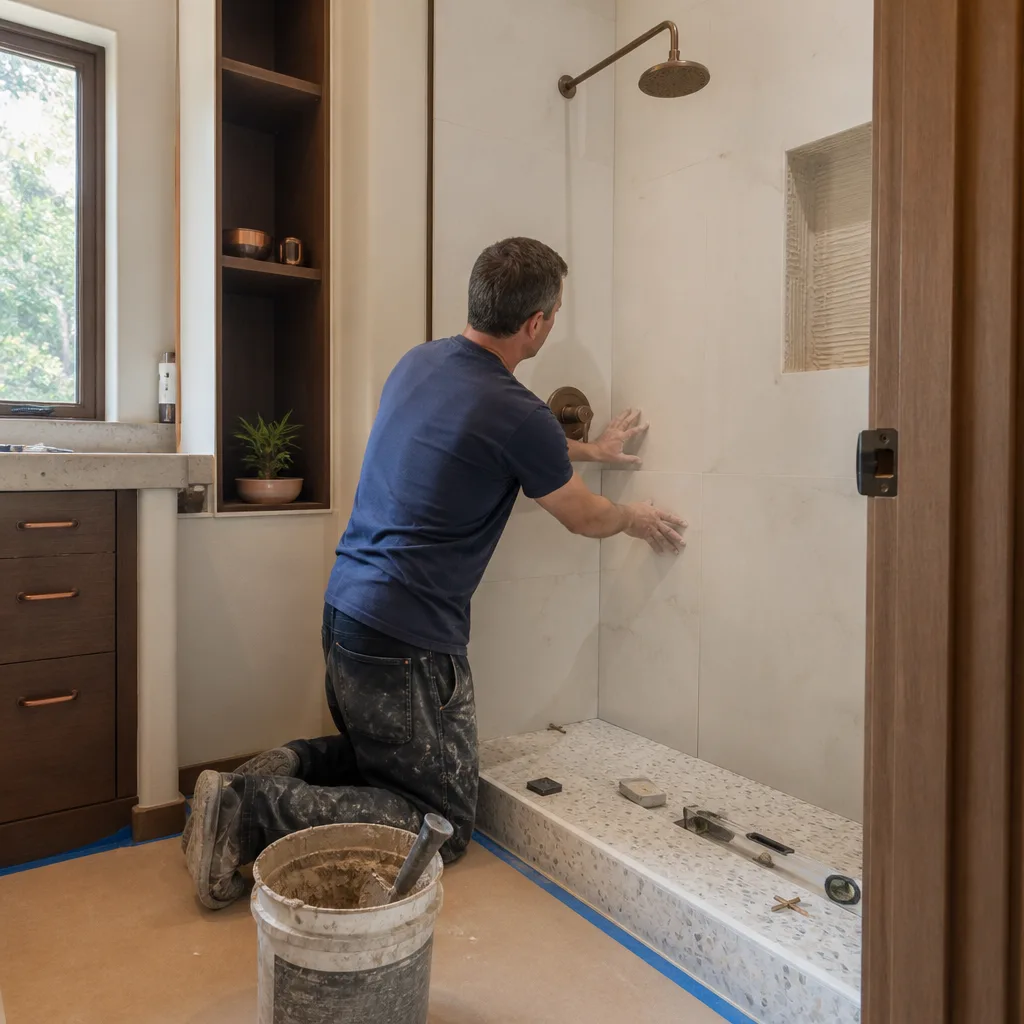
- Tile installation (walls and floor, mid-grade tile): $3,500 to $7,000
- Tile and grout materials: $800 to $2,500 (epoxy grout pushes this higher)
- Fixtures (toilet, vanity, shower valve, trim): $1,500 to $5,500 depending on brand tier
- Ventilation (fan + timer + ducting): $250 to $500
- Drywall, paint, and finish trim: $800 to $1,500
- Final cleaning and punch list: $250 to $500
That totals $14,700 to $30,000 for a standard hall bath in Boulder City. A primary bath with a walk-in shower, freestanding tub, and dual vanity routinely lands between $28,000 and $55,000. A half-bath or powder room refresh without plumbing changes can be done for $8,000 to $15,000. If you’re expanding the footprint, expect the per-square-foot cost to climb by 20 to 30 percent because framing, exterior wall work, and additional trades get involved. This is the same logic we use when scoping Home Additions & ADU in Boulder City, where footprint changes carry the largest cost multipliers.
The Three Scope Decisions That Drive Cost Variance
Most of the cost variance between a $20,000 Boulder City bathroom and a $50,000 one comes down to three decisions. Understanding these helps you make trade-offs intelligently before you ever request quotes, which usually makes the whole process go faster.
1. Tile selection. Wall tile ranges from $2 to $30 per square foot for material alone. A standard 3×6 ceramic subway comes in around $2 to $5 per square foot. A handmade zellige or a large-format marble-look porcelain runs $12 to $30. On a 100-square-foot shower surround, that’s the difference between $300 in tile and $3,000. Labor also scales because small-format tile takes longer to set than large-format. Grout choice adds more: cement grout at $1 per square foot versus epoxy at $1.50 to $2.50. Choosing a mid-grade porcelain in a large format with epoxy grout hits the sweet spot for Boulder City.
2. Shower system complexity. A basic rain head over a fixed shower valve is $400 to $800 in fixtures. A thermostatic system with two body sprays, a handheld slide bar, and a diverter runs $2,000 to $4,500. Body sprays require additional rough-in plumbing and additional waterproofing, so the labor and material cost compounds. Most Boulder City homeowners we work with land in the middle: a thermostatic valve with a rain head and a separate handheld, at $900 to $1,800 in fixtures. It delivers the spa feel without the plumbing complexity of body sprays.
3. Layout changes. Keeping the toilet, sink, and shower in their existing positions means the plumbing lines stay where they are, which saves $1,500 to $3,000 in plumbing labor alone. Moving the toilet to a different wall changes the drain slope and may trigger additional framing work. Moving the shower drain is the most expensive single change because it requires cutting the subfloor, re-roughing the drain, re-waterproofing, and re-tiling. If your existing layout functions, keeping it is the highest-value decision you can make.
How to Sequence a Bathroom Remodel Around Inspection Scheduling
Inspection scheduling in Boulder City moves slower than in Las Vegas, and mismanaging that sequence is where schedules blow up. Here’s the order that keeps a bathroom remodel on track.
- Week 0: Permit application. Submit plans and permit applications before you order a single material. Permit review is two to four weeks for a typical bathroom. Ordering tile before the permit is issued is a common mistake, because if the plan reviewer asks for a fixture change, you may need to re-order.
- Week 1: Demolition. Once the permit is issued, demo goes fast. Two to three days for a hall bath.
- Week 1-2: Rough plumbing and electrical. Both trades work in parallel here. Assume three to five days for each, then schedule both rough inspections for the same day if your inspector allows combined visits.
- Week 2-3: Inspection window. Budget three to five business days per inspection. If rough plumbing and electrical are scheduled back to back, that’s your whole week.
- Week 3-4: Backer board and waterproofing. Cement board and a liquid-applied or sheet membrane system. This is where the tile performance in a hard-water environment is actually determined.
- Week 4-5: Tile installation. Four to six days for a shower surround and floor. Grout is applied on the final day and needs 24 hours to cure.
- Week 5-6: Fixture set and trim. Toilet, vanity, faucet, fan, lighting. All of this happens after tile and paint.
- Week 6: Final inspection and punch list. Schedule the final inspection as soon as the last fixture is set. Budget another three to five business days if the inspector’s calendar is full.
The realistic timeline for a Boulder City bathroom remodel is six to eight weeks from demo to final inspection if everything goes smoothly. Add two to three weeks if any inspection fails or a material is back-ordered. Bringing the contractor in early to plan against the Boulder City inspection calendar saves real money over the six-week window.
Material Selection Guide for Hard Water Environments
This is the table we wish every Boulder City homeowner had before they walked into a tile showroom. It compares the materials you’ll be choosing on hard-water durability specifically, since that’s the biggest longevity factor in this water.
- Floor tile – porcelain (large format): Excellent hard-water resistance, minimal grout line, easy to clean. Our default recommendation for Boulder City.
- Floor tile – natural stone (travertine, marble): Poor. Etches, stains, requires sealing twice yearly. Beautiful, but a maintenance commitment.
- Shower wall – glazed porcelain: Excellent. Non-porous, resists mineral buildup, comes in almost any look.
- Shower wall – unglazed natural stone: Poor. Absorbs water, traps minerals, hard to clean.
- Grout – epoxy: Excellent. Non-absorbent, mold-resistant, mineral-resistant. Worth the premium.
- Grout – cementitious with sealer: Fair. Requires resealing annually in hard water. Fails within three to five years if neglected.
- Faucet finish – PVD or brushed nickel: Excellent. Resists etching and mineral filming.
- Faucet finish – polished chrome: Fair. Shows water spots and mineral film immediately, requires weekly wiping.
- Shower valve – thermostatic: Excellent. Maintains temperature even when other fixtures run, less scale-sensitive than pressure-balance valves.
- Showerhead – rain head with silicone nozzles: Excellent. Silicone nozzles can be rubbed clean of calcium buildup in seconds.
- Showerhead – standard low-flow with metal nozzles: Poor. Clogs within 12 to 18 months in Boulder City water.
- Vanity top – quartz (Cambria or comparable): Excellent. Non-porous, no sealing, resists staining and mineral film.
- Vanity top – granite: Good. Requires annual sealing in hard water to avoid mineral stains.
- Vanity top – marble: Poor. Etches on contact with hard water and soap.
We pull from brands like Kohler for fixtures because their PVD finishes hold up in this water, and from quartz suppliers similar to Cambria for vanity tops because the non-porous surface means one less thing to reseal every year. When we’re building out the rest of a home’s exterior, we lean on brands like Belgard for hardscape, and the same logic of matching material to environment applies outdoors too. You can see that approach in our Driveway & Pavers in Boulder City work, where heat cycling drives the same kind of material decisions.
How to Choose a Remodeling Contractor in Boulder City
The right contractor makes a Boulder City bathroom remodel feel predictable. The wrong one turns it into a six-month ordeal. Here’s what to look for, in the order that matters most.
- Written line-item bids, not lump sums. A lump-sum bid of “$22,000 for your bathroom” hides the decisions that will drive overruns. A line-item bid shows you what tile, what fixtures, what labor, and what allowances are built in. It’s the difference between a fixed price and a moving target.
- A written workmanship warranty measured in years, not months. A one-year warranty on tile and shower waterproofing is a red flag. Water damage from a failed shower pan typically shows up between year two and year four, right after a one-year warranty expires. Look for a workmanship guarantee that lasts well past that window.
- Live phone coverage, not voicemail. When a bathroom is torn apart and the shower valve arrives wrong, you need a person on the phone, not a message system. Ask the contractor how after-hours calls are handled. If the answer is “leave a message,” keep looking.
- Background-checked, uniformed crews. A bathroom remodel means strangers in your home for six weeks. Every crew on the project should be background-checked and arrive in uniform so you know who’s in your house.
- Real familiarity with Boulder City permitting. Ask specifically how they schedule inspections and how long the current review windows are. A contractor who quotes “three to five business days” without hesitation knows the local process.
- Upfront pricing and clear promotional offers. Ask for the final number in writing, and ask how change orders are priced. A contractor confident in the estimate has no problem spelling out what a category upgrade or a layout change will cost.
This is the set of standards we hold ourselves to at Groundwork Construction Co. of Boulder City: written line-item pricing, a 730-Day Done Right Promise covering workmanship, background-checked and uniformed technicians, and live phone coverage around the clock. When we quote a bathroom, the number on the estimate is the number you pay unless you choose to change scope.
Common Mistakes to Avoid
- Choosing polished chrome fixtures without a water softener. Chrome in Boulder City water develops a chalky mineral film within months, and once etching sets in, no cleaner removes it. Choose a PVD or brushed finish if a softener isn’t in the plan.
- Skipping epoxy grout to save $400. Cement grout with sealer fails in Boulder City’s hard water within three to five years. Epoxy adds $400 to $800 to a typical shower and lasts the life of the tile. It’s the highest-return decision on the whole project.
- Ordering tile before the permit is issued. If the plan reviewer asks for a fixture substitution or a layout change, your special-order tile may not work. Wait for the permit, then order.
- Leaving the builder-grade exhaust fan in place. A 1990s fan moving 50 CFM in a sealed Boulder City bathroom doesn’t clear the humidity after a shower. The tile and grout fail, and the fan was the culprit. Replace it during the remodel, not after.
- Moving the shower drain “while we’re at it.” Relocating a shower drain adds $1,500 to $3,000 in plumbing, waterproofing, and re-tiling. If the existing drain works, leave it alone unless the layout genuinely doesn’t function.
- Hiring on lump-sum bids and one-year warranties. A lump-sum bid and a 12-month workmanship warranty are the two patterns behind almost every bathroom remodel horror story we hear. Demand line items and a multi-year guarantee.
- Forgetting the door undercut. A sealed bathroom door starves the exhaust fan, and the humidity in the room doesn’t clear. Add an inch of undercut or a transfer grille to let the fan actually pull air.
See the difference
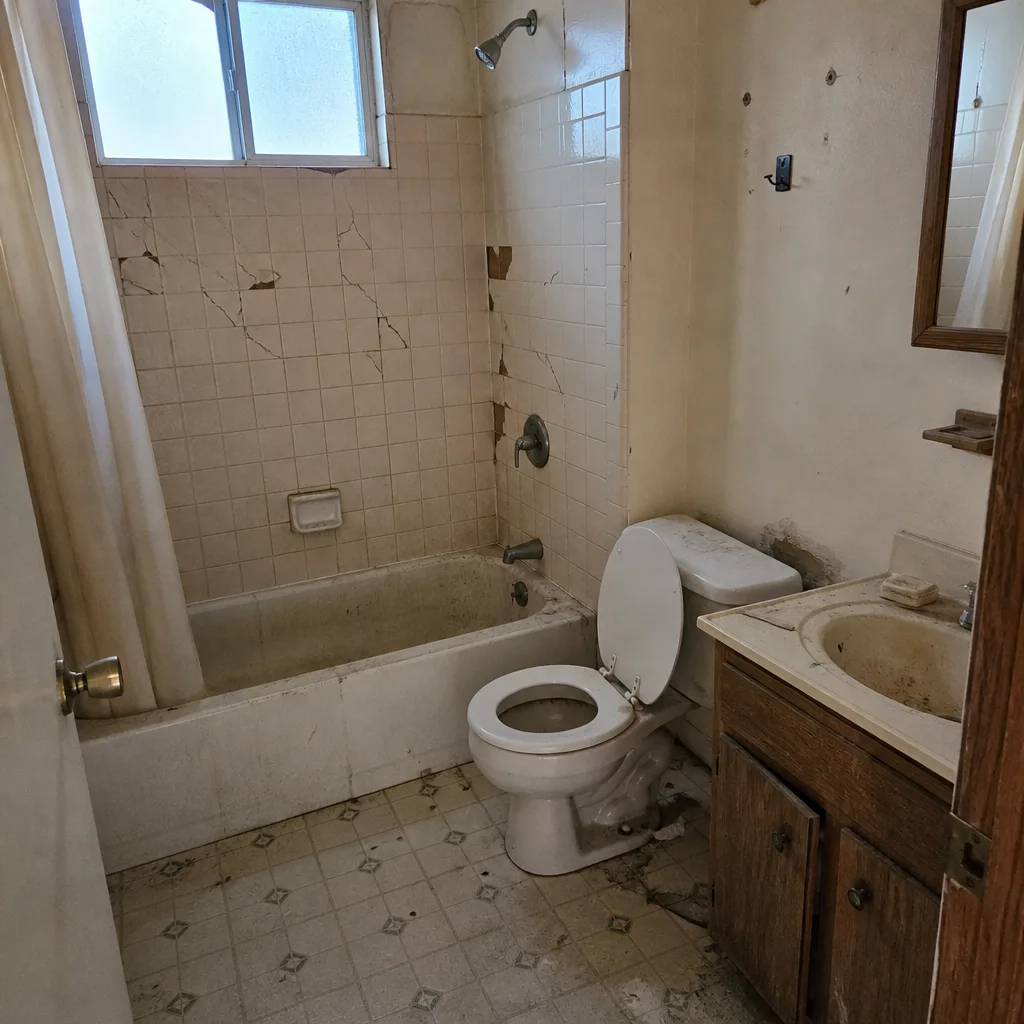 Before
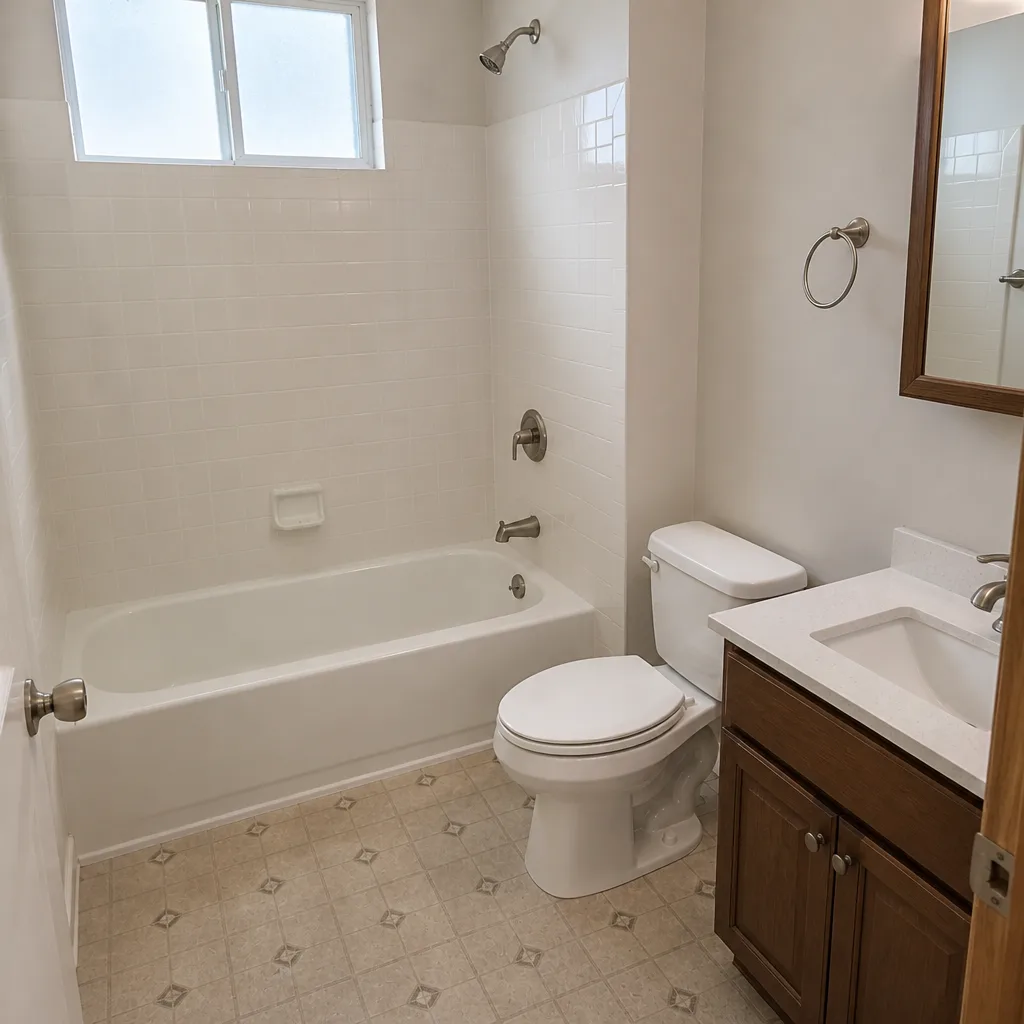 After
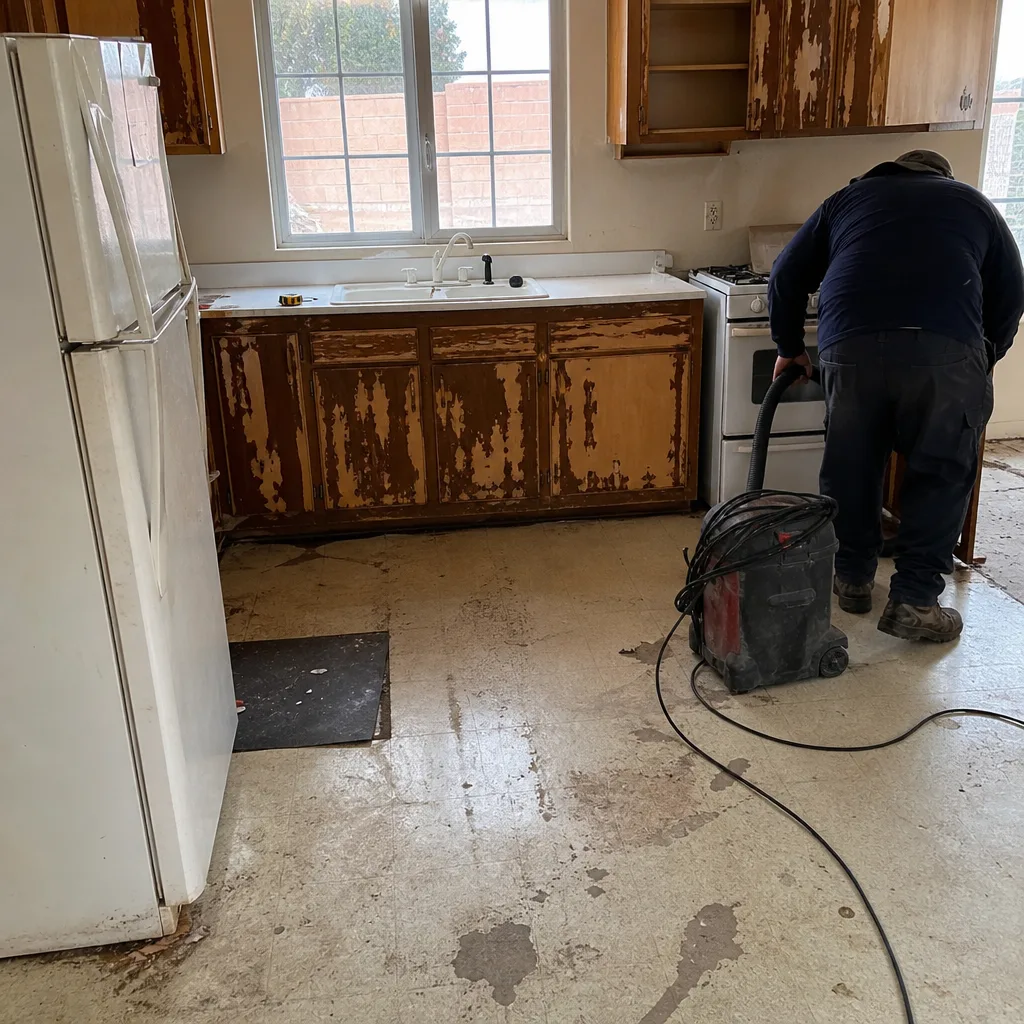 Before
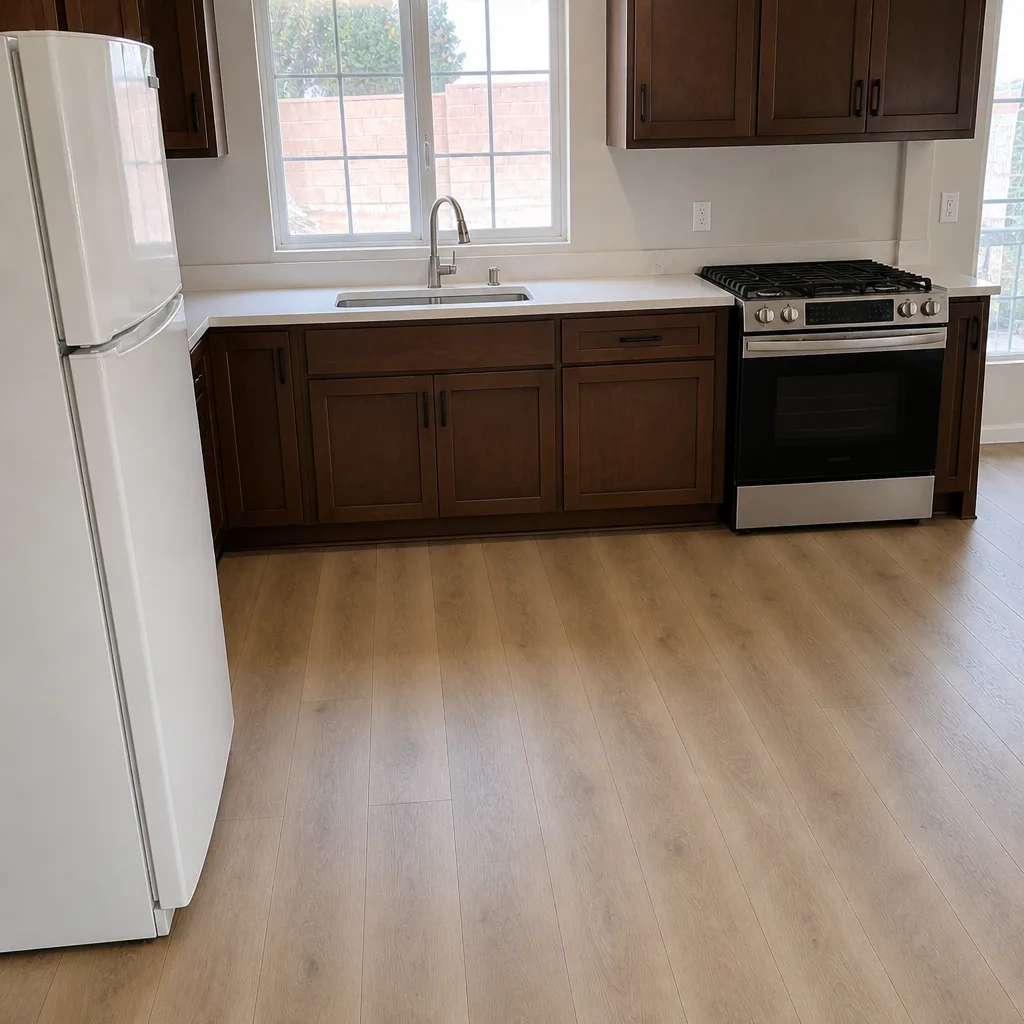 After
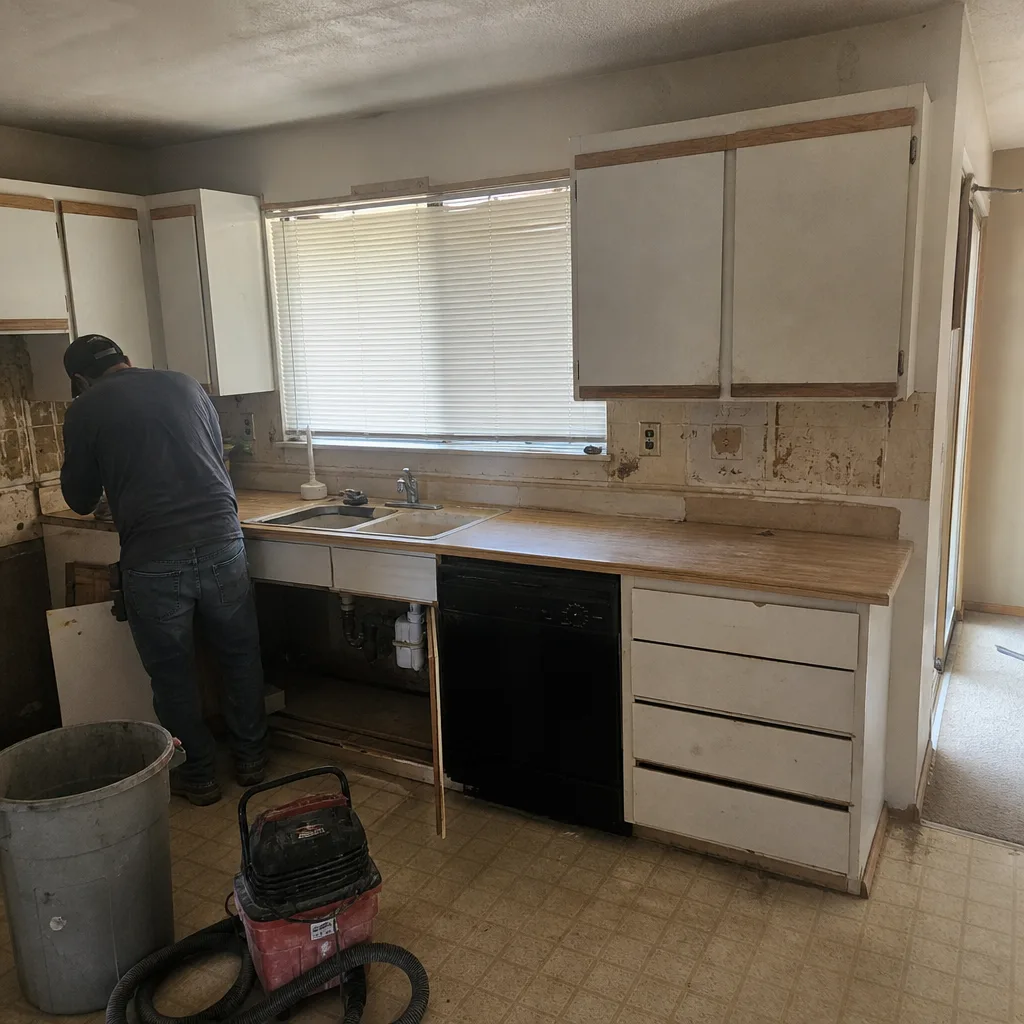 Before
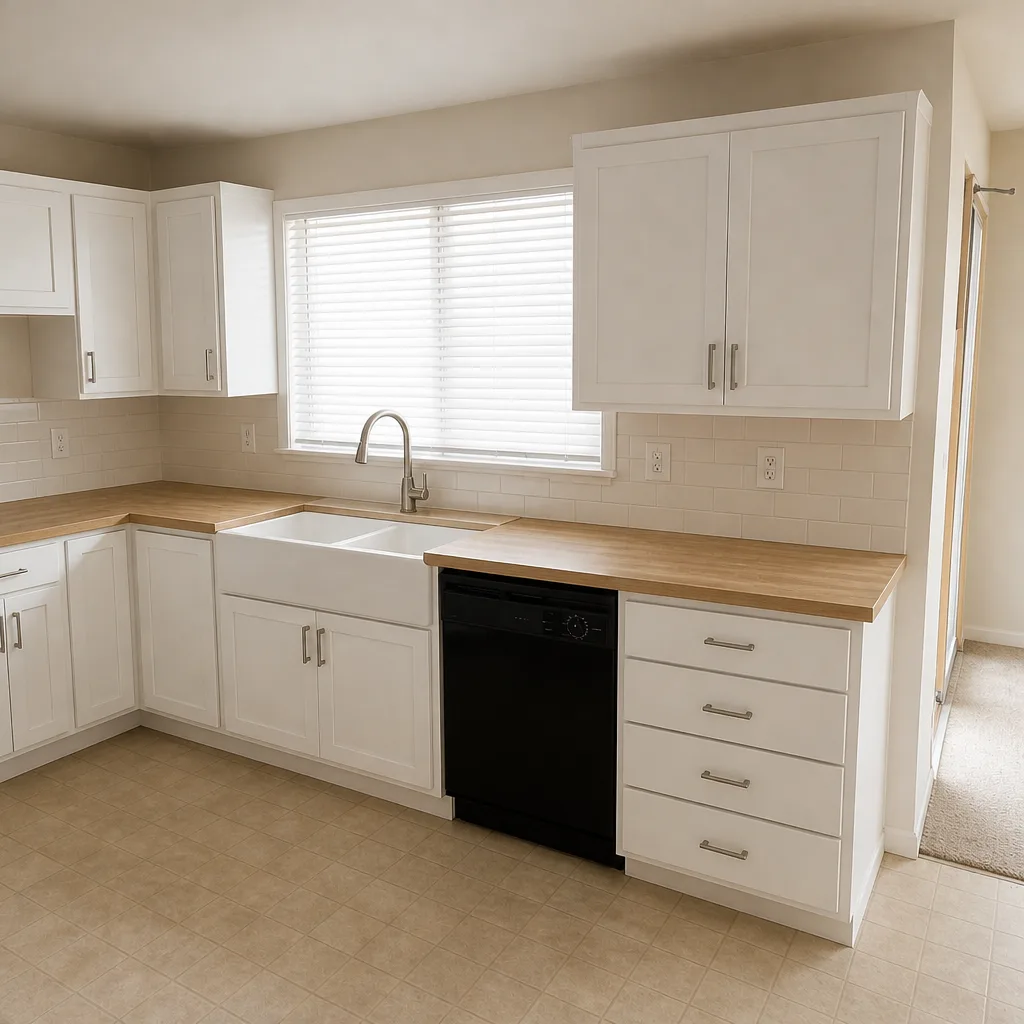 After
When to Call a Professional
Some bathroom work is DIY-friendly: swapping a vanity top, replacing a faucet, painting. But certain parts of a Boulder City bathroom remodel are genuinely dangerous or code-sensitive enough to require a licensed pro. Shower pan waterproofing has to be right the first time, because a pan failure takes out the ceiling below and costs more to fix than the original install. Any plumbing rough-in change triggers a permit and an inspection that a licensed plumber needs to pull and pass. Electrical work in a wet room is regulated for real reasons, and a moisture-related fire risk isn’t something to learn on YouTube. And any gas work for a bathroom heater or a tankless water heater needs a licensed professional, full stop. When you’re ready to plan the work, Groundwork Construction Co. of Boulder City offers free estimates in Boulder City. Call (888) 282-1693, and a real person will pick up.
Frequently Asked Questions
A full bathroom renovation in Boulder City typically runs $18,000 to $45,000 for a standard bath, and $28,000 to $55,000 for a primary bath with a walk-in shower. Expect 10 to 15 percent above comparable Las Vegas pricing because the local subcontractor pool is smaller and materials ship in from Las Vegas suppliers. Call (888) 282-1693 for an exact quote – estimates are free.
Yes, if the work touches plumbing rough-in, electrical circuits, or framing. Cosmetic-only work like replacing a vanity top or repainting doesn’t require one. Swapping a like-for-like fixture in the same location typically doesn’t trigger a permit, but moving a drain line, adding a circuit, or installing a new exhaust fan where none existed does. The Boulder City building department will issue permits for the plumber and electrician separately from the general contractor.
Plan for six to eight weeks from demolition to final inspection for a full gut renovation. The Boulder City building department’s inspection windows typically run three to five business days each, and a bathroom triggers three to five inspections depending on scope. A cosmetic refresh without plumbing changes can finish in two to three weeks.
Boulder City’s water is sourced from Lake Mead and tests above 300 mg/L hardness, which means heavy calcium and magnesium content. That water doesn’t just look bad on fixtures; it etches chrome, clogs low-flow showerheads, and degrades cement grout sealer at an accelerated rate. Choosing PVD finishes, epoxy grout, and a point-of-use shower filter dramatically extends the life of everything in the room.
Standard industry guidance of 1 CFM per square foot isn’t enough in Boulder City. Summer ambient temperatures around 115°F and tight building envelopes mean a 50-square-foot bathroom needs at least 110 CFM, and a primary bath with a walk-in shower needs 130 to 150 CFM. Put the fan on a 20-minute timer so it keeps running after the shower ends, and make sure the door has an inch of undercut for makeup air.
Not if the scope doesn’t change. We give written line-item estimates with upfront pricing, so the number on the estimate is the number you pay unless you choose to change scope or upgrade a material during the project. Change orders are priced in writing before any work happens. Call (888) 282-1693 for a free estimate and a line-item bid you can actually compare.
The Bottom Line
Bathroom remodeling in Boulder City isn’t the same job it is in most of the country. Hard water above 300 mg/L drives material choices, summer heat and tight envelopes drive ventilation requirements, and a smaller local subcontractor pool drives cost and scheduling. The three decisions that matter most are tile and grout selection (epoxy grout is non-negotiable), ventilation (110 to 150 CFM on a timer), and whether the layout changes (keeping it saves thousands). Get those three right, hire a contractor who quotes line items and warranties workmanship in years, and the bathroom lasts decades instead of years. When you’re ready to plan the work, call Groundwork Construction Co. of Boulder City at (888) 282-1693 for a free estimate. Live people answer around the clock, background-checked technicians do the work, and every project is covered by the 730-Day Done Right Promise. From foundation to finish line, we build it to last and back it in writing.
Written by the team at Groundwork Construction Co. of Boulder City.