Last updated November 18, 2026


Free written scope consultation - allowances, timeline, and change-order rules on paper before a single trade is scheduled
Driveway & Pavers Maintenance Checklist for Boulder City Homeowners
Caliche is the reason your neighbor’s pavers look like a frozen lake after five summers while a driveway in a wetter climate would still sit perfectly flat. That calcium carbonate layer under Boulder City soil hardens like concrete, sheds water poorly, and lets fine dust shift beneath the bedding sand until individual units rock, chip, and settle at odd angles. Layer on 110°F summers, mineral-heavy municipal water, and monsoon runoff funneling off steep lots, and you get a failure pattern most driveway guides never mention because they were written for Ohio. This guide gives you a season-by-season maintenance protocol built for the Mojave and the specific conditions your Boulder City driveway actually faces.
Quick Answer
Driveway paver maintenance in Boulder City comes down to four jobs done on a recurring schedule: refill joint sand before summer, verify drainage and re-level settled areas after monsoon season, remove mineral haze and efflorescence from hard water, and reseal on a two-to-three year cycle using a UV-stable product rated for sustained temperatures above 105°F. Homeowners who follow this calendar typically get 20+ years from concrete pavers; those who skip it can see joint failure and caliche-related settlement within five to seven years.
Styles & brands we work with
- Kitchen remodeling
- Bathroom remodeling
- Home additions & ADU
- Roofing
- Windows & doors
- Driveway & pavers
- Fence
Table of Contents
- Why Caliche Changes Everything About Paver Maintenance in Boulder City
- The Season-by-Season Maintenance Calendar
- Post-Monsoon Inspection Checklist
- Joint Sand and Sealer for 105°F+ UV Exposure
- Removing Efflorescence and Hard-Water Mineral Deposits
- What Protects Your Installer Warranty and What Voids It
- Paver Material Choices That Survive the Mojave
- What Maintenance and Repair Cost in Boulder City
Why Caliche Changes Everything About Paver Maintenance in Boulder City
Caliche is a naturally cemented layer of calcium carbonate that forms just below the topsoil in much of the Mojave, and Boulder City sits right on top of it. When it rains, water drains poorly through that layer rather than soaking down. The water sheens across the caliche, finds any thin spot in the base aggregate, and softens the bedding sand beneath your pavers. A few wet seasons of that and units start rocking.
The second effect is thermal. Caliche and the clay-heavy soil above it expand slightly when wet and contract hard when dry. Boulder City gets some of both in the same month. That flexing pumps fine silt upward through the joint sand (installers call it “pumping”), which widens joints and speeds settlement. In cooler, wetter climates, that cycle is slow and gentle. Here it’s fast.
Three signs tell you caliche is moving your driveway:
- Uniformly rocking pavers in a cluster or strip rather than one random unit – settlement is happening beneath them, not just under one stone.
- Fine tan or gray powder surfacing out of the joints after a rain – that’s pumping.
- A “puddle map” that stays the same after every storm – the pavers have dropped in a pattern, and water keeps finding those low spots.
If your subgrade wasn’t properly prepared with a minimum base of compacted aggregate over a stabilized caliche layer, no amount of joint sand refill will fix the rocking. In our experience, correcting a failing caliche subgrade means pulling the affected field, re-grading, and re-setting the pavers over properly compacted material. That’s real work, and it’s why the base on a Boulder City driveway matters more than the paver color or pattern ever will.
The Season-by-Season Maintenance Calendar
Boulder City’s seasons aren’t the textbook four. Think of the year as: winter (cool, occasional frost), spring (short, dry, windy), summer (brutal heat, dry), and monsoon (July through September). Here’s the calendar we walk our own clients through:
Winter (December-February)
- Walk the driveway after each cold snap. Boulder City gets overnight lows near freezing occasionally, and any trapped moisture in joints can lift a paver edge.
- Rinse salt, sand, and winter grit off with a hose and clear water. Do not pressure-wash with an aggressive nozzle during cold months.
- Check all drainage channels and the transitions to landscape beds. Clean leaf litter and wind-blown debris before spring winds arrive.
Spring (March-May)
- Refill joint sand in any area that lost depth over winter. Aim for joints filled to just below the paver’s chamfer, never proud of the surface.
- Inspect for the first signs of efflorescence (whitish haze). Catch it early and it lifts in a single treatment.
- Schedule a deep-clean and sealer evaluation before the sun turns brutal. Sealer cures best during fresh spring weather with low humidity.
Summer (June-August)
- Skip aggressive pressure washing. The combination of 105°F+ surface temperatures and high-pressure water accelerates surface degradation.
- Spot-check any paver showing discoloration or “sunburn” – prolonged UV exposure can fade low-quality sealers but actual paver surface is generally UV-stable if it was a quality product to begin with.
- Watch for microlifting on pavers in full sun while adjacent shaded pavers stay stable. That’s thermal expansion and a sign your joint sand is depleted.
Monsoon (July-September)
- Inspect after every significant rain event using the checklist below.
- Check the transition between the driveway and garage floor. Water pooling there is a warning sign of grade failure.
- Note any puddle that holds water longer than 24 hours after rain stops. That’s a drainage issue, not a cosmetic concern.
Fall (October-November)
- Re-seal if it’s been two to three years. Fall weather in Boulder City is nearly ideal curing weather.
- Fill any sunken joints, re-sand the whole field, and re-inspect for caliche pumping that happened over summer.
Post-Monsoon Inspection Checklist
Boulder City’s monsoon season moves fast and drops heavy rain in short bursts. Because the surrounding lots are often sloped and much of the residential soil sheds rather than absorbs, water dumps onto hard surfaces quickly. Every driveway at the bottom of a slope needs a serious post-storm look. Here’s the checklist we use:
- Walk the entire perimeter and look for erosion trenches along the edge of the pavers, especially on sloped driveways. A trench means water is being channeled where it shouldn’t be.
- Mark puddles with painter’s tape if they linger longer than 24 hours. Come back out the next day and measure how much the water dropped.
- Check paver heights at the same three or four reference points every time, using a string line or straightedge. Any deflection over 1/8 inch from the last measurement means something moved.
- Inspect joint sand depth along the downslope side of your driveway and any low-flow channels. Water scours the joints first there.
- Look at the transitions to garage floors, walkways, and landscape beds. Water finding its way underneath any of those edges is the first sign of underlying settlement.
- Photograph everything. Date-stamped photos of any new damage become essential backup if you need warranty work or need to file an insurance claim.
- Clear the drainage channels at the ends of your driveway and any French drains. A clogged channel turns a minor overflow into a paver-lifting flood.
One common pattern we see on elevated lots in Boulder City: the driveway pitch is fine but the transition to the street has been paved “flush” over the years. Water can’t escape, and you get a constant shallow puddle at the bottom. That’s a design correction, not a maintenance item.
Joint Sand and Sealer for 105°F+ UV Exposure
Joint sand does most of the invisible structural work on a paver driveway. It locks the pavers into the field, keeps them from shifting under tire rotation, and blocks the fine dust that starts the caliche pumping cycle. In Boulder City, that joint sand has to be re-topped at least once a year, more on driveways exposed to full sun and constant traffic.
Not every sand works here. A few things matter:
- Polymeric sand vs. regular sand. Polymeric sand sets harder and resists scour far better than plain sand, which is why most quality installers use it. If your driveway was built with plain sand, you can upgrade to polymeric on the next refill once the joints are completely clean.
- Joint width matters. Products rated for widths over 1 inch won’t perform well in tight joints; check the bag specs against your actual joint dimensions.
- UV stability. This is the one homeowners overlook. Regular polymeric sand can haze, crack, or cloud under sustained UV exposure above 105°F. Look for a UV-stable formulation explicitly rated for high-temperature exposure, and confirm it on the manufacturer’s data sheet rather than the front of the bag.
- Activation water. Most polymeric sands activate with a light misting, not a soaking. Follow the manufacturer exactly. Over-watering is the number one reason a polymeric joint fails in the first year.
Sealer sits on top of the sand and protects both the surface and the joint. On a Boulder City driveway, you need a penetrating sealer, not a film-forming one. Film-forming sealers can yellow, crack, or delaminate under high UV and thermal cycling here; penetrating sealers saturate the pores without leaving a coat to fail. Solvent-based penetrating sealers penetrate better and tend to last longer in the southern Nevada heat, while water-based options are easier to apply and less hazardous to the plant beds around the driveway.
Expect to reseal every two to three years on a fully sun-exposed Boulder City driveway. Test the surface by dripping water onto it – if it beads and holds for 30 seconds, the sealer is still working. If it absorbs within 10 seconds, it’s time.
Removing Efflorescence and Hard-Water Mineral Deposits
Boulder City’s municipal water carries a lot of dissolved minerals. Every time you hose the driveway, you leave behind a fine calcium film once the water evaporates. Over a summer, that film builds into visible white haze. Efflorescence is related but different – it’s the natural migration of salts from within the pavers and subgrade to the surface as the material cycles wet-to-dry. Both mysteries get worse in Boulder City’s dry heat and both are fixable.
Here’s the process:
- Dry-brush first. A stiff push broom removes surface salt and grit without soaking the pavers.
- Wet the pavers first with clean water before applying any cleaner. Pre-wetting keeps the cleaner from absorbing too deeply into the paver and reducing its effectiveness.
- Apply a diluted efflorescence remover (usually a mild acidic cleaner, per manufacturer instructions – check the product is safe for your specific paver material). Never use pool acid or muriatic acid on concrete pavers; it damages the surface.
- Scrub with a soft-bristle brush and let it dwell for the product’s stated time.
- Rinse thoroughly with clean water, using a fan nozzle, not a high-pressure jet.
- Rinse again the next day – residual cleaner left to dry will itself form mineral haze.
One note specific to Boulder City: if your driveway water runoff is draining toward landscape beds, don’t use harsh cleaners on those edges. Better to spot-clean with clear water and let the sun do the work than to kill an expensive desert planting in the process.
If efflorescence keeps returning within weeks of every cleaning, the source is moisture coming from below. That’s a caliche drainage issue and it needs a real fix, not another round of cleaner.
What Protects Your Installer Warranty and What Voids It
Most paver warranties contain more exclusions than most homeowners realize, and the biggest exclusion is maintenance. Knowing what protects coverage and what kills it matters more than the fine print itself. Here’s the split we see most often:
Tasks that protect your warranty
- Keeping a written maintenance log with dates, products used, and before/after photos. Every year, each task logged is one more boundary the manufacturer can’t dispute.
- Using approved joint sand and sealer that the installer or manufacturer recommends. If you use an off-brand sealer and the surface fails, the warranty will not cover it.
- Scheduling annual or biennial professional inspections. Documented inspections are the single strongest warranty-protection action you can take.
- Prompt reporting of any issue. A hairline joint failure reported within 60 days is a warranty fix; the same crack after two winters is a maintenance issue.
Tasks that void or curtail warranty
- High-pressure washing over an overly aggressive nozzle. Pressure above 1,500 PSI at close range strips sealer, blasts joint sand, and voids most surface warranties.
- Driving heavy equipment or loaded trucks onto residential pavers. Standard residential pavers are rated for passenger vehicles, not dumpsters or box trucks. One delivery vehicle can permanently damage a section not designed for it.
- Applying acid or corrosive cleaners. Muriatic acid, pool acid, and many aggressive de-scalers chemically etch paver surfaces.
- Re-sealing over uncured or dirty pavers. Locks in moisture and dirt, accelerates surface failure.
- Removing or resetting pavers yourself. Any DIY re-set of failing pavers without installer documentation usually voids the structural coverage of the affected area.
The one action that matters most: document everything. Keep a spreadsheet or a notebook. Every sealer application date, every refill, every inspection. If a failure appears inside your warranty window and you have a clean maintenance record, the claim is straightforward. If you don’t, you’re arguing about whether the sealer failure was your fault or the installer’s.
If you’re unsure what your original install warranty covers, ask before you do anything to the driveway. Our team at Groundwork Construction Co. of Boulder City walks through warranty terms with homeowners before we touch a paver, and we can tell you what to document going forward even if we didn’t do the original install.
Paver Material Choices That Survive the Mojave
The material your driveway is built from determines how much maintenance it needs. Here’s how the main options hold up in Boulder City specifically:
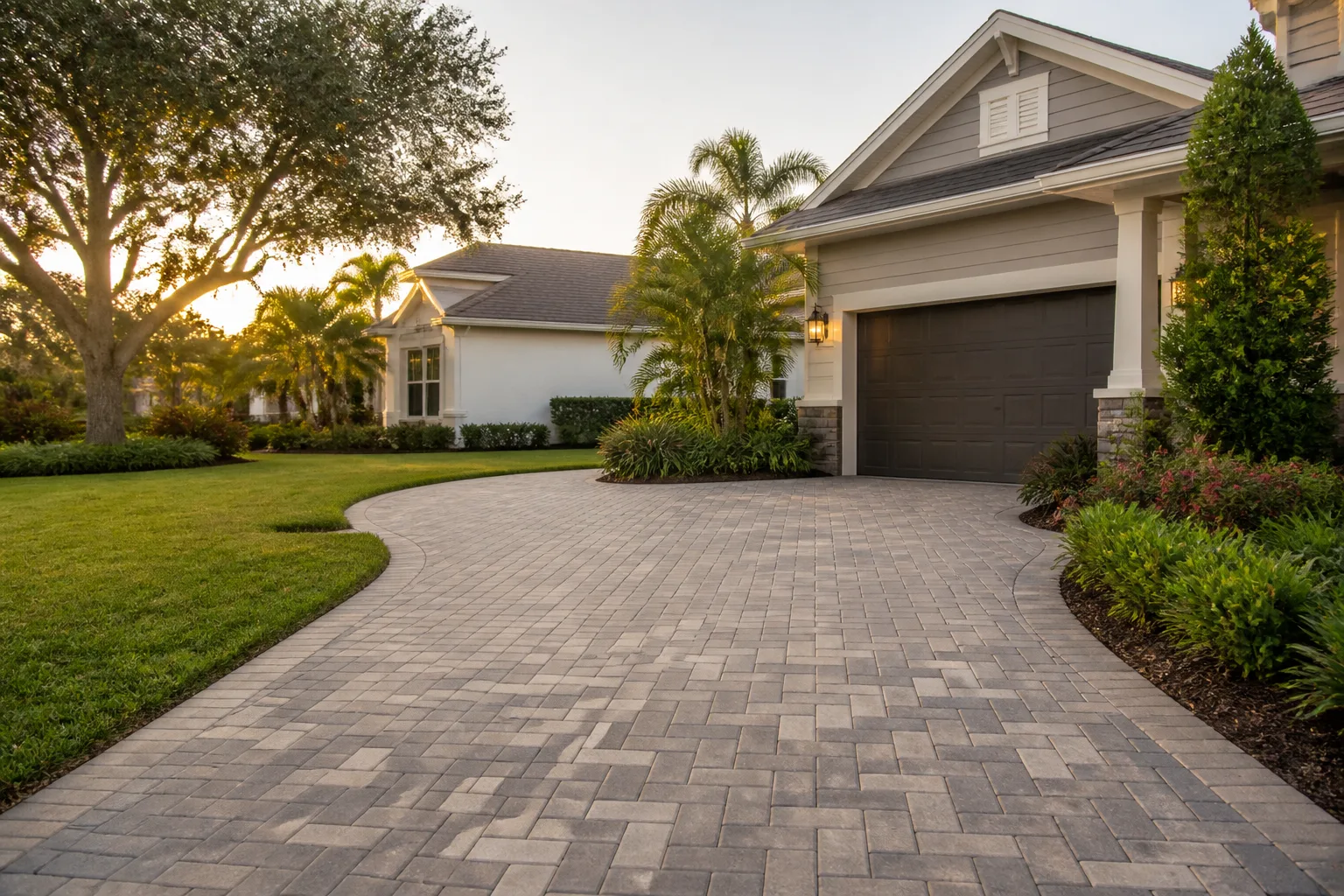
- Concrete pavers. The workhorse of the Mojave. Rated up to 8,000+ PSI for heavy traffic, UV-stable, and available in a wide range of colors and textures. Quality brands from Belgard and other premium suppliers are engineered for extreme-temperature climates like ours. Expect 20-30 years of life with proper maintenance.
- Clay brick pavers. Beautiful, but you need to confirm the specific product is rated for freeze-thaw and high heat. Some clay brick made for wetter climates cracks in Boulder City’s thermal swings. When the brick is right, it’s durable and distinctive.
- Natural stone. Travertine and granite pavers look fantastic, but some softer natural stones don’t survive the summer surface temperatures and hard water. If you go natural stone, don’t skip the sealer.
- Permeable pavers. Worth serious consideration on sloped Boulder City lots where runoff is a problem. They let water pass through instead of sheeting off, which is kind to the caliche subgrade below.
- Stamped concrete. Looks like pavers, behaves differently. Less expensive upfront, generally less repairable – when a stamped concrete driveway fails, you typically replace a slab, not a paver.
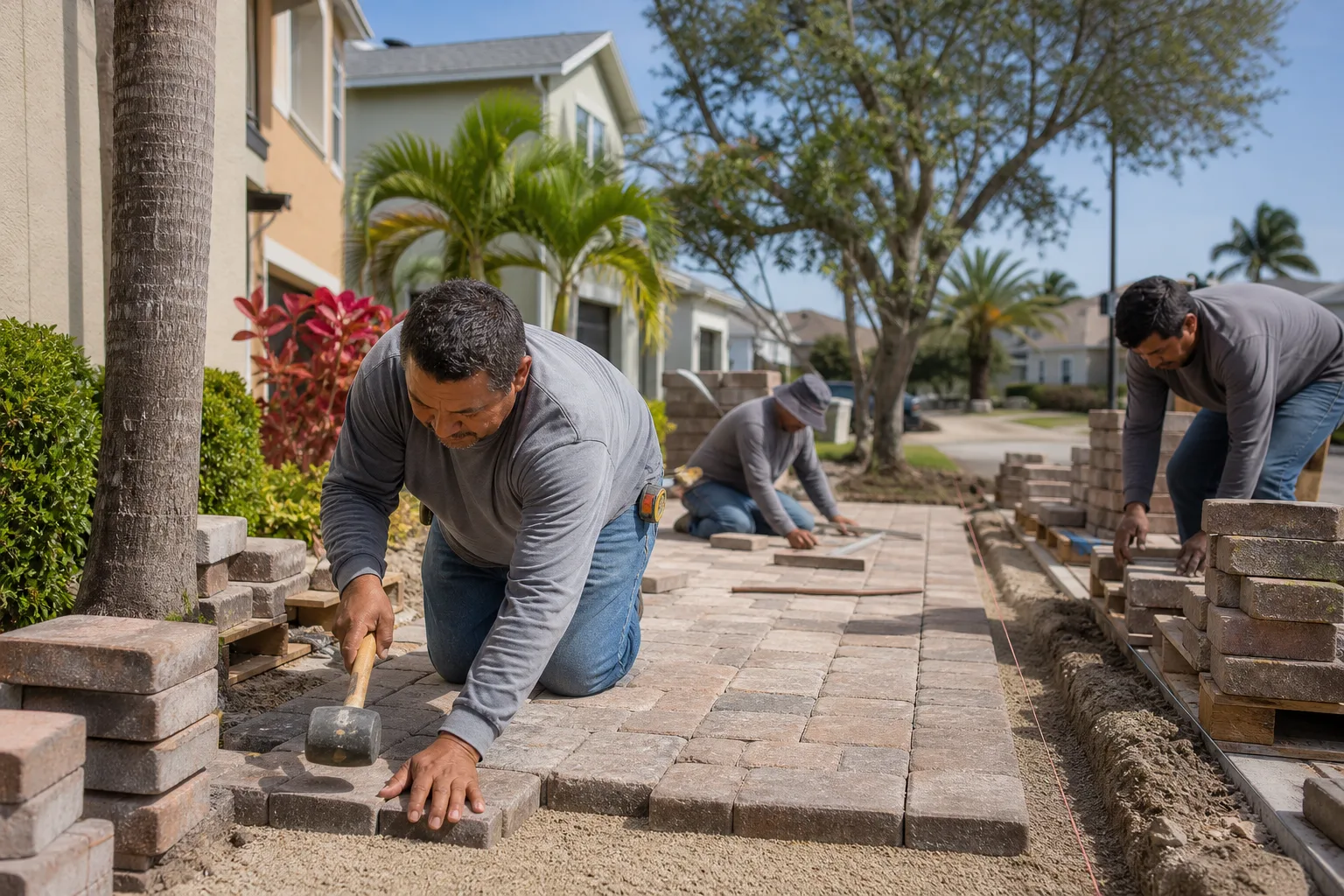
For homes where pavers tie into broader hardscape work – walkways, drive approaches, patios – the same material range applies. Our Driveway & Pavers in Boulder City service handles everything from a single paver driveway to full property hardscape. Homeowners planning bigger builds often pair a new driveway with fence and gate work – that’s covered in our Fence Installation in Boulder City guide – or with a detached garage or casita that ties into the driveway design. That last piece falls under Home Additions & ADU in Boulder City, and it’s one of the projects our team builds from foundation to finish line.
The brand partners we work with matter here. Roofs and exterior construction overlap with paver work, and the same standards apply – GAF and CertainTeed shingle systems under a house that sits beside a properly built paver driveway is the kind of full-property consistency that holds up over decades. The best paver brand on the market does nothing if the base under it was built to a Florida standard on Mojave soil.
What Maintenance and Repair Cost in Boulder City
Boulder City paver maintenance pricing is fairly consistent, and knowing the ballpark before you call saves time. Here’s what typical work runs at the time of writing:
- Joint sand refill (full driveway): $300-$600 for a standard two-car driveway, more for larger lots.
- Full clean, re-sand, and reseal: $900-$1,800 for a two-to-three car driveway.
- Efflorescence removal and hard-water treatment: $250-$500 per visit.
- Spot repair of settled pavers (up to 20 square feet): $350-$700 including re-leveling and re-sanding.
- Section re-lay over failed caliche subgrade: $15-$30 per square foot – this is where poorly prepared base installations get expensive.
- Full new paver driveway installation: $12-$22 per square foot, which for a 600-square-foot driveway lands around $7,200-$13,200.
Two factors move the number most: how much caliche work is under the driveway (which only becomes visible when a section is opened), and whether the driveway is fully sun-exposed. Full-sun driveways need more frequent sealer and joint care than shaded ones. Homeowners planning a full replacement rather than repair should factor in the current promotions – Groundwork Construction Co. of Boulder City offers a free project estimate and design consult, $1,000 off projects over $10,000, and 0% financing for 18 months on qualifying work.
For a full cost breakdown on new installations, the Driveway & Pavers page linked above goes deeper. For maintenance, the main thing to know is that the annual cost of proper maintenance ($500-$1,500 depending on driveway size) is a fraction of the cost of re-doing a failed install.
Common Mistakes to Avoid
- Pressure washing too hard. A 3,000+ PSI pressure washer at close range strips sealer and blasts out joint sand in a single pass. Boulder City homeowners who do this “to keep the driveway clean” usually create a repair that costs more than the cleaning.
- Using pool acid or muriatic acid to clean hard-water haze. It etches the paver surface and destroys sealer. The right product for hard-water minerals is a dedicated paver cleaner, not the pool chemicals already in the garage.
- Skipping joint sand refill because the pavers “still look fine.” Joint sand is invisible structural work. Skipping it lets pavers rock on caliche, and caliche-driven settlement doesn’t show up until the pavers are already failing.
- Applying a film-forming sealer. Looks great for six months, then yellows and peels under Boulder City’s UV load. Penetrating sealer only.
- Ignoring the drainage channel at the bottom of the driveway. A clogged channel is a slow-motion paver lift. This is the single most common avoidable failure on sloped Boulder City lots.
- Never taking photos. Homeowners who need warranty work without dated photos usually lose the claim. A 30-second job done twice a year.
- Assuming all pavers handle desert heat. Cheap import pavers and low-heat-rated natural stone crack here when they’d hold fine in coastal climates. Always confirm the specific product’s heat and freeze-thaw rating before it goes in.
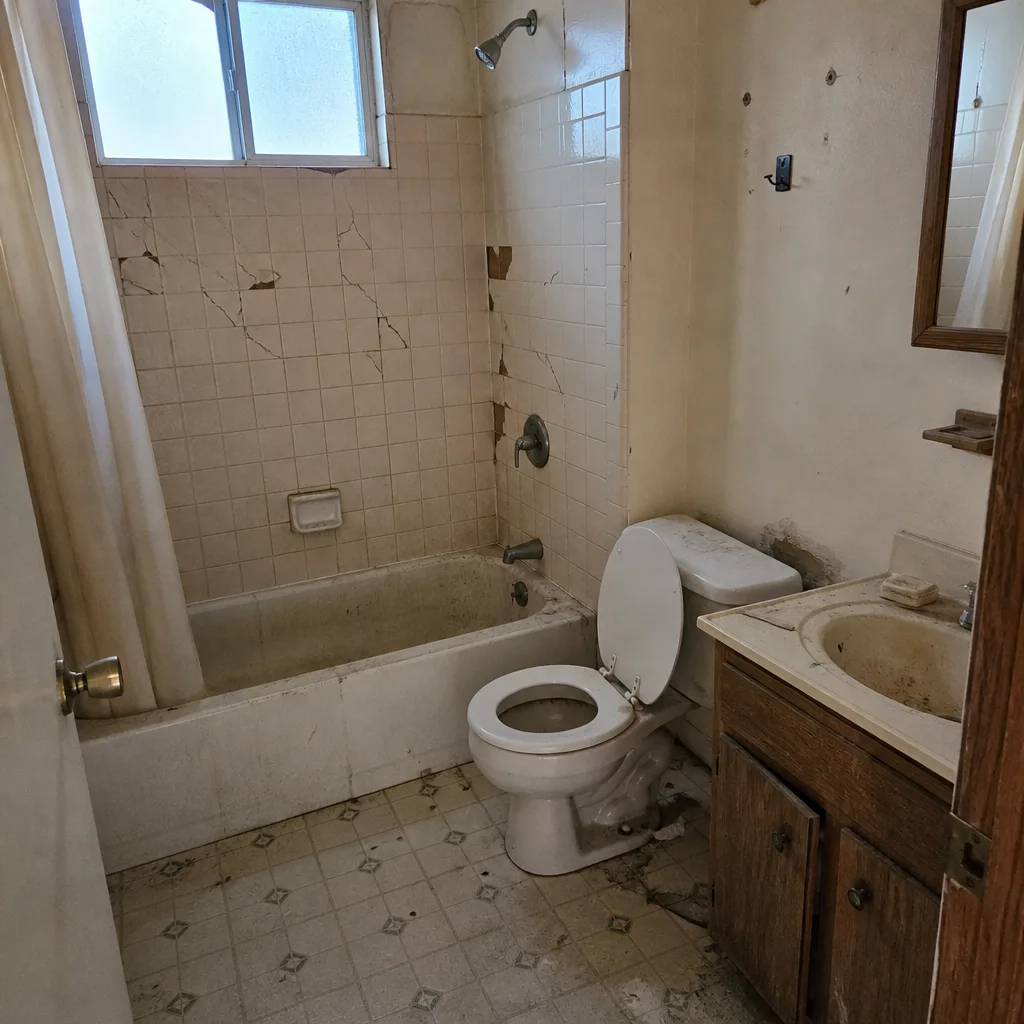
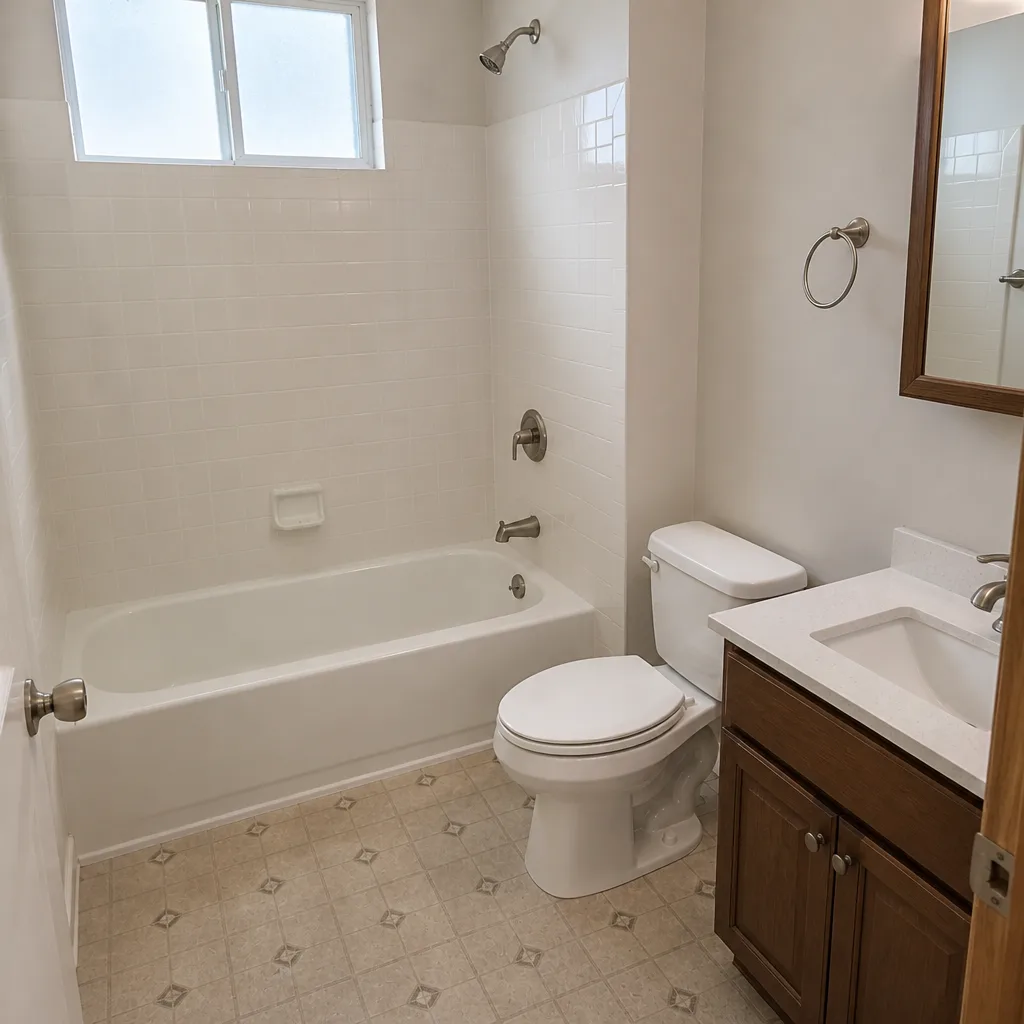
See the difference
 Before
 After
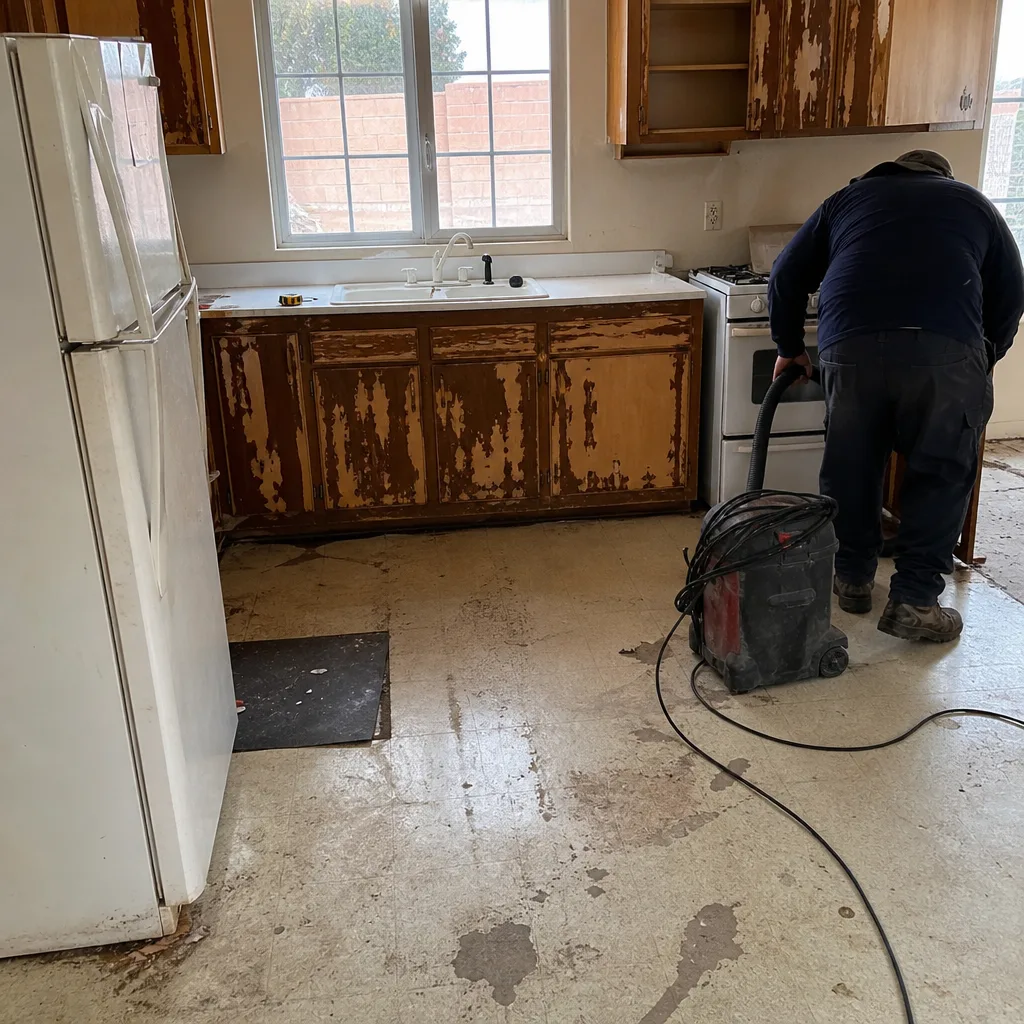 Before
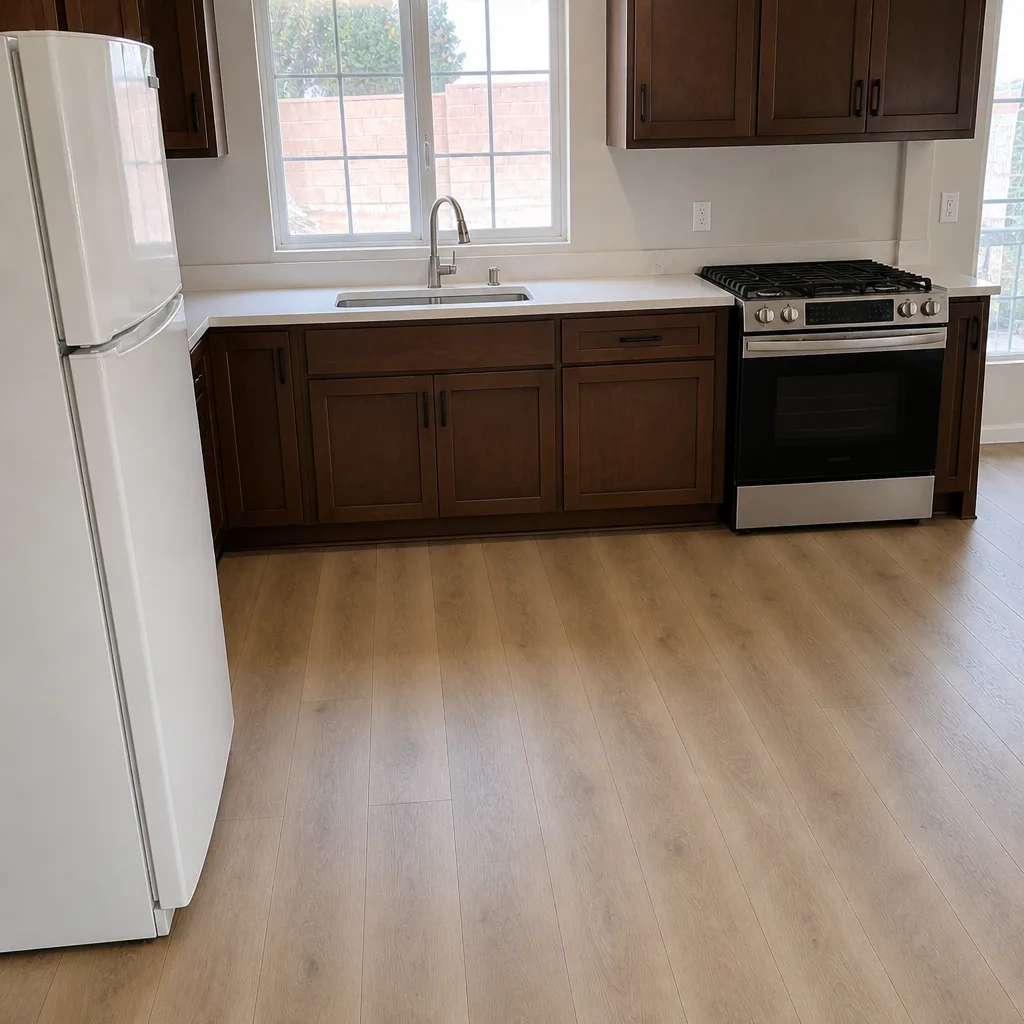 After
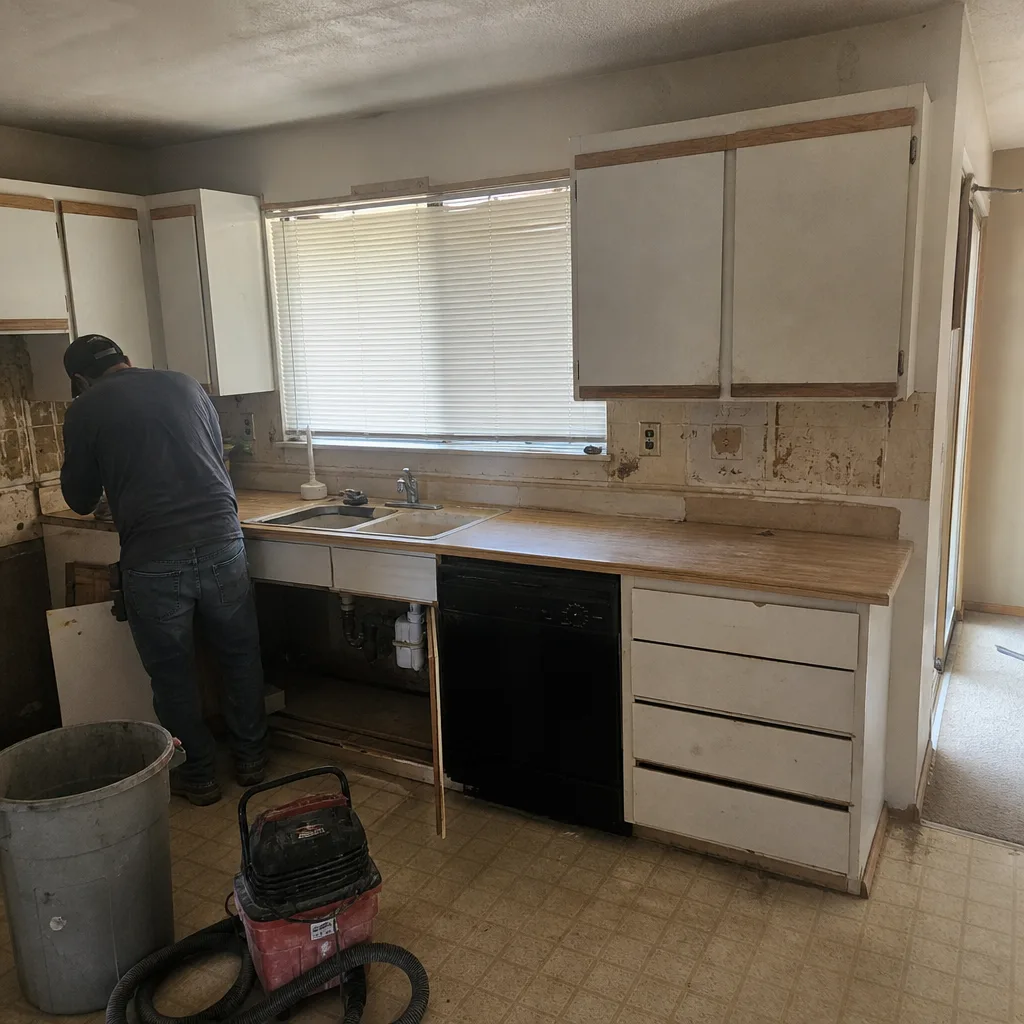 Before
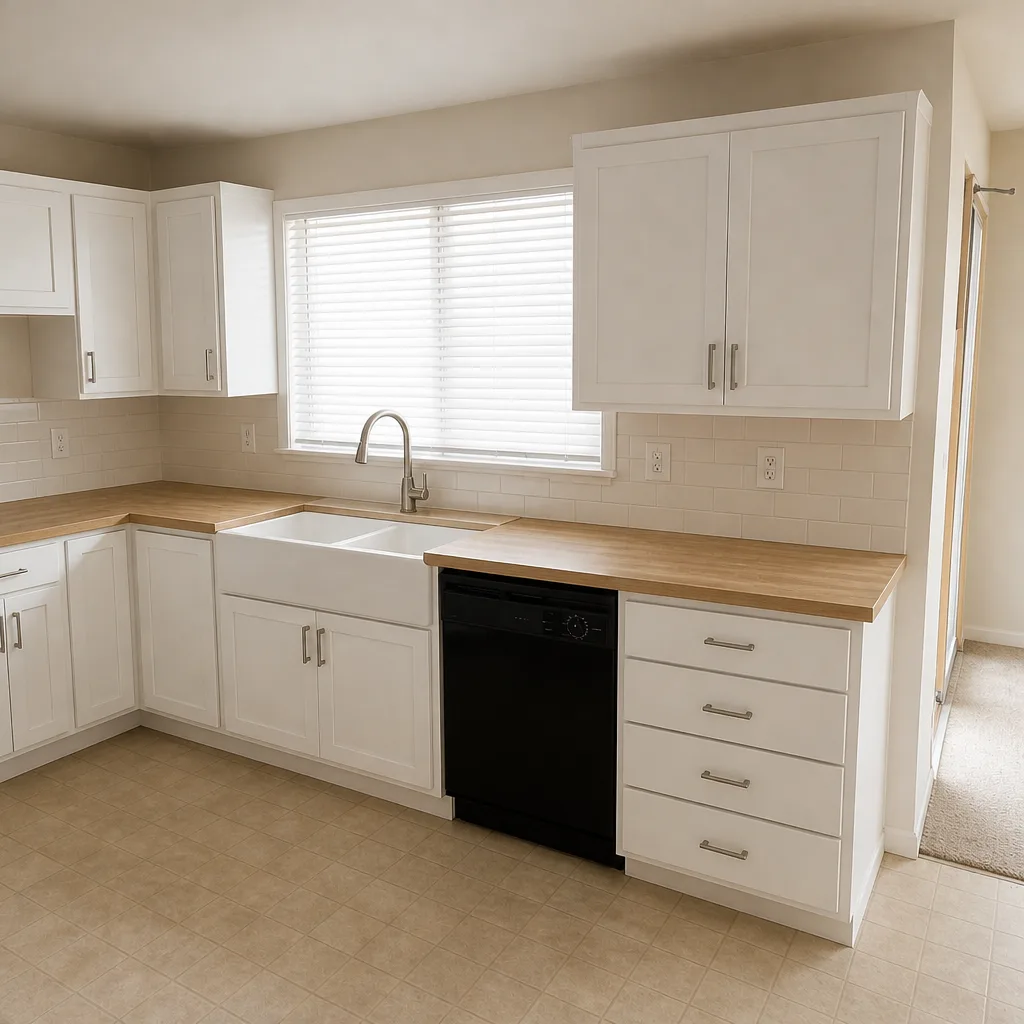 After
When to Call a Professional
Most maintenance tasks – joint sand refill, sealer, cleaning, post-storm inspection – are within reach for a confident homeowner with a few tools. But there are real scenarios where DIY turns an affordable fix into an expensive repair. Call a professional when: multiple pavers in a cluster are rocking or appear to have sunk more than an eighth inch; water pools and stays more than 24 hours after rain; efflorescence keeps returning within weeks of every cleaning; a drainage correction is needed at the driveway-to-street transition; or you’re planning to re-set any section of the driveway, because an improperly reset section over failed caliche will fail again within a year. Those are structural issues that need eyes on the subgrade. Groundwork Construction Co. of Boulder City offers free estimates in Boulder City – call (888) 282-1693, and a live person picks up 24/7. Every estimate is upfront pricing, no surprises, with the line items written out. And every project we complete is backed in writing by our 730-Day Done Right Promise – if it’s not done right, we make it right.
Frequently Asked Questions
Every two to three years on a fully sun-exposed driveway, and every three to four years on a shaded one. Test the surface by dripping water on it – if it beads for 30 seconds or longer, the sealer is still working; if it absorbs within 10 seconds, it’s time. The dry, UV-heavy climate in Boulder City breaks down sealers faster than wetter climates, so don’t stretch past the three-year mark without checking.
The most common cause in Boulder City is caliche subgrade behavior – either the base wasn’t properly stabilized during installation, or the driveway sits at a low point on the lot where monsoon runoff concentrates. Both identify as “settlement,” but only one is fixed with maintenance. If a section has dropped more than an eighth inch, it’s a subgrade issue and needs a professional look. Call (888) 282-1693 for a free estimate.
You can, but not at high pressure and never close to the pavers. Keep the pressure under 1,500 PSI, use a fan tip at least 12 inches from the surface, and never aim directly into the joints. High-pressure washing strips sealer and blows out joint sand, which is a warranty voiding action on most installations. For most cleaning jobs, a hose, a stiff broom, and a quality paver cleaner do the job safely.
Two possible causes in Boulder City: hard-water mineral deposits from the tap water used to rinse, or efflorescence – salts migrating up from within the pavers and subgrade. Hard-water haze lifts with a dedicated paver cleaner in one treatment. Efflorescence that keeps coming back within weeks means moisture is getting into the paver field from below, usually a drainage issue. Call (888) 282-1693 if it returns twice in a season.
Quality concrete pavers handle 110°F surface temperatures without damage. Sealer is the weak point. Solar UV degrades some sealers faster at this latitude and heat load, which is why UV-stable penetrating sealers rated for high-temperature exposure are the right choice for a Boulder City driveway. Using the wrong sealer is the most common maintenance mistake we see – a $200 sealer bill becomes a $2,000 re-do when it fails.
Yes, most driveway installations or major reconstructions that change the driveway footprint or the connection to a public street require a permit from the City of Boulder City. Minor maintenance like re-sanding and re-sealing does not. A licensed contractor pulls the permits and handles inspection on any structural work. Our team pulls permits on all project scopes that require them and walks the inspection process through to completion.
The Bottom Line
Boulder City isn’t a temperate-climate city, and your driveway maintenance schedule shouldn’t be either. Caliche subgrade, 110°F summers, fast monsoon runoff, and hard municipal water all combine to break pavers in patterns standard checklists ignore. Follow the season-by-season calendar: refill joint sand in spring, verify drainage after every monsoon storm, clean mineral haze with the right products instead of acid, and reseal every two to three years with a UV-stable penetrating product rated for sustained high heat. Document every task. Then a 20-year driveway actually stays a 20-year driveway instead of becoming a five-year repair bill. And when a structural issue shows up – cluster settlement, recurring efflorescence, drainage failure – call the pros rather than patch over a subgrade problem that will return.
Ready to get an honest read on your driveway? Call Groundwork Construction Co. of Boulder City at (888) 282-1693 for a free estimate. Our phones are answered by a live person 24/7, our technicians arrive in uniform and background-checked, and every project we do is backed in writing by our 730-Day Done Right Promise. Whether you’re re-sanding an existing paver driveway or planning a full replacement, the number we quote is the number you pay – upfront, no surprises.
Written by the team at Groundwork Construction Co. of Boulder City.