Last updated November 18, 2026




Free written scope consultation - allowances, timeline, and change-order rules on paper before a single trade is scheduled
Driveway & Pavers Warning Signs Every Homeowner Should Know
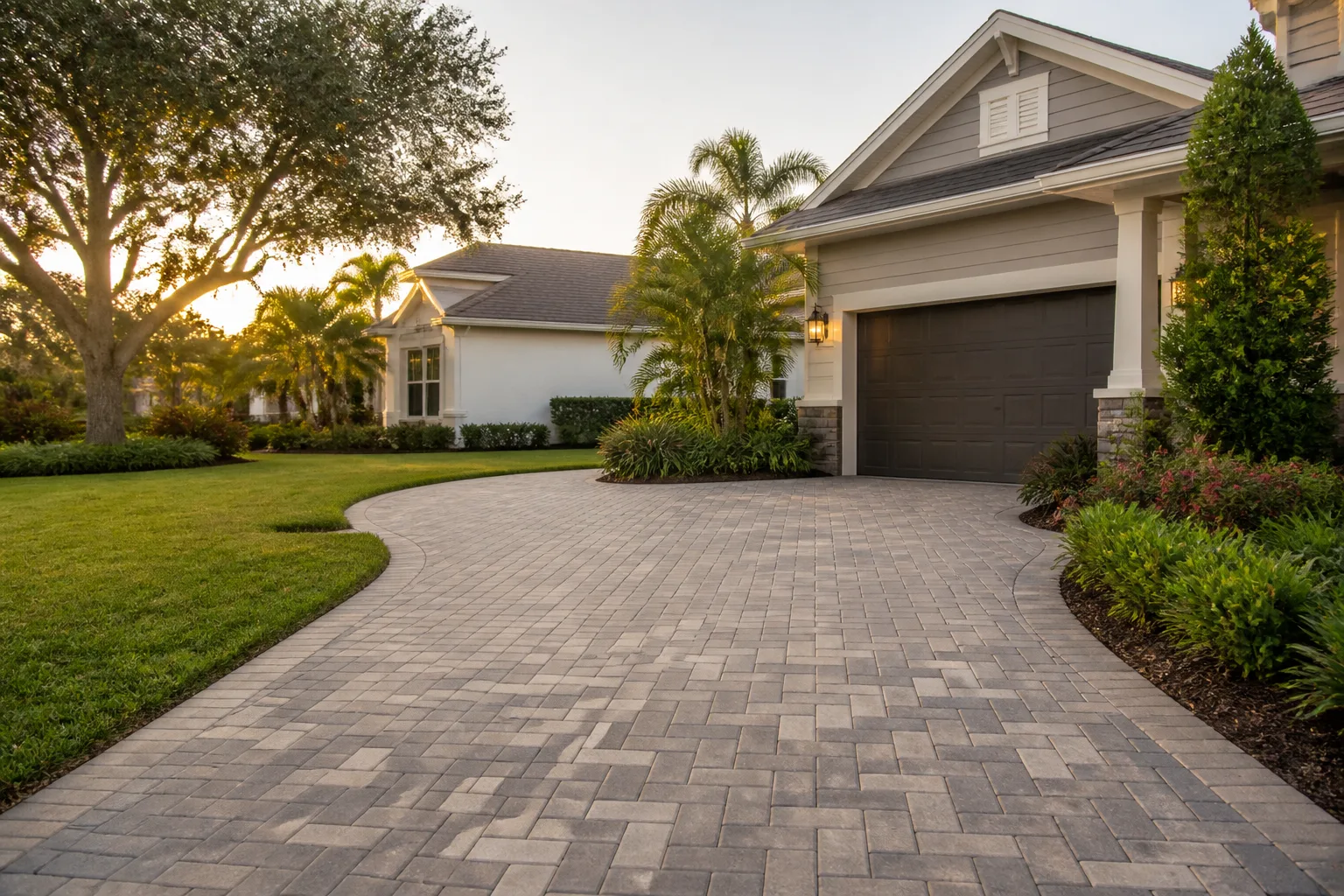
By the time you see a sunken section in your paver driveway, you’ve already missed the three earlier warning signs that could have fixed the problem for $200 instead of $2,000. That’s the hard truth we’ve learned from watching pavers fail across Boulder City neighborhoods, where intense sun, monsoon rain, and shifting desert soils put constant pressure on the materials under your feet. The dramatic crack or obvious dip that finally makes a homeowner call is almost always the last symptom of a problem that started months before. In this guide, we’ll show you the subtle geometric changes, water patterns, and surface clues that reveal base or drainage failure while repair is still straightforward and cheap.
Quick Answer
Most paver driveway failures announce themselves weeks before any visible sinking: pattern drift (joints spreading wider than a 1/8-inch), standing water that lingers in the same low spot after every rain, and edge restraint movement at the border row. If you catch these early, repair often costs a few hundred dollars. Wait for a sunken section, and you’re looking at base reconstruction that can run $15-$30 per square foot or more.
Styles & brands we work with
- Kitchen remodeling
- Bathroom remodeling
- Home additions & ADU
- Roofing
- Windows & doors
- Driveway & pavers
- Fence
Table of Contents
- Pattern Drift: The First Warning Sign Nobody Notices
- What Standing Water After Rain Reveals About Your Base
- Efflorescence vs. Active Water Infiltration
- Edge Restraint Failure: Check the Border Row Quarterly
- Desert-Specific Warning Signs: Sand Channels, UV Cracks, and Weed Roots
- How to Inspect Your Driveway Step by Step
- When Repair Is Cheap vs. When It’s Expensive
- Common Mistakes to Avoid
Pattern Drift: The First Warning Sign Nobody Notices
Pattern drift is the slow spreading of pavers away from their tight, original layout. The pavers don’t sink. They slide sideways. Joints that were once a uniform 1/8-inch widen to 1/4-inch, then 3/8-inch, then half an inch. Most homeowners look right past it because the surface still looks flat and the driveway still works. The geometry is telling you the base has started to lose its grip.
Here’s the test. Lay a four-foot straightedge (a level works too) across the joints you suspect. Then check the gaps between pavers in that same area. The gap size tells you how urgent the problem is:
- 1/8-inch to 3/16-inch gaps: Normal and stable. Joint sand is doing its job.
- 1/4-inch gaps in one or two spots: Early drift. Usually a localized base issue or a single shifted paver. Fixable with a spot re-set.
- 3/8-inch gaps along a row or across several pavers: Active drift. The base is moving and joint sand is escaping into voids underneath. Repair now, not later.
- Half-inch or wider, especially if joints feel loose or hollow when tapped: Base failure is underway. The pavers are being pushed apart by water or softened supporting material.
We’ve seen this pattern repeatedly in Boulder City, where the dramatic day-to-night temperature swing causes base material to expand and contract more than homeowners expect. On a paver driveway installed along a western-facing slope, that daily cycle alone can produce visible drift within two or three years if the base wasn’t properly compacted and drained. If you don’t know where to look, a drifted driveway in Boulder City can pass visual inspection right up until the day the first paver drops.
What Standing Water After Rain Reveals About Your Base
Standing water is your driveway’s confession. It tells you exactly where the base has stopped draining properly, even when every paver is still sitting level and tight. When we evaluate a paver driveway, the first thing we look at isn’t the pavers. It’s where the water goes.
Walk your driveway after any significant rain and note the wet spots. The Boulder City monsoon season (roughly July through September) is the best time to do this inventory because the volume of water exposes problems that a hose test can miss. Here’s what different water patterns mean:
- Water pooling along the perimeter: Drainage slope has dipped or the edge restraint has settled. The perimeter is the lowest point in the system and the first place base compaction fails.
- Water pooling in the center of the driveway: Base consolidation underneath. The pavers are still in place, but the base has compacted in one spot and created a shallow bowl.
- Water that sheet-flows toward the garage or the street instead of away from it: The overall slope is wrong. This is almost always a construction problem rather than a wear problem, and it’s the single most expensive drainage issue to correct because it can mean removing and re-grading the whole driveway.
- Water that lingers 24 to 48 hours after the rain stops: Base material under the bedding layer is now a drainage problem. Slow-draining sand and fines are clogging the void structure the driveway needs to release water quickly.
Pattern drift plus one persistent low spot is a two-signal confirmation. That combination tells us the base is failing in that area, and the only way the paver stability will recover is by rebuilding that section of base – not by adding sand over the top. Top-dressing sand hides the problem for a month and then the water returns.
Efflorescence vs. Active Water Infiltration
White mineral deposits on pavers are common in Boulder City, where our water carries dissolved salts that wick up through the surface and dry into a chalky film. That film is called efflorescence. Most of the time, it’s cosmetic. It appears most often on new pavers in their first year, or after a heavy rain cycle, and it fades with time. You can brush it off and it stays gone for a while.
Active water infiltration looks different. Not in color, but in pattern and persistence.
- Cosmetic efflorescence: A uniform whitish haze across a wide area, especially after installation or after a wet spring. Reappears lightly after rains but doesn’t concentrate around specific joints.
- Active infiltration deposits: White deposits that concentrate along a limited stretch of joints, in a band, or in a line following the low side of the driveway. They appear quickly after each rain and never really go away, because water is continuously moving through the joint and pushing dissolved material up. The bed sand is dissolving and being carried to the surface.
That concentrated deposit pattern is a sign that water is reaching the bedding layer and moving through it. The pavers aren’t failing yet, but the bedding sand is being washed out of the joints. Small voids are forming underneath. Once those voids widen enough, the pavers will settle. If you see white bloom concentrating along a single joint line or in a streak following the driveway’s low edge, treat it as an active warning sign, not a cosmetic nuisance.
Cleaning the white off with an acid wash is a mistake at this stage. It removes the evidence while the base problem keeps growing underneath. If you want to know whether the bloom is harmless, wait for the next rain and see whether the pattern comes back in the same place within 72 hours.
Edge Restraint Failure: Check the Border Row Quarterly
Edge restraint is the hidden structure that keeps the outer row of pavers from spreading outward under load. It’s usually a buried concrete curb, a plastic edge product like those from Belgard or Unilock, or a metal restraint pinned into the base. When it fails, the border pavers can drift outward, opening up the entire pattern behind them. That makes edge restraint failure the highest-leverage warning sign on this list to catch early, because a border row drift can spread across the whole driveway in a single season.
The test takes 60 seconds per side and should happen every quarter:
- Stand at one corner of the driveway and sight down the outer edge of pavers. Do they form a straight line? A gentle sway is normal. A visible outward bow or bulge is not.
- Press down on each border paver with your foot. Any rock or tip is a problem. Pavers on a proper bed don’t move underfoot.
- Look at the joint between the border row and the next row in. If the gap is wider at the edge than at the interior, the restraint is losing grip.
- Examine the visible edge restraint (where it’s not buried). A restraint lifting, tilted, or separated from the paver is on its way out.
We’ve seen entire driveways in Boulder City where the edge restraint at the street cut failed silently over one summer and pushed the outer row of pavers nearly two inches outward by the next spring. The repair would have been a spot fix on a couple of curb pins in March. By June, it was a full border-row rebuild with base work underneath. The border row is where your paver driveway does most of its structural work.
Desert-Specific Warning Signs: Sand Channels, UV Cracks, and Weed Roots
Pavers in Boulder City live under conditions most manufacturers’ warranty literature doesn’t fully account for. Almost no rain for most of the year, then sudden monsoon bursts, then the long hard sun that drives surface temperatures over 150 degrees on some summer afternoons. That environment produces three failure modes you won’t see on a wetter climate’s warning-sign checklist.
Sand loss channels from ant activity
Harvester ants and other desert species excavate channels through the joint sand to reach the cooler bedding layer underneath. A small ant hole in a joint looks harmless. A line of them does not. When you see a linear run of ant activity along a joint or two – a “sand channel” – that joint has been hollowed out. The joint sand is gone, rain will go straight down into the cavity, and the base will start to settle. Watch for fine soil mounds next to joints after any warm, dry stretch. If the mound reappears within a week of being swept away, the ants have an established channel and the joint needs to be re-sanded with a stabilized polymeric product.
UV-induced sealer cracking
Sealers protect paver surfaces from UV damage and slow water infiltration. But in Boulder City, sealers break down faster than they do in most of the country. When a sealer fails, it cracks in a fine web pattern across the surface. It looks cosmetic. It isn’t. Those cracks are the first channels for water to reach the joint sand and then the bedding layer, which is exactly what drives base erosion. Any paver sealer on a Boulder City driveway should be inspected annually. If you can feel a cracked, scaly texture running your fingers across the surface, that sealer has already opened the door.
Weed root pressure on joint integrity
Weeds growing between pavers aren’t just an eyesore. Their roots push outward into the joint sand and the smaller void spaces in the base, and each successive wet season widens those channels. The most dangerous weeds are the tough, deep-rooted species that thrive in desert heat – purslane and spurge in particular. Yanking the weed above ground doesn’t kill the root pressure. The joint sand stays displaced, the base gets more exposed to water, and a persistent weed cluster becomes a drainage problem in miniature. If you’re pulling the same weed out of the same joint every spring, treat the joint and re-sand it after removal rather than just yanking the top off. If you want a broader look at how pavers and hardscaping fit together with the rest of your exterior, see our Driveway & Pavers in Boulder City service page.
How to Inspect Your Driveway Step by Step
A full self-inspection takes about 30 minutes. Do it once in spring after the last cold snap and once in late fall before the winter rains. Bring a four-foot straightedge (or a level), a tape measure, and a phone to photograph anything that looks off. Photos are the best way to detect slow drift, because the changes year over year are too gradual to remember.
- Sight down each long edge of the driveway. Look for any outward bow of the border row and any visible drift.
- Pick five areas at random and set the straightedge across the pavers. Any gap between the straightedge and pavers under 1/4-inch is normal. Anything 3/8-inch or more is settlement to flag.
- Walk every square foot and listen. A hollow or rattling sound, or any paver that rocks slightly underfoot, means the base isn’t holding.
- Measure the joint width in five locations. Any joint consistently wider than 3/8-inch is active drift.
- Pour a bucket of water slowly across the high point of the driveway. Note the path and any spots where water slows and pools. A driveway that drains well will shed water off within about 30 seconds of each pour.
- Inspect the edge restraint and border row visually and with foot pressure. Anything moving is an urgent problem.
- Do a weed and ant check across the whole surface. Look for mounds, holes in joints, or recurring weed clusters in the same spot.
- Photograph and date everything. Take the same photos every season to detect drift you can’t see in a single glance.
When Repair Is Cheap vs. When It’s Expensive
This is the section most homeowners care about, so we’ll be straight with you. The whole point of catching warning signs early is that cost jumps sharply once the base is actively failing. Here’s how the numbers usually run for a paver driveway problem in the Boulder City area. These are typical ranges; every driveway is different and an on-site look is the only way to be sure.
| Problem Stage | Typical Trigger | Typical Repair Scope | Typical Cost Range |
|---|---|---|---|
| Early drift, no settlement | Joints opened to 1/4 inch in isolated spots | Re-sand, spot reset of a few pavers, joint stabilization | $200-$500 |
| Active drift, minor settlement | 3/8-inch joints, one or two sunken paver clusters, edge moving | Rebuild a section of base, reset pavers, re-seat edge restraint | $600-$1,500 |
| Established base failure | Visible depression, hollow pavers, pooling water | Remove and rebuild a section of driveway base and drainage | $1,500-$4,000 |
| Full reconstruction | Widespread settlement, failed drainage slope, edge gone | Full tear-out, re-grade, rebuild base and edge, reinstall pavers | $5,000-$15,000+ |
The gap between the first row and the last row is why this guide exists. A joint that’s 1/4-inch wide today can be a base failure in 18 months if the water path goes unchecked through it. During the design consult on a new paver driveway, we always walk the homeowner through drainage slope and edge restraint specification before we talk about paver style. Those two things decide whether the driveway’s warning signs stay cosmetic or turn structural.
On a new installation, we specify edge restraint and base compaction as carefully as we specify the paver itself. We work with Belgard and Unilock products regularly in Boulder City – both have specific edge restraint systems that pair well with our desert climate. If you’re considering an upgrade or a full replacement, we recommend investigating the Groundwork Construction Co. of Boulder City home overview so you can see how an exterior project connects to the rest of the home’s design.
Common Mistakes to Avoid
- Treating drift as a sanding problem. Adding joint sand over drifting pavers hides the symptom. The base underneath is still moving. Two months later the sand is gone and the joints are wider than before.
- Pressure washing the driveway to “clean it up.” High-pressure washing blasts out joint sand and stabilizes the wash-out pattern. It’s the fastest way to accelerate base failure. Use low pressure and stabilized joint sand instead.
- Acid washing over active efflorescence. Acid removes the visible bloom without addressing what’s causing it. If the deposit comes back along the same joints within a week, the acid wash told you nothing and the base problem kept growing.
- Ignoring perimeter weeds. A weed cluster along the driveway edge is a sign that joint sand is gone and water is getting in. Pull the weed, treat the joint, re-sand it, and watch for recurrence.
- Skipping the border row inspection. The border row takes the most load and is the first thing to drift. Every homeowner who skips it ends up paying for a bigger repair at the other end.
- Sealing a failing driveway. A sealer over an active drainage problem locks moisture in and makes the surface look fine while the base keeps failing. Fix the drainage first, then seal.
- Assuming Boulder City’s dry climate means no water issues. Our monsoon bursts drop a month’s worth of water in an hour. The dry summer masks the drainage problems that show up with the first big August storm.
When to Call a Professional
Call a professional when you see any single sign that crosses into active failure: joints wider than 3/8-inch, any paver you can rock underfoot, standing water that persists more than 24 hours after rain, or an edge restraint that’s visibly lifted or separated. Call sooner if two or more of these signs appear in the same area, or if you notice any sunken paver cluster, since base failure that’s already showing at the surface is not going to reverse itself with sand or sealer. Do not attempt to dig into the base below the bedding layer yourself: the pavers rest on compacted stone and sand that has to be recompacted to a specific standard, and getting it wrong makes the next repair much more expensive. Groundwork Construction Co. of Boulder City offers free estimates in Boulder City – call (888) 282-1693 to schedule a walkthrough. We’ll give you a written line-item quote on what’s actually failing and what it costs to fix it, whether that’s a spot reset or a section rebuild.
Frequently Asked Questions
Look for pattern drift first: joints wider than 3/8-inch in a specific area, any paver that rocks underfoot, and standing water in the same low spot after rain. Those three signs show up weeks to months before visible settlement. Same-day diagnostic visits are not something we promise for planned exterior work, but our free estimate on a paver problem is scheduled quickly. Call (888) 282-1693 for an inspection appointment.
Cosmetic efflorescence appears as a broad, even white haze and fades with time. Active water infiltration appears as concentrated white deposits along a specific joint line or in a streak following the driveway’s low side, and it returns within days of each rain. If the bloom comes back in the same pattern, water is moving through the base and you should get it checked. Call us for a free estimate in Boulder City.
Sight down the border row: any outward bow is a sign the restraint has lost grip. Press down on the outer pavers: any rock or tip is a problem. Boulder City’s day-night temperature swing stresses edge restraint more than most climates, so a quarterly check is worth the five minutes. If you find movement, call (888) 282-1693 for an estimate before the border row spreads its drift further in.
Sand piling up usually means the joint sand is being pushed out from under load or washed out of adjacent joints and settling at the lowest point. It almost always points to base movement in a nearby area, not a problem at the pile’s location. Have the adjacent joint line inspected before adding more sand. Call us for a free estimate.
If you have drift wider than 3/8-inch, edge movement, or recurring standing water, yes – repair now while it’s a spot fix. The whole economics of paver repairs favor early action: a $200-$500 joint stabilization today can prevent a $4,000 base rebuild later. Call (888) 282-1693 for a Boulder City estimate and a written scope.
Typically every two to three years in our climate, and the sealer needs a yearly visual inspection because the UV load in Boulder City breaks it down faster than in cooler regions. Cracked or scaly sealer is a warning sign, not just a cosmetic issue – it opens the pavers to water infiltration. Call us for a free estimate on sealing or resealing.
The Bottom Line
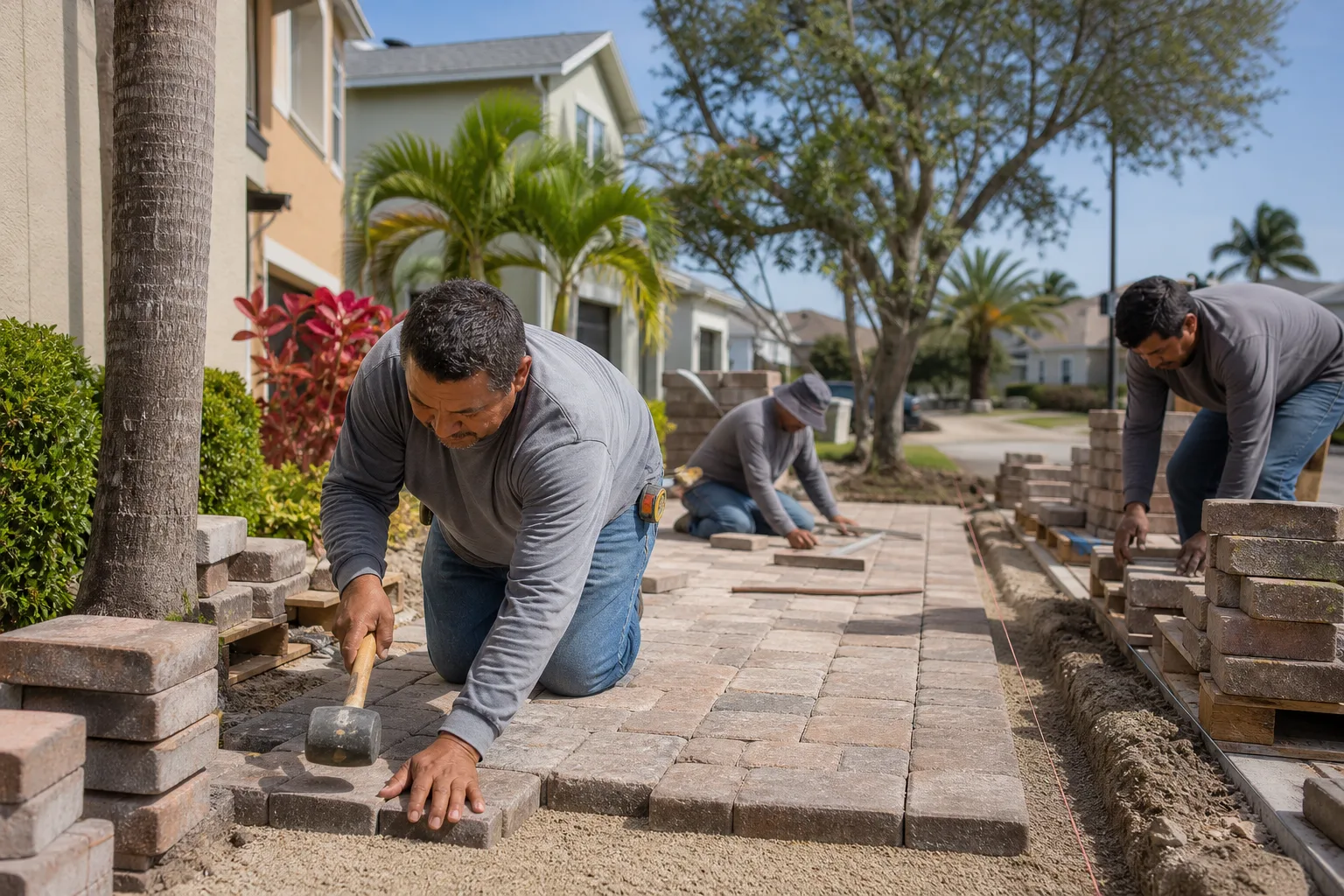
The lesson of every failed paver driveway we’ve looked at in Boulder City is the same: the expensive repair was almost always visible for months as a cheap one. Pattern drift, persistent low spots, concentrated efflorescence, edge restraint movement, and desert-specific issues like ant sand channels and UV sealer cracking are all early signals. If you inspect your driveway quarterly – border row, joint width, water path, weed and ant activity – you will catch the problem while a spot fix still costs $200 instead of $2,000. Our technicians have up to 12 years of experience reading exactly these signals, and we’ll put our findings in writing before we touch a paver. If you’re planning a broader exterior project, we handle Fence Installation in Boulder City and Home Additions & ADU in Boulder City with the same upfront pricing we bring to every paver job. Call (888) 282-1693 for a free estimate.
Ready to schedule a free estimate or design consult? Reach Groundwork Construction Co. of Boulder City at (888) 282-1693. Calls are answered by a live person 24/7, all projects are covered by our 730-Day Done Right Promise, and current promotions include 0% financing for 18 months plus $1,000 off projects over $10,000. From foundation to finish line, we build it and back it in writing.
Written by the team at Groundwork Construction Co. of Boulder City.
See the difference
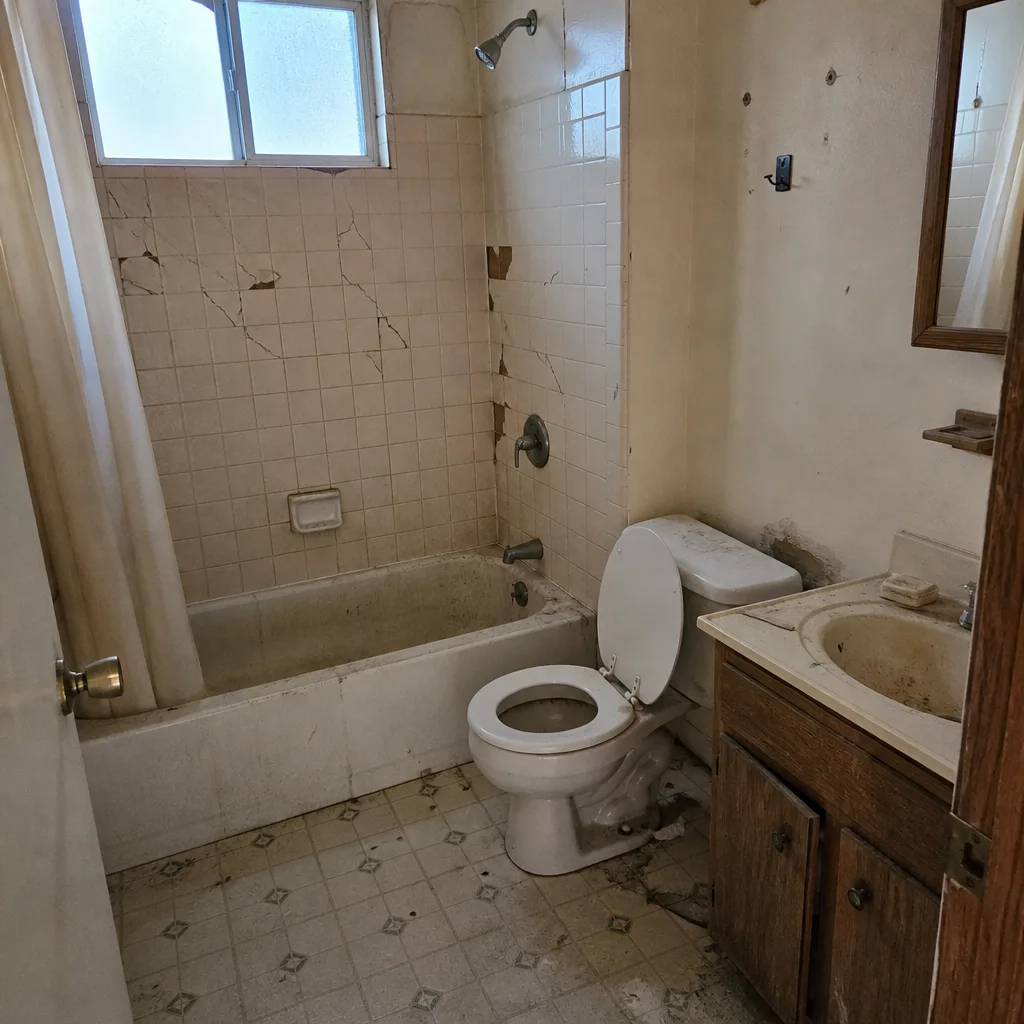 Before
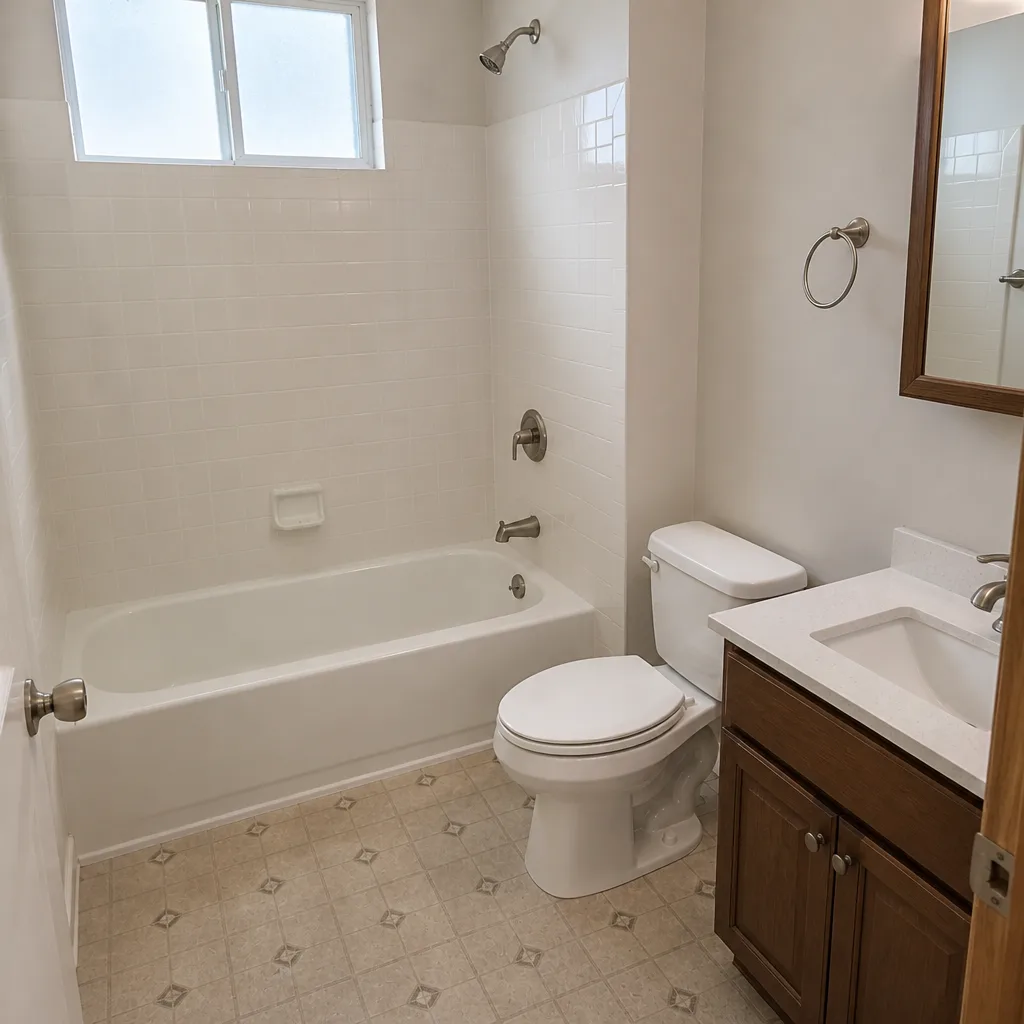 After
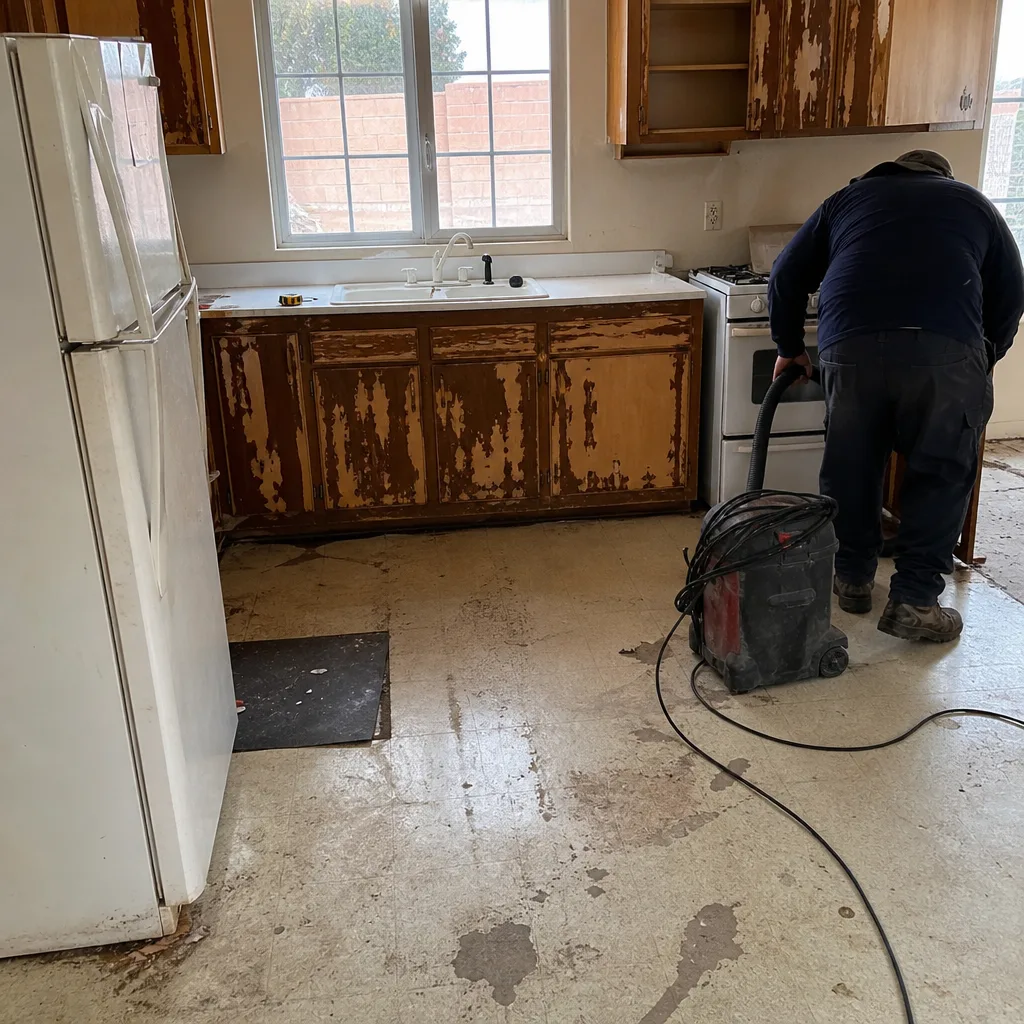 Before
 After
 Before
 After