Last updated November 18, 2026




Free written scope consultation - allowances, timeline, and change-order rules on paper before a single trade is scheduled
Fence Installation Troubleshooting: Common Problems and How to Fix Them
Most fence failures we diagnose trace back to two decisions made on day one: how deep the posts went in, and how the concrete was mixed. A leaning post in clay soil usually means the footing shifted. A leaning post in desert caliche often means it was never properly set in the first place. Those two look identical from the street and require completely different repairs. This guide walks through how to tell one from the other, plus the gate sag, board warping, and corrosion problems that show up across Boulder City. You’ll learn what you can fix and what needs to come out of the ground.
Quick Answer
Diagnose a failing fence by testing the post footing first (a soil probe tells you whether the concrete is intact or the soil has shifted), then trace gate and board problems back to their source. A leaning post with solid concrete in stable soil can often be reset; a post with shallow footing, poor concrete cure, or rotted wood has to be replaced. Desert heat and caliche cause predictable failure patterns that tell you which repair you’re facing in Boulder City.
Styles & brands we work with
- Kitchen remodeling
- Bathroom remodeling
- Home additions & ADU
- Roofing
- Windows & doors
- Driveway & pavers
- Fence
Table of Contents
- The Two Decisions That Cause Most Fence Failures
- How to Fix a Leaning Fence Post
- The Soil Probe Test: Reset vs. Replace
- Diagnosing a Sagging Gate
- Board Warping and Splitting in Desert Heat
- Wood-to-Metal Contact and Corrosion
- Concrete Cure Failures vs. Shallow Footings
- Common Mistakes to Avoid
The Two Decisions That Cause Most Fence Failures
When we open a failing fence to diagnose it, the answer almost always comes back to post depth and concrete mix. Everything downstream – a leaning gate, a warped picket, a post that walks out of the ground after a monsoon – flows from those two starting choices. Get them right and a wooden or vinyl fence holds for 20 years in Boulder City’s climate. Get them wrong and you’re patching failures within three seasons.
Post depth: The rule of thumb in most of the country is one-third of the post’s above-ground height buried below grade. In Boulder City’s caliche (that dense, cement-like layer of calcium carbonate just below the surface) a contractor who hits caliche at 18 inches often stops there because digging is slow and augers dull quickly. That post is not anchored against frost heave or the lateral wind load a 6-foot privacy fence sees during a desert gust. It will lean.
Concrete mix: The two mistakes here are too little concrete (half a bag tipped into a post hole) and concrete mixed too wet. A dry-ish mix (roughly 4 parts sand-cement to 1 part water by volume, roughly pea-gravel consistency) cures strong. A soup-thin mix poured into a dry hole pulls moisture out of the surrounding soil, cures weak, and crumbles at the base. We’ve pulled posts out of Boulder City soil where the concrete came up in chunks the size of a coffee mug.
Both decisions are invisible once the dirt is back. That’s why diagnosis matters before a repair: if the footing is bad, resetting the post buys you six months. It has to be replaced.
How to Fix a Leaning Fence Post
A leaning post is the most common fence complaint we get in Boulder City, and the repair depends entirely on why it’s leaning. Here’s the diagnostic sequence we run on every call.
- Check the post itself first. Push the post side to side. If it moves at the base but the wood above grade is solid, the footing failed. If it wobbles mid-span, the wood is rotted and the post is done.
- Check the ground around the base. A cone-shaped depression at the base, or a visible gap on one side, usually means the concrete has shifted (soil settling) or pulled out of the ground (shallow footing). A clean ring of concrete with intact dirt around it points to a reset.
- Check the neighbors. If one post leans and its neighbors are plumb, the problem is isolated. If two or three in a row lean the same direction, the whole run was likely under-anchored and needs a re-set footing strategy.
- Reset or replace. If the post is solid and the footing is heavy, we excavate one side, wet the soil to break the bond, and use a hydraulic jack and a temporary brace to bring the post plumb while a new concrete collar cures. If the post is shallow, rotted, or the concrete is crumbled, we pull it and set a new post.
Expect a reset to take a few hours per post and a replacement to take most of a day, including concrete cure. The 730-Day Done Right Promise on any post we reset or replace covers a return trip if it leans again. A proper repair holds; a cosmetic pull-and-brace doesn’t.
Safety note: A wooden or vinyl 6-foot privacy fence panel can weigh 60 to 100 pounds plus the post. Once you break a footing’s bond, the whole run can shift suddenly if it’s tied together. If you don’t have a second person and a plan for bracing, don’t try to reset a panel yourself.
The Soil Probe Test: Reset vs. Replace Without Full Excavation
You don’t need to dig out a whole footing to find out whether a leaning post can be reset. A soil probe test tells you what’s under there in under five minutes.
Take a piece of 3/8-inch rebar or a long screwdriver and push it into the ground in a ring around the failed post, about 4 inches out from the wood, all the way around. Note where the probe stops. Here’s how to read the result:
- Solid refusal all the way around at roughly the same depth: The concrete footing is intact. The lean is a soil shift. Reset is possible; the concrete is heavy enough to hold again once brought plumb.
- Refusal on one side, easy push on the other: The concrete has tipped or the footing hole was dug off-center. That’s a partial failure. It can sometimes be reset with a concrete collar, but check the post condition first.
- Easy push on all sides with no refusal until 18 to 24 inches: There’s no real footing down there. The post was set in a shallow hole, maybe dirt-backed. Whichever contractor did this didn’t bury the post deep enough. It needs a replacement with a proper footing, not a reset.
- Refusal within 6 inches on all sides: That’s the caliche layer, not concrete. If the probe hits that hard layer right at grade, the post is essentially sitting on bedrock with no anchor. That post will keep leaning. It has to be replaced and anchored into the caliche with a deeper hole.
We use this test on every Boulder City call before we quote a repair. In our experience, roughly a third of “reset” jobs we get called out for turn out to be replacement jobs, because the post was never set right to begin with. Cutting out a full excavation without knowing which of those two you’re facing is how you waste a Saturday.
The same care goes into new builds. Our Fence Installation in Boulder City work sets every post to a depth spec and a concrete mix we’d want on our own fence, because the failure pattern in this town is unforgiving.
Diagnosing a Sagging Gate
A sagging gate is a diagnosis problem, not a repair problem. The hinge, the post, and the header board all cause sag, and each takes a different fix. Here’s how to sort them out.
Hinge problem (most common): Open the gate 90 degrees and let it go. If it sags as it swings, and the post it’s mounted to feels solid when you push it, the hinge has worn or the screws have pulled. You’ll usually see wood shavings or a loose screw plate on the gate face. Repair: replace the hinge hardware, or shim the screw holes with wooden toothpicks and wood glue and re-set the screws. A sagging gate that opens easily but drops when closed is almost always a hinge.
Post problem: Push the gate post top to bottom with your hand. If the whole post moves, the footing failed and the gate will keep sagging no matter what you do to the hinges. This is a post repair, not a gate repair. Reset or replace the post first, then re-hang the gate.
Header board problem: Look at the horizontal top-rail that ties the two gate posts together. If it’s cracked, pulling away from a post, or has a shimmed gap, the gate frame is spreading. A gate that sags in the middle (the top rail bows down) but that pushes back plumb when you lift it is usually a header problem. Repair: replace or reinforce the header with a heavier board, or add a diagonal brace from the bottom-hinge-side post to the top of the latch-side post.
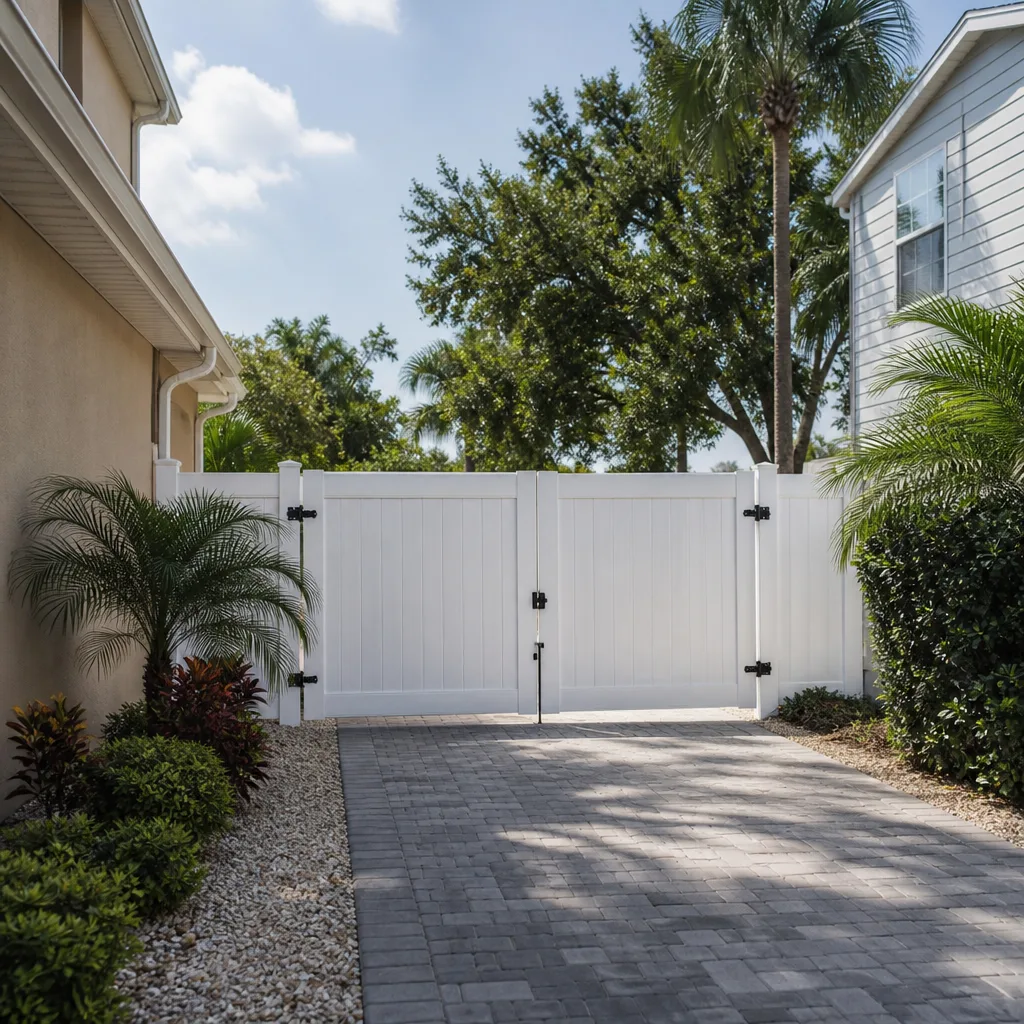
In Boulder City, we see more header board problems than anything else because a wide gate has more weight to carry and a lot of installers use a single 2×4 header with no diagonal support. The gate works for two seasons, then the top rail bows and the gate drops. A proper install adds a diagonal cable or a steel brace from day one. That’s the kind of spec we insist on in the Fence Installation in Boulder City work.
Quick check: A gate that swings past 90 degrees and touches the post likely has a hinge set too close. A gate that scrapes at the bottom likely has a hinge that has pulled. A gate that sags but swings freely has a post problem.
Board Warping and Splitting in Desert Heat
Boulder City’s heat does two things to wood fence boards that look similar but need different fixes: it bleaches and dries the surface (UV damage), or it drives moisture cycling through the wood (structural damage). One is cosmetic, the other isn’t.
UV surface damage: The board is faded, gray, or has a powdery surface, but it’s straight. Push on it; if it returns flat and doesn’t flex, the wood’s structure is intact. This is sun damage, and it’s fixed with a clean-and-seal. The board has years left. Note that in August in Boulder City the surface temperature of a dark-stained board can hit 160°F, which speeds up that fade by about 3x compared to a lighter shade.
Structural moisture cycling: The board is cupped (edges curled), split down the grain, or has a visible bow when you sight down its length. This happens when wood pulls in and out with seasonal moisture changes. In a real desert climate it’s usually the initial kiln-dry at the mill let go, and the board was oversized for the post spacing. When wood cups and splits, the fix is replacement, not repair. Sealers don’t fix cupped boards; they just delay the inevitable.
Here’s how to spot the difference fast: run a hand down the board (with a glove; desert wood splits and cuts). If the surface feels smooth and you can’t feel a grain ridge, it’s surface UV. If you can feel grain ridges or pick a splinter off, the wood is checking, and that board is failing. Our rule of thumb: replace any board with a split longer than 8 inches. Repair the rest.
Fencing brand partners we use – including James Hardie and Belgard – make products for the material choices where the desert heat cycle won’t repeat, but any wood board set with too much gap will cup regardless. Board spacing and material choice matter more than the seal coat.
Wood-to-Metal Contact and Corrosion
Anywhere a treated board touches a metal post, a hinge, a bracket, or a screw, you have two materials that expand and contract at different rates. In Boulder City’s summer heat (ground temps pushing 140°F in direct sun) the chemistry speeds up. Treated lumber – especially the copper-based pressure treatment most boards use – reacts with steel or aluminum in a wet-then-dry cycle. The result is fast corrosion at the contact point.
Two specific failure patterns we see:
- Aluminum or galvanized posts with treated wood boards: The treated wood releases copper ions that react with the aluminum, producing a white or green chalky crust around the fastener and pitting in the post. Left alone, the post wall thins and fails.
- Galvanized deck screws into treated pine: You’ll see rust staining around the screw heads within three to four years, and the screw shanks can fail inside the wood. The board is fine, but the fastener gives out.
An effective repair: remove the board or bracket, clean the contact area with a wire brush, isolate the wood from the metal with a strip of bituminous tape, rubber gasket, or a plastic isolator, and re-fastener with stainless steel fasteners. A cosmetic cover-up (just painting over the rust or capping the screw head) doesn’t stop the corrosion – it hides it until the post or fastener fails completely.
If you find corrosion, look at every contact point in that run, not just the one. Accelerated corrosion usually means the whole install mixed the metals wrong. When we install, that means isolating every treated board from metal with the right fastener and isolator. When we repair, we replace the whole run of hardware, not just the failed screw. Our Driveway & Pavers in Boulder City and fence crews use stainless on outdoor projects as a standard.
Concrete Cure Failures vs. Shallow Footings: Telling Them Apart
Two failure modes look alike from the ground but require totally different fixes: the concrete was mixed or cured wrong (it’s weak), or the concrete is strong but the hole was too shallow (there’s nothing anchoring it). Here’s how you tell.
Concrete cured too fast or mixed too wet: In Boulder City heat, a wet-mixed concrete pour in late spring or summer cures a lot faster than the bag says. Concrete that sets in 15 minutes loses most of its design strength. The tell is a crumbly, chalky texture at the base of the post, cracks running through the visible collar, or the whole collar breaking loose in one chunk when you pull the post. If you can dig the concrete out with a shovel, it never set properly. That post needs a new footing with a dry-mixed, slow-cured pour, and possibly a shade cover in hot months.
Inadequate footing depth: The concrete is intact (hard to shovel, breaks in big chunks), but the hole is only 18 to 24 inches deep. The post didn’t fail because the concrete was bad. It failed because there was no anchor below the caliche layer. That’s a depth problem, and the fix is a new hole drilled through the caliche layer to the required depth, a full set of gravel, and a proper concrete collar. You can’t fix a shallow footing by adding concrete around the existing base; you need a new footing.
How to tell the difference in the field: pour a glass of water on the exposed concrete at the base of the post. Wet-set, uncured concrete drinks it in fast. Fully cured concrete beads it and sheds it. Fully cured concrete that’s sitting in a shallow hole is a proper footing – it was just placed too shallow.
- Test cure: Water-bead test on the concrete collar. Beads up = cured correctly. Drinks it in = bad cure.
- Test depth: Dig down alongside the collar. Any concrete bottom above 24 inches in a frost-guideline state = too shallow.
- Test integrity: Pull on the post firmly. Concrete chunk comes up whole = bad footing. Concrete stays put and post pulls out = shallow or bad post.
Both failures are commonly installed in Boulder City where digging is slow. The fix is a full replacement of the footing. On the Groundwork Construction Co. of Boulder City home page, you can see how a proper install sets footing depth and mix specs from the first day.
Common Mistakes to Avoid
- Resetting a post without checking the footing first. The leaning post comes back plumb and leans again within six months because the concrete or depth was the original problem. Do the probe test first.
- Mixing concrete too wet in the desert. The temptation in 100°F heat is to add water so it pours. That’s exactly what weakens it. Mix dry, and cure it correctly.
- Digging down to caliche and calling it a footing. In Boulder City that hard layer sits 12 to 24 inches down in most yards. The auger stops, and the contractor stops with it. That’s not enough depth.
- Bolting a gate to a post with a failed footing. New hinges fix nothing if the post is the problem. Re-post first, then re-hang.
- Skinning over corrosion with a coat of paint. It hides the failure for one season while the metal underneath keeps thinning. Replace the contact point or isolate it.
- Replacing individual warped boards in a run that is failing everywhere. If three or four boards in the same run are cupping and splitting, that run’s spacing, treatment, or stud length is the problem.
- Assuming all fence failures are wood failures. A lot of them are footing failures. Diagnose the foundation before you buy new boards.
See the difference
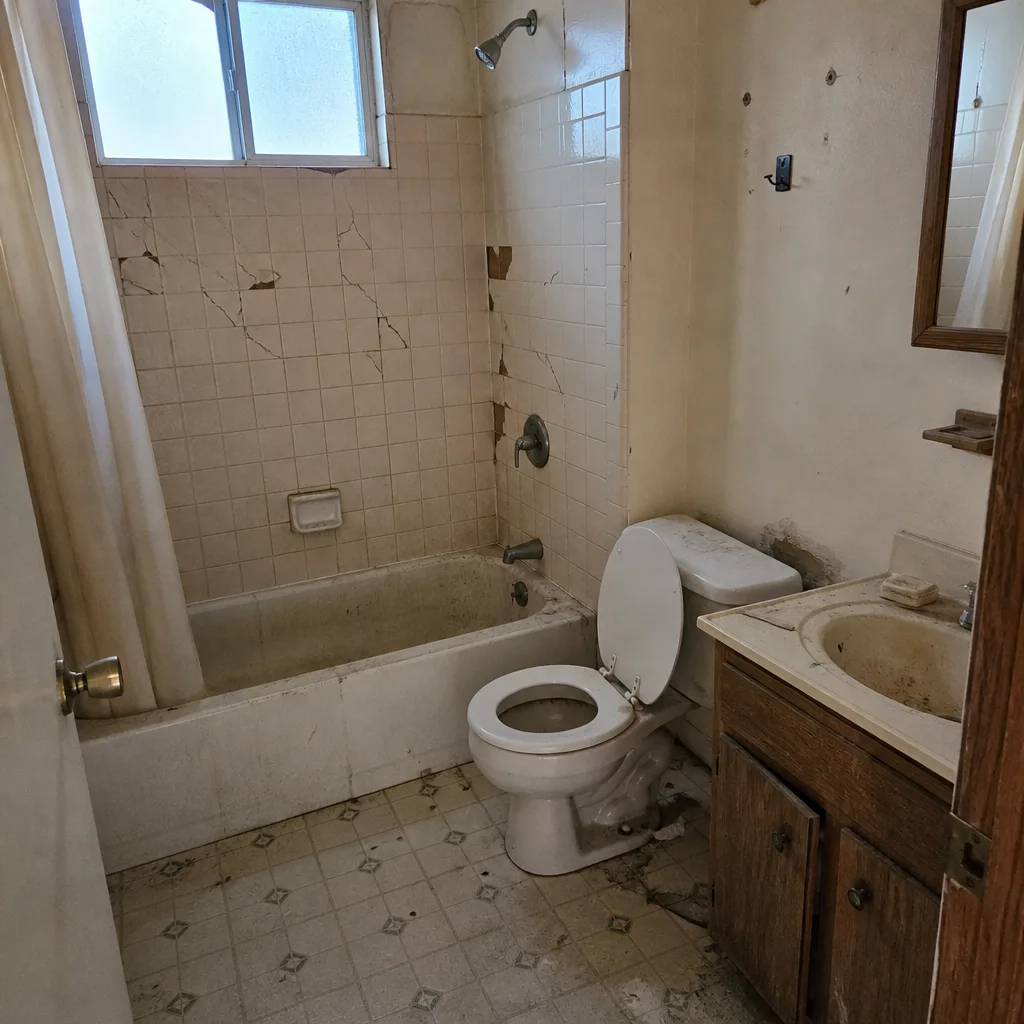 Before
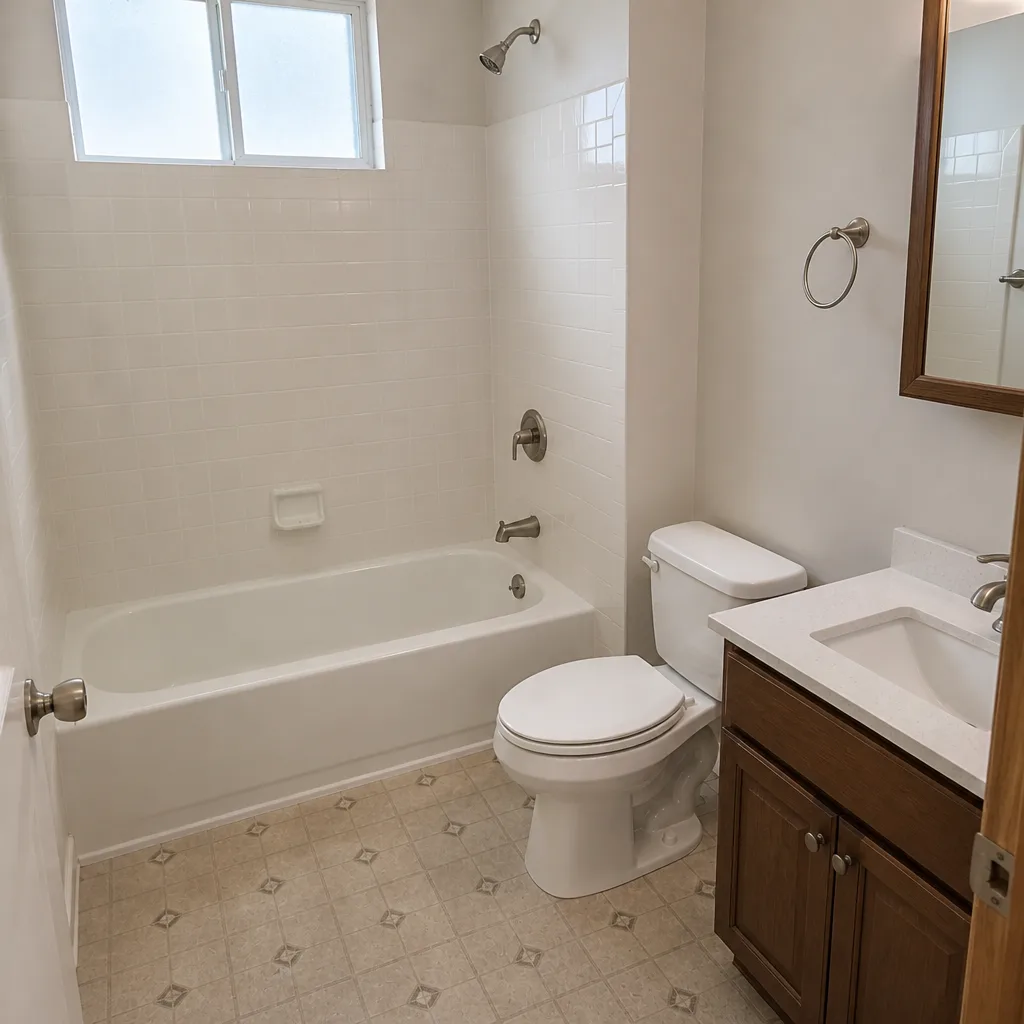 After
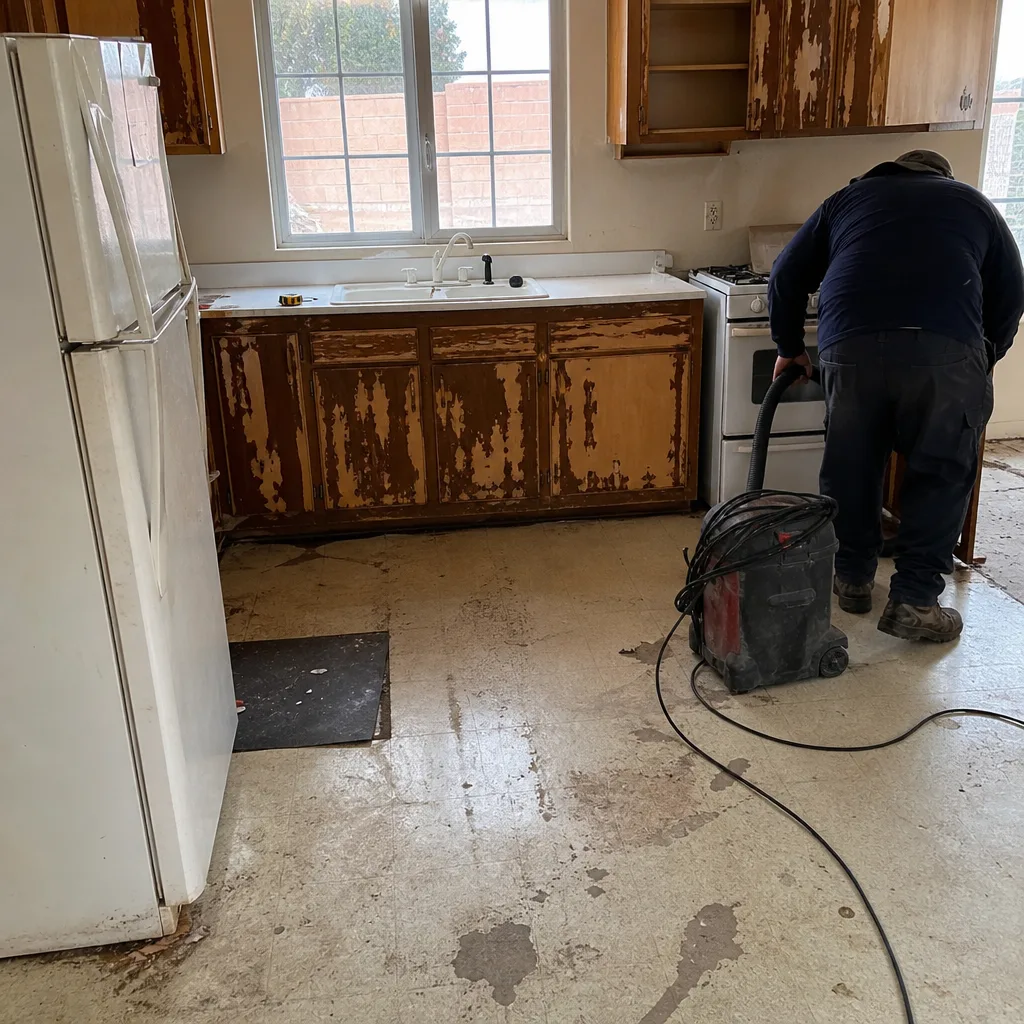 Before
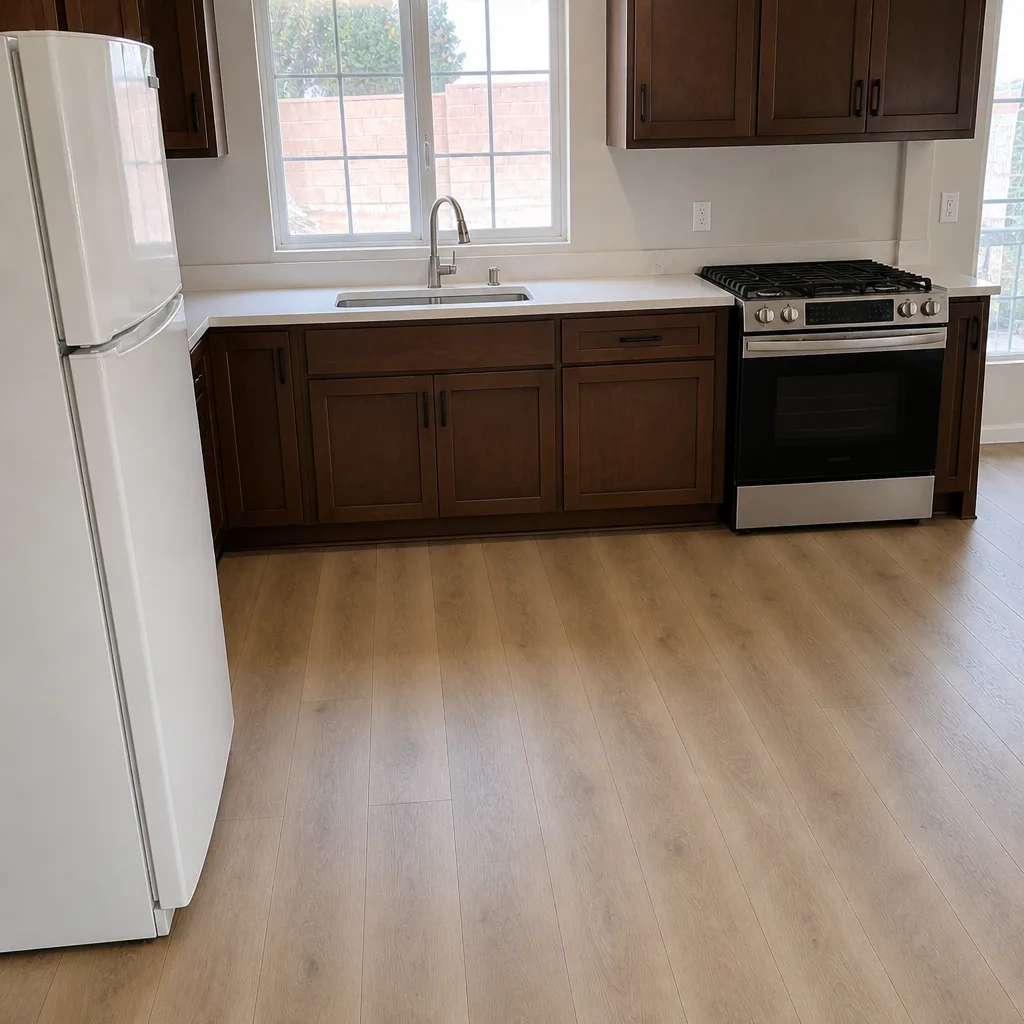 After
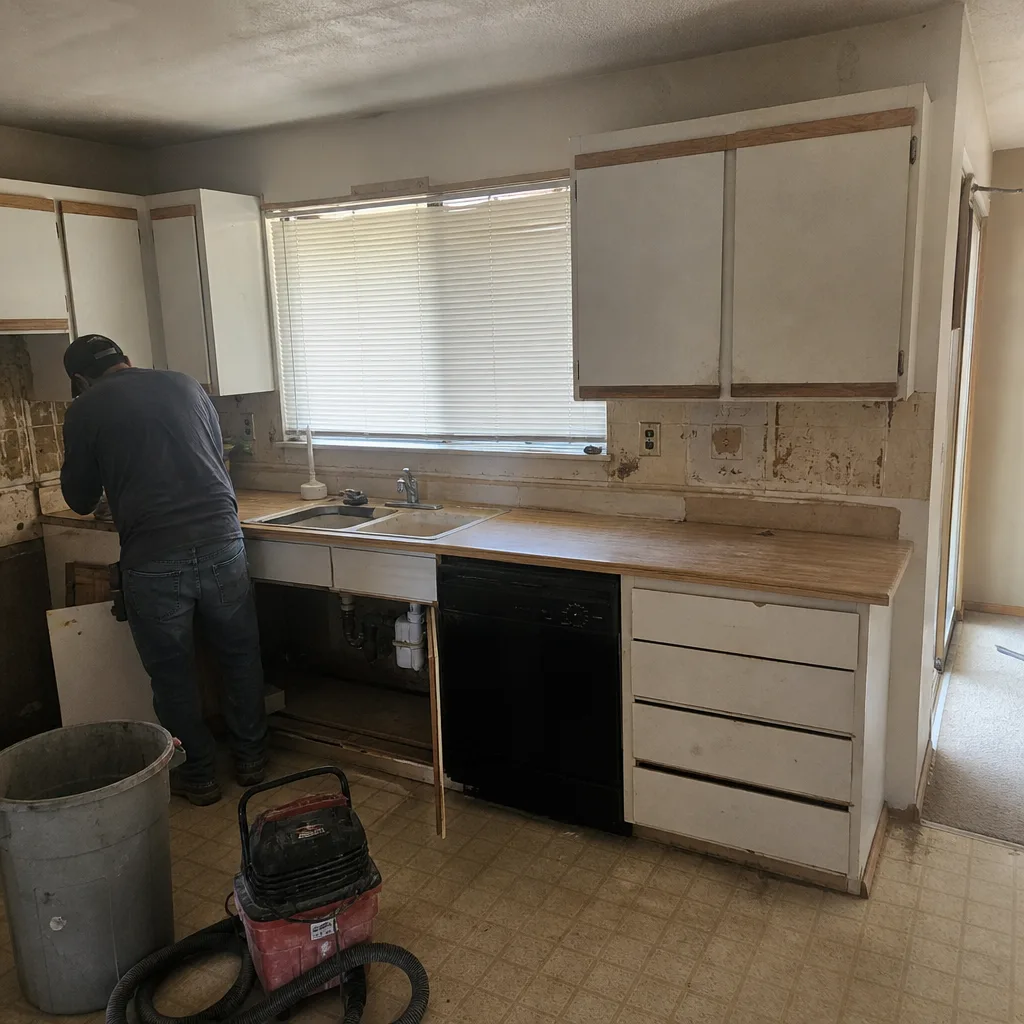 Before
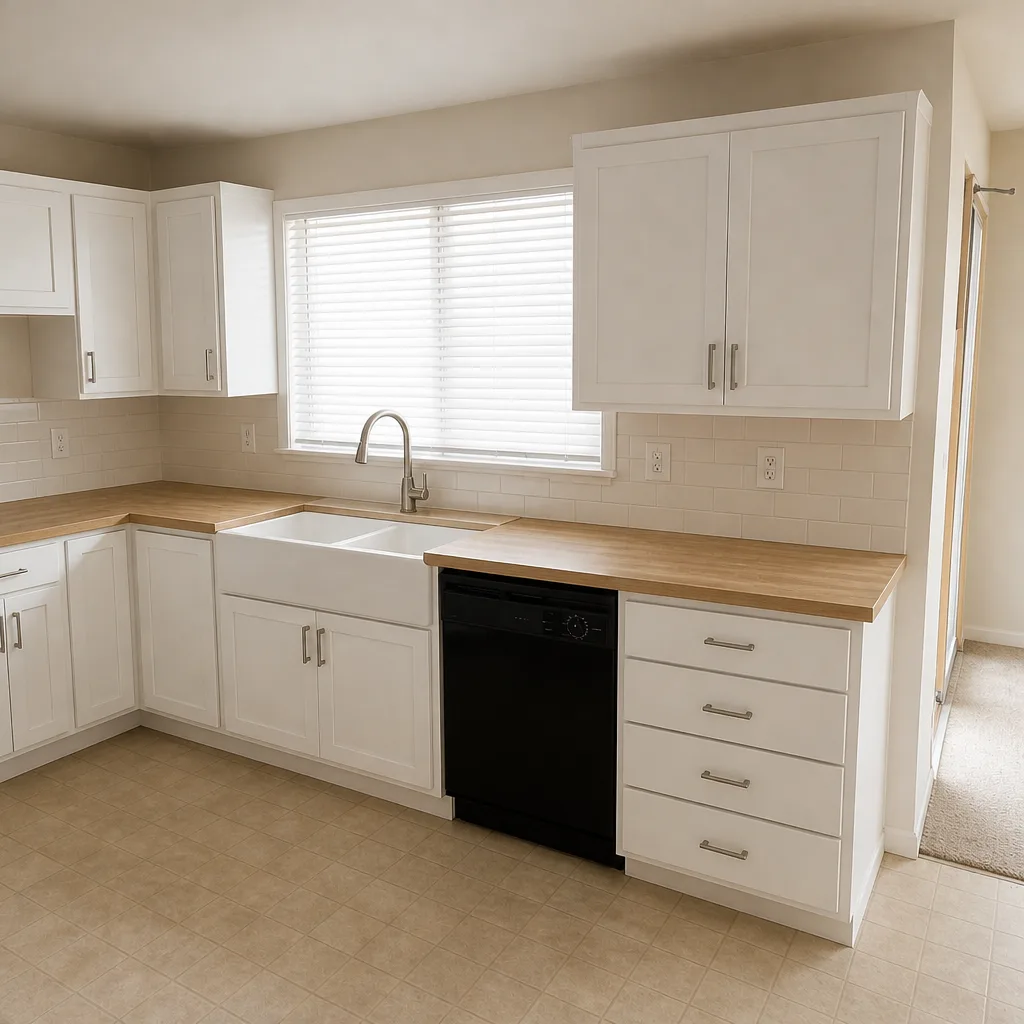 After
When to Call a Professional
If you’ve done the probe test and the answer is unclear, or a gate post moves when you test it, or you’ve got corrosion at multiple contact points in the same run, the diagnosis is the hard part and a pro saves you from the wrong repair. A failed post tied into five or six neighbors is a bigger fix than it looks, and a Boulder City fence has to stand up to the kind of wind and heat that punishes shortcuts. Groundwork Construction Co. of Boulder City offers free estimates in Boulder City – call (888) 282-1693. You’ll get a line-item quote on the repair scope, upfront pricing with no surprises, and the 730-Day Done Right Promise on the work. A repair that holds for years beats a patch that leans again next spring.
Frequently Asked Questions
Run the soil probe test: push a rebar or screwdriver into the ground around the post base and note where it refuses to go. If it refuses all the way around at 18 to 24 inches, the concrete is intact and the post can be reset. If it pushes easily, the footing is shallow and the post has to be replaced. Call (888) 282-1693 for a free estimate if the test is unclear.
Boulder City has caliche – a dense, cement-like sublayer – plus extreme summer heat and dry-then-wet cycles. Posts often stop at the caliche layer at 18 inches instead of the 30 to 36 inches they need, and concrete mixed too wet for the heat cures weak. Both leaves the post exposed to wind load and soil settling. A proper install anchors through the caliche and uses dry-mix concrete.
A single post repair in Boulder City typically runs $180 to $350 for a reset or a replacement post with a new concrete collar, plus the fence panel re-installation if it’s a privacy fence. A full gate re-hang and post repair can run $450 to $800. Call (888) 282-1693 for a line-item quote – estimates are free and the number you see is the number you pay.
No. A Groundwork Construction Co. estimate is a line-item quote for the scope we found during diagnosis, and it doesn’t move because we found something under the soil. Our upfront pricing means the number you see is the number you pay, and any change would require covering a scope change you approve first. That’s how we run every repair, not just the big jobs.
A single post reset is usually a few hours in Boulder City. A replacement post with a new footing takes most of a day including the concrete cure schedule. A full run of three or four posts plus new boards can take two to three days. Most single-post repairs finish in a single visit.
If the posts still test solid with the probe and the boards are straight, repair. If multiple posts in a run lean in the same direction or the boards show corrosion at the contact points, replace the run. Our Home Additions & ADU in Boulder City work includes fencing for the surrounding yard, so we treat the fence as part of the whole property. Call (888) 282-1693 and we’ll diagnose before we quote. We’ve been in business since 2014 and proudly serve Boulder City and the surrounding communities.
The Bottom Line
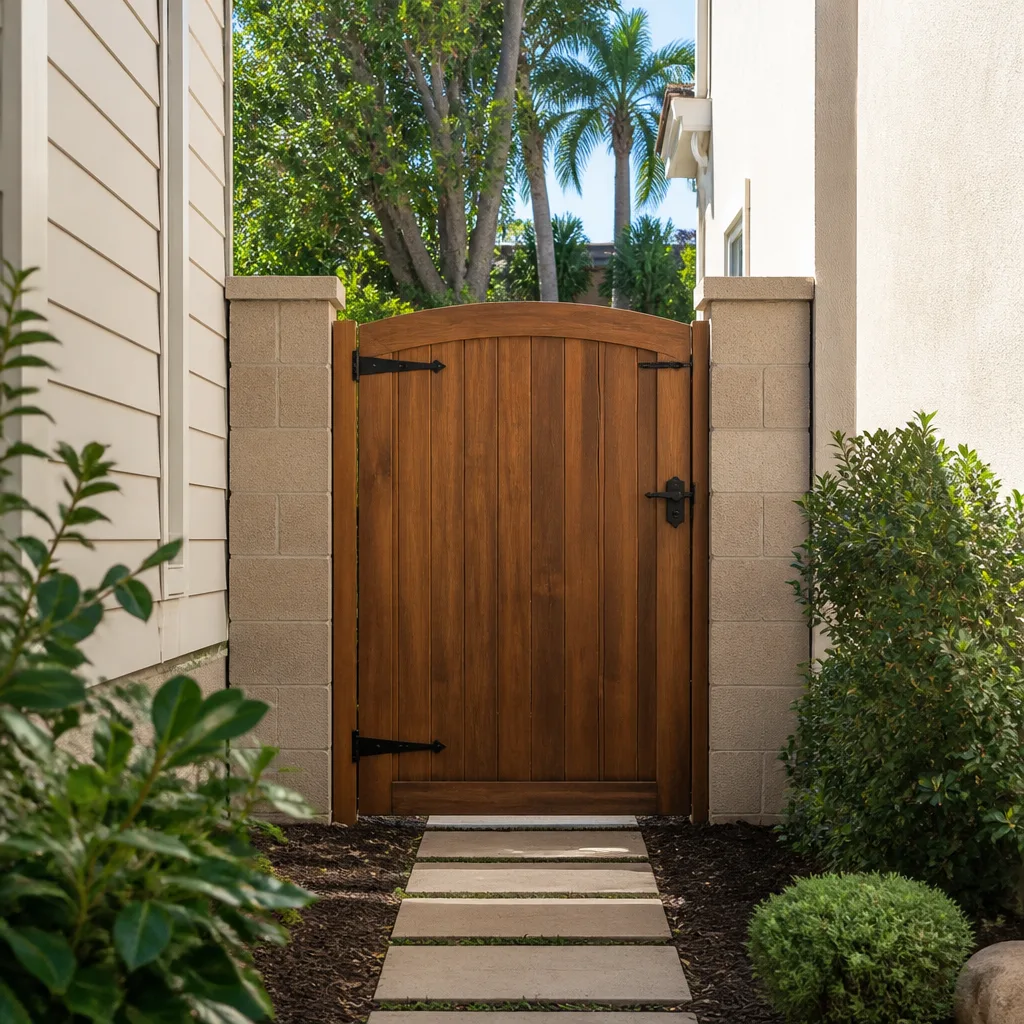
Two decisions – post depth and concrete mix – cause most fence failures you’ll ever see. Diagnose with a soil probe before you repair, separate a footing failure from a wood failure, and match the repair to the actual cause. Gate sag has three distinct causes (hinge, post, header) and each gets a different fix. Desert heat warps boards in two distinct ways, and only one is cosmetic. Corrosion at wood-to-metal contact points requires isolating or replacing, not painting over. Concrete cure and footing depth look alike but need different fixes. When diagnosis gets complicated in Boulder City, call Groundwork Construction Co. of Boulder City for a free estimate.
Ready to solve your fence problem? Call Groundwork Construction Co. of Boulder City at (888) 282-1693 for a free estimate. Every project is covered by the 730-Day Done Right Promise, our technicians are background-checked and arrive in uniform, calls are answered by a live person 24/7, and you’ll get a written line-item quote with upfront pricing and no surprises. From foundation to finish line, we build fences that are built to last and backed in writing.
Written by the team at Groundwork Construction Co. of Boulder City.