Last updated November 18, 2026






Free written scope consultation - allowances, timeline, and change-order rules on paper before a single trade is scheduled
Construction Emergency Preparedness Guide for Boulder City Homes
Most Boulder City homeowners have a fire extinguisher and a flashlight. Almost none have a contractor response plan. That gap matters more than it used to, because FEMA redrew the local flood maps in 2023 and a lot of properties in Boulder City changed risk classification without anyone getting a letter that made the change obvious. Meanwhile, our technicians walk homes after windstorms and monsoon events and see the same three failures over and over: stucco blown off a windward wall, a drainage system that dumped water against the slab instead of away from it, and roof membranes that split at a seam because the desert sun cooked the material past its flexibility. This guide gives you a plan you can actually use, before the 11pm Sunday call.
Quick Answer
Construction emergency preparedness in Boulder City comes down to three things: knowing which parts of your home fail under Mojave heat, monsoon flooding, and high wind; keeping your permits, warranty paperwork, and pre-loss photos somewhere you can grab them in the dark; and having a vetted contractor you already trust before you need one. Spend fifteen minutes on a post-storm walk after every significant event and photograph what you see. Documentation gathered before a loss is worth far more in an insurance claim than anything you can reconstruct afterward.
Styles & brands we work with
- Kitchen remodeling
- Bathroom remodeling
- Home additions & ADU
- Roofing
- Windows & doors
- Driveway & pavers
- Fence
Table of Contents
- How Boulder City Homes Actually Fail in a Storm
- The 2023 Flood Map Change and What It Means for Your Property
- The 15-Minute Post-Storm Structural Walk
- What to Document Before Anything Happens
- How to Vet an Emergency Contractor in an Hour, Not a Week
- Insurance Claim Documentation: Before vs. After the Loss
- Building Your Contractor Response Plan
- Heat and Wind: The Slow Emergencies Nobody Plans For
How Boulder City Homes Actually Fail in a Storm
Boulder City sits at the edge of the Mojave in a way that stacks three stressors on the same structure. Summer highs push past 105°F for weeks at a stretch. Monsoon season delivers a huge volume of rain in a short window onto ground that’s baked hard enough to shed most of it. And the open desert exposure means wind events hit with nothing to break them up before they reach your subdivision.
In our experience across Boulder City, those three forces produce a predictable set of failures:
- Stucco blow-off on windward walls. Older three-coat stucco that has lost some of its bond due to thermal cycling will delaminate in sheets during a sustained wind event. The west and southwest facing walls take the most abuse. Once a section goes, wind gets behind it and the failure spreads fast.
- Monsoon drainage failure. Not a failed downspout, but a whole-drainage failure. Desert soils crust over, swales silt in, and water that should sheet away from the foundation ponds against the slab instead. That’s the source of more slab and foundation issues in Boulder City than anything else.
- Roof membrane thermal splits. Flat and low-slope membrane roofs flex with daily temperature swings of 40 degrees or more. Seams that were sound in April can split wide open by August. Tile roofs fail differently: cracked or slipped tiles let water under the field in a hard rain, and you don’t notice until the ceiling shows a stain.
- Fence and gate failure. Block walls and fence panels go down in wind events with surprising regularity here. When they go, they take out sprinkler lines, patios, and occasionally a window with them.
The point isn’t to scare you about weather. It’s that in Boulder City, the failure modes are known. That means you can walk your property in calm weather and check for the conditions that precede them. If you want a professional eye on the drainage and hardscape side of that checklist, a walkthrough from the crew that handles Driveway & Pavers in Boulder City will tell you more in twenty minutes than a dozen seasons of guessing.
The 2023 Flood Map Change and What It Means for Your Property
FEMA’s flood insurance rate maps for the Boulder City area were updated in 2023, and the practical effect is that some properties moved into a higher-risk classification while others moved out. Many homeowners never checked. If your policy or your rebuilding assumptions are based on the map from before that update, you may be planning against a risk profile that no longer applies to your address.
Here’s what to do, and it takes about ten minutes:
- Look up your address on FEMA’s Flood Map Service Center. You’ll get your current zone designation and the effective date of the map being used.
- Compare that to your insurance declaration page. If the zone on your policy doesn’t match the current map, call your agent and ask what changed and whether your coverage reflects it.
- Check whether your lender requires flood insurance. A reclassification can trigger a requirement you didn’t have before.
- Walk the drainage path. Find the lowest point relative to your house and figure out where water is meant to go. Then check whether that path is actually open, or blocked by silt, landscape changes, or a neighbor’s wall.
We see a specific pattern in Boulder City: a homeowner adds a block wall or raises a patio a few inches, and a drainage path that worked fine for two decades now pushes water toward the house instead of past it. Grading and hardscape decisions made years apart can combine into a problem. If you’re adding or replacing hardscape, factor water movement into the design from the start, and use a contractor who asks about it before you sign anything.
The 15-Minute Post-Storm Structural Walk
Do this after any significant wind or rain event, and do it in the same order every time so you don’t skip a section. Take your phone and photograph anything that looks even slightly off. You can always delete photos you don’t need; you can never go back and take a photo of a condition that has since been repaired.
Walk in this sequence:
- Perimeter first, right-hand direction. Start at the front door and circle the house clockwise. Look up at the fascia and soffit, then at the walls, then down at the ground at the base of the walls.
- Stucco and siding, eyes on the wall-plane. Look for cracks wider than a hairline, bulges, or sections that sound hollow when you press on them. Hollow means delamination has started.
- Ground-to-wall contact all the way around. Look for soil piled above the weep screed, water lines on the stucco, or new settling cracks in the slab edge. A visible water line on the wall tells you how high water pooled during the storm.
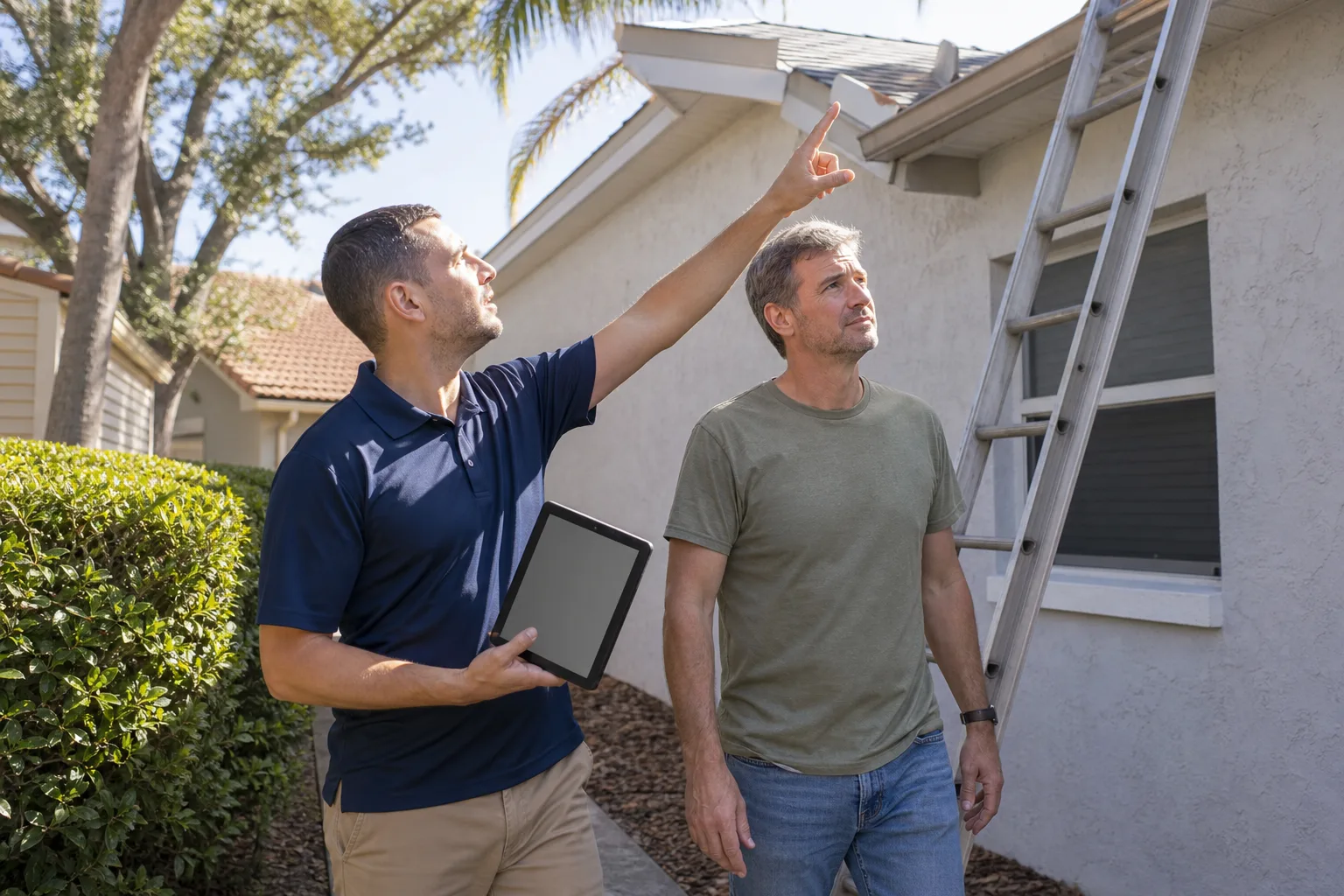
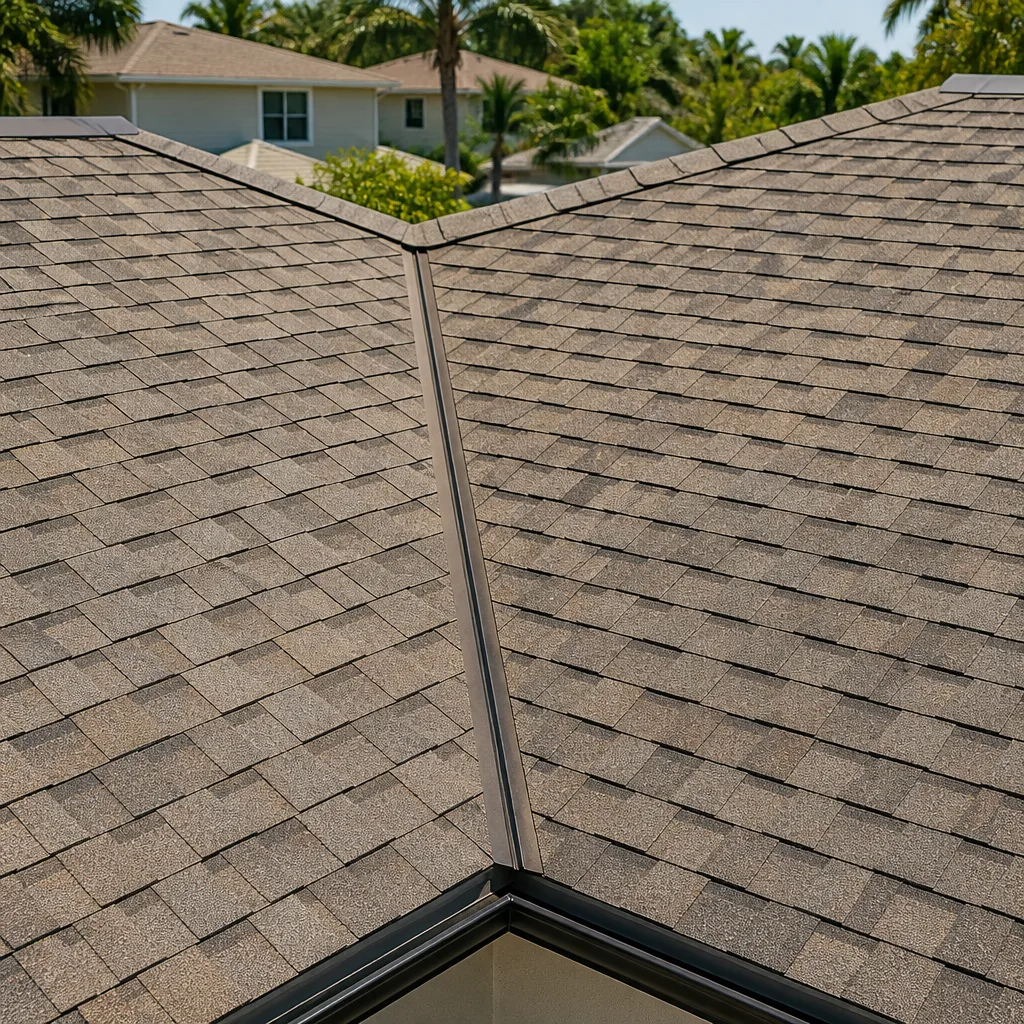
- Roof, from the ground. Use binoculars if you have them. Look for missing, cracked, or slipped tiles, lifted shingle tabs, granule piles in the gutters, and around vents and skylights for open seams. Do not climb up there.
- Fence, gates, and block walls. Push on posts at the base of every gate. Look for lean and for separation at the joints in block walls. A leaning block wall is a hazard, not a cosmetic issue.
- Drainage paths and swales. Confirm water can still move away from the house and that nothing has silted in or been blocked.
- Interior ceilings and window wells. Check ceilings under the roof edges and around skylights for new stains. Check window wells and door thresholds for water intrusion.
Photograph each item as you go, wide shot first, then close-up. Date-stamp matters; your phone does that automatically. We’ve seen insurance claims resolved in days because a homeowner had clean before-and-after photos and dragged on for months because they didn’t. Roofs deserve a professional look after any event that unseats tiles or shingles, and the crew that installs roofs in Boulder City can inspect from the ground and on the roof safely. If you’re curious how we handle roof systems, the team that does Groundwork Construction Co. of Boulder City home work can explain what they look for.
What to Document Before Anything Happens
The time to assemble your contractor and insurance paperwork is in a quiet week in February, not on a Sunday night when water is coming in. Here’s the packet that carries the most weight in an emergency, and how to store it so you can actually find it:
- Building permits and inspection records. Pull every permit ever issued on the property from the Boulder City building department. These establish what was built, when, and whether it was inspected. You’ll need them if there’s ever a question about whether the work that failed was permitted.
- As-built drawings or a rough floor plan. You may not have original drawings, but a hand-drawn sketch of the layout, with dimensions of the rooms and the location of major walls, is enough for a contractor to plan and for an adjuster to understand scope.
- Warranty paperwork for every installed system. Roof, windows, doors, water heater, HVAC. Keep the manufacturer’s warranty and the installer’s workmanship warranty together, with contact information and expiration dates.
- Your before photos. A full set of interior and exterior photos taken in good weather, plus the storm-walk photos as they accumulate. This is the single most valuable item in the packet.
- Contractor contacts. The name and phone number of the contractor who performed each major job, plus a backup. Two names per trade.
- Insurance policy and declaration page. With your agent’s direct line, not just the main number.
How to store it: make one shared digital folder in cloud storage that every adult in the household can open, and keep a printed copy in a fireproof box or waterproof bag in the same place you keep your important documents. Photograph the printed inventory list and keep that on your phone. None of this has to be beautiful. It has to be findable when the power is out.
How to Vet an Emergency Contractor in an Hour, Not a Week
In a real emergency you don’t have two weeks for full due diligence, and the worst contractors in any market know that. They show up first, they push for a signature and a deposit, and by the time you’ve done your homework the work is already started. Here’s a fast filter that catches most of the bad actors:
- Call at an odd hour and see who answers. A company that answers a live person at 9pm on a Sunday is a company that has a real operation. A company whose phone rolls to voicemail after hours and doesn’t call back is a project waiting to stall.
- Ask for the license number and verify it in the state contractor database while you’re on the phone. Not the number on the truck; the number in the database.
- Ask for a certificate of insurance and confirm the general liability and workers’ comp are active. If they hesitate, move on.
- Ask what the workmanship warranty is, in writing, and for how long. Anything vague or short is a red flag. Our work is covered by the 730-Day Done Right Promise, and if it’s not done right we make it right. That’s one of the longest workmanship guarantees in residential construction, and it exists precisely so you don’t have to guess.
- Ask for the price in writing before any work starts, with the scope broken out. “We’ll figure it out as we go” is not a scope. Upfront pricing, no surprises, is the standard we hold ourselves to.
- Ask who is actually showing up. Background-checked, uniformed technicians on every job is a baseline. A crew whose paperwork doesn’t match the person at your door is a pass.
- Search the name for recent complaints. Ten minutes of reading is not a full vetting, but it catches the worst.
Because emergencies come with real risk, some fields deserve a strict line. Do not climb a roof after a storm to do your own inspection or repair, and do not attempt to fix a roof with visible structural damage or lose shingles yourself. Height work is dangerous and the insurance part matters. Call a trained professional. The same applies to any electrical or gas work in a damaged home: shut off the service at the panel or meter if there’s water nearby, then call the utility and a licensed professional. Those aren’t jobs for a weekend DIYer under any circumstances.
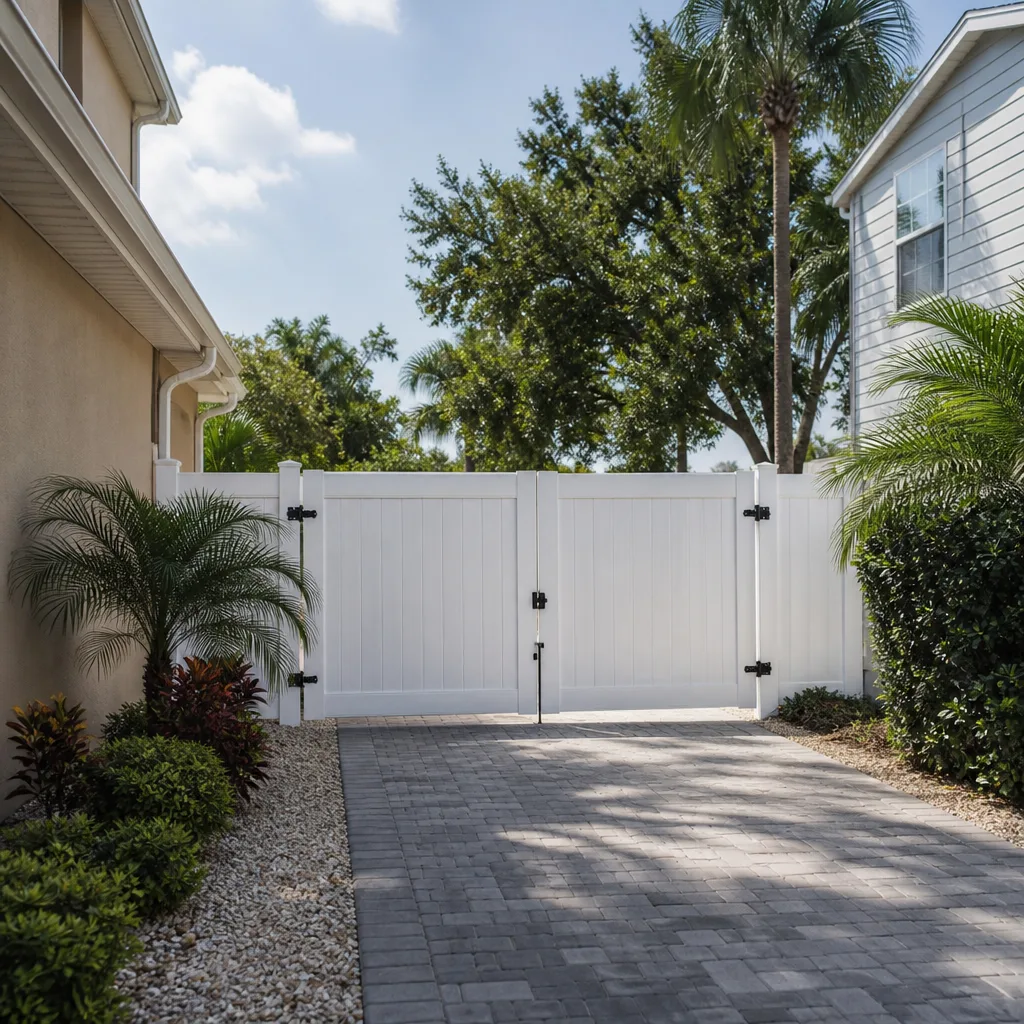
When you need to replace a fence, gate, or block wall after a wind event, ask the contractor who quotes it whether they install Barrette or Master Halco systems and whether they can source Ameristar gates, because you want the parts to be available in a hurry. The crew that handles Fence Installation in Boulder City can do a fast replacement in a single visit for most jobs, and that’s the kind of turnaround that matters when you’ve got a dog and no perimeter.
Insurance Claim Documentation: Before vs. After the Loss
Here’s the difference that decides how claims go: evidence gathered before a loss is accepted. Evidence gathered after is negotiated. That sentence is the whole game.
When you’ve taken the post-storm walk and photographed the same wall sections for five years, then a windstorm finally takes them out, you’re not arguing about whether the stucco was in good condition. You have the photos. When you didn’t, the claim conversation becomes about what the adjuster assumes based on age and appearance, and those assumptions tend to run against you.
The practical split looks like this:
- Before the loss: establish the baseline. Photos, dated, of every exterior wall, roof plane, window, door, and fence line. Keep copies of permits and the warranty documents for every system on the property. Save the flood map designation for your address and the effective date. Note the date, materials, and contractor for each major installation.
- Immediately after the loss: document the damage before you move anything that can be photographed. Wide shots first, then close-ups. Note the date and time. Don’t throw away damaged materials; the adjuster may want to see them. Call your agent the same day, and get a written scope from a contractor as soon as you can so the adjuster has a documented cost basis, not a guess.
- After the claim: keep every receipt, the written scope, any change orders, and the final invoice together. If you pursue a replacement claim later, this history helps.
One specific Boulder City note: after flash flooding, photograph the water line on the wall before it dries. It’s the clearest single piece of evidence that water reached a given height, and it disappears in a day or two of dry heat. A couple of close-ups with a tape measure in frame will save a lot of argument.
Building Your Contractor Response Plan
You now have the pieces. Put them together in one page and store it with the packet. A response plan is not a binder. It’s a single page you can read in a minute when you’re standing in the dark trying to figure out who to call first.
- Two names and numbers per trade. Roofing, exterior/stucco, fence, drainage/hardscape, and general contractor. One primary, one backup. Verify the numbers every year.
- The emergency order of operations. For a wind event: safing the perimeter (fence, broken glass), then roof, then drainage. For water intrusion: stop the source (shut off, cover openings), then dry the interior, then repair. For anything involving electrical or gas, call the utility first.
- Your insurance agent’s direct line and policy number. Plus the address on the current FEMA map and the effective date.
- The three fast-vet questions. License, insurance, warranty length. Written down.
- Your documentation folder location. Cloud folder name and password, and where the printed copy lives.
Then plan a professional inspection once a year, in spring before monsoon season, covering roof, drainage, stucco, and fences. If you’re considering an addition or ADU at any point, that inspection is also the natural moment to talk about how the new structure will interact with drainage and wind. The team that handles Home Additions & ADU in Boulder City will flag those interactions before a design is finalized, which is a lot easier than retrofitting a drainage solution around a finished slab.
Heat and Wind: The Slow Emergencies Nobody Plans For
Not every emergency happens in an hour. Mojave heat and wind do their damage over hundreds of cycles, and the failures look sudden when they finally happen. Two patterns are worth watching on your property in Boulder City.
The first is thermal cycling on exterior surfaces. Stucco, paint, sealant, and flat-roof membrane all expand in the afternoon and contract at night. Daily temperature swings of 40 degrees push sealant past its elasticity faster than most homeowners realize. Re-sealing window and door perimeters, flashing points, and roof penetrations on a recurring schedule costs a fraction of interior water damage and is the single cheapest preventive step on the list.
The second is wind-driven connection fatigue. Fence posts, patio covers, and shade structures that survived ten moderate winters can fail in one severe wind event because the fasteners have slowly worked loose and the wood has dried. Push on every post at the base every year. If a post moves, it needs replacing or resetting before the next wind event, not after.
Long-term material choice matters here too. Premium exterior materials from brand partners like James Hardie and quality fencing systems from Master Halco are spec’d to handle exactly this climate, and they make the difference between a repair every five years and a repair every fifteen. Built to last, backed in writing, is the standard.
Common Mistakes to Avoid
- Assuming you didn’t flood because you live on a hill. Water pools at the bottom of a slope, and the property at the bottom of your slope is often you. We’ve seen more flooding damage from drainage concentrated by uphill neighbors than from flat properties.
- Using a pre-2023 flood map for insurance decisions. If your policy still reflects the old zone, your coverage may not match the current classification of your address.
- Signing with the first contractor who knocks after a storm. Out-of-town crews follow storm events. Ask for the license number and verify it, and confirm the warranty in writing. If they can’t do that in the driveway, walk away.
- Starting repairs before photographing the damage. Once the water-stained drywall comes out, so does your clearest evidence. Photograph first, then remove.
- Not keeping the warranty documents together. A warranty you can’t find when you need it is a warranty you don’t have. Roof warranties, window warranties, and workmanship guarantees all need to be in the same folder.
- Ignoring a hollow stucco patch. A hollow sound when you thump a stucco wall means the coat has lost its bond. That section will blow off in the next strong wind. Have it inspected before it becomes a bigger repair.
- Letting a fence post lean for a season. Leaning posts don’t get better. They lean further. Replace or reset now while it’s a small job.
See the difference
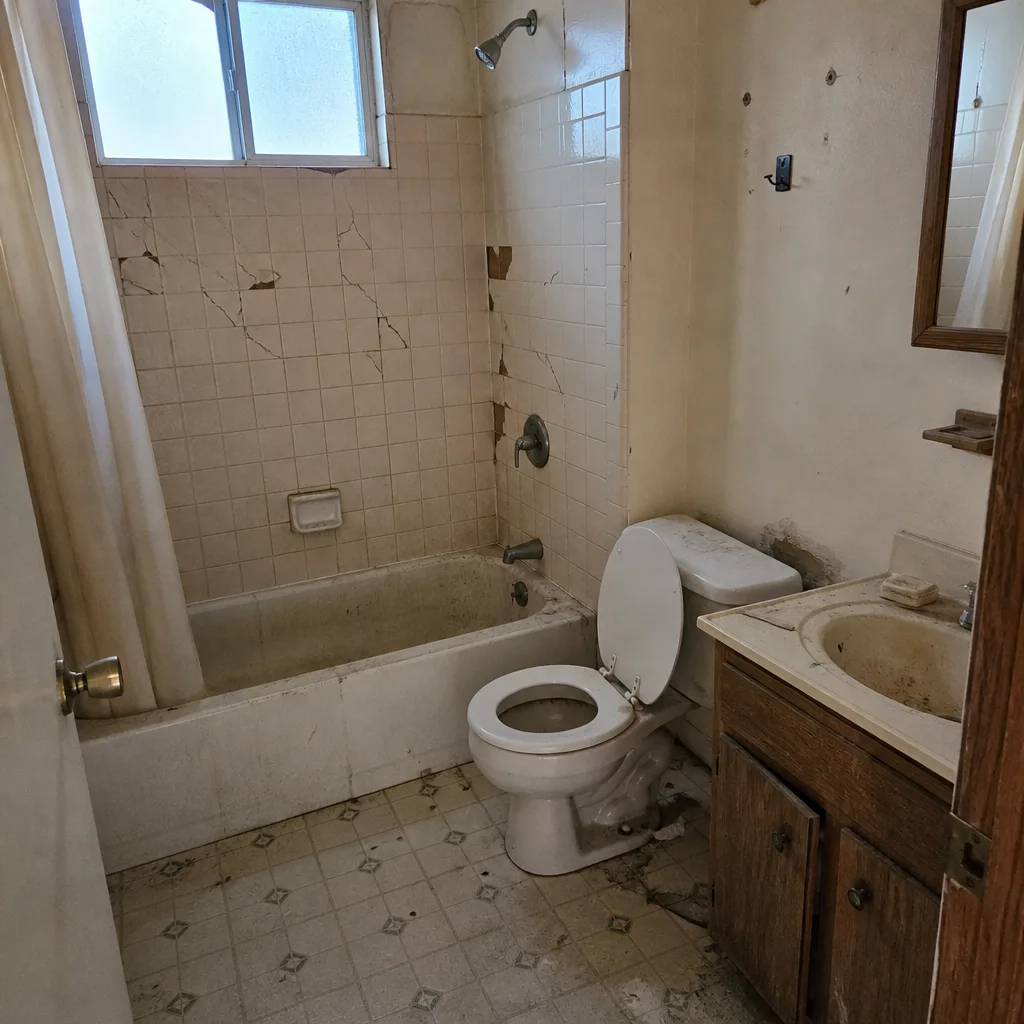 Before
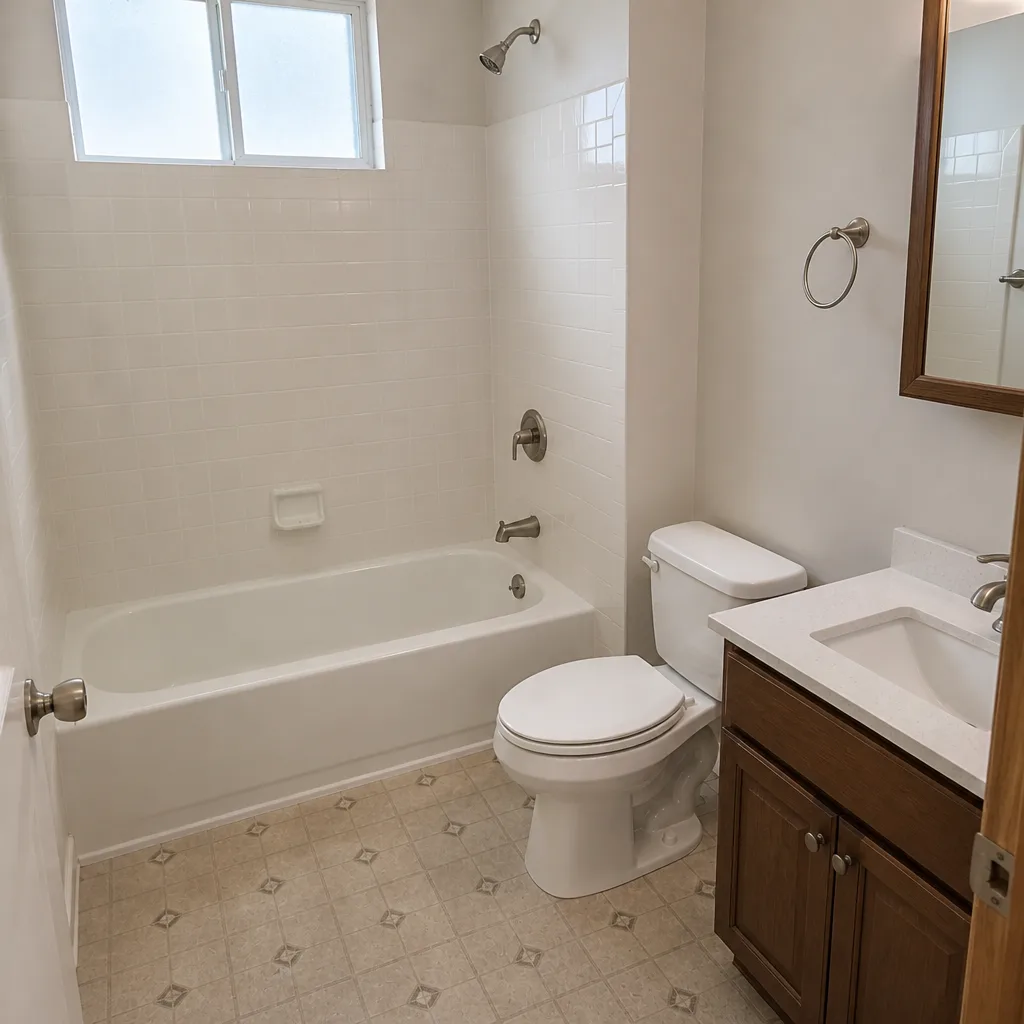 After
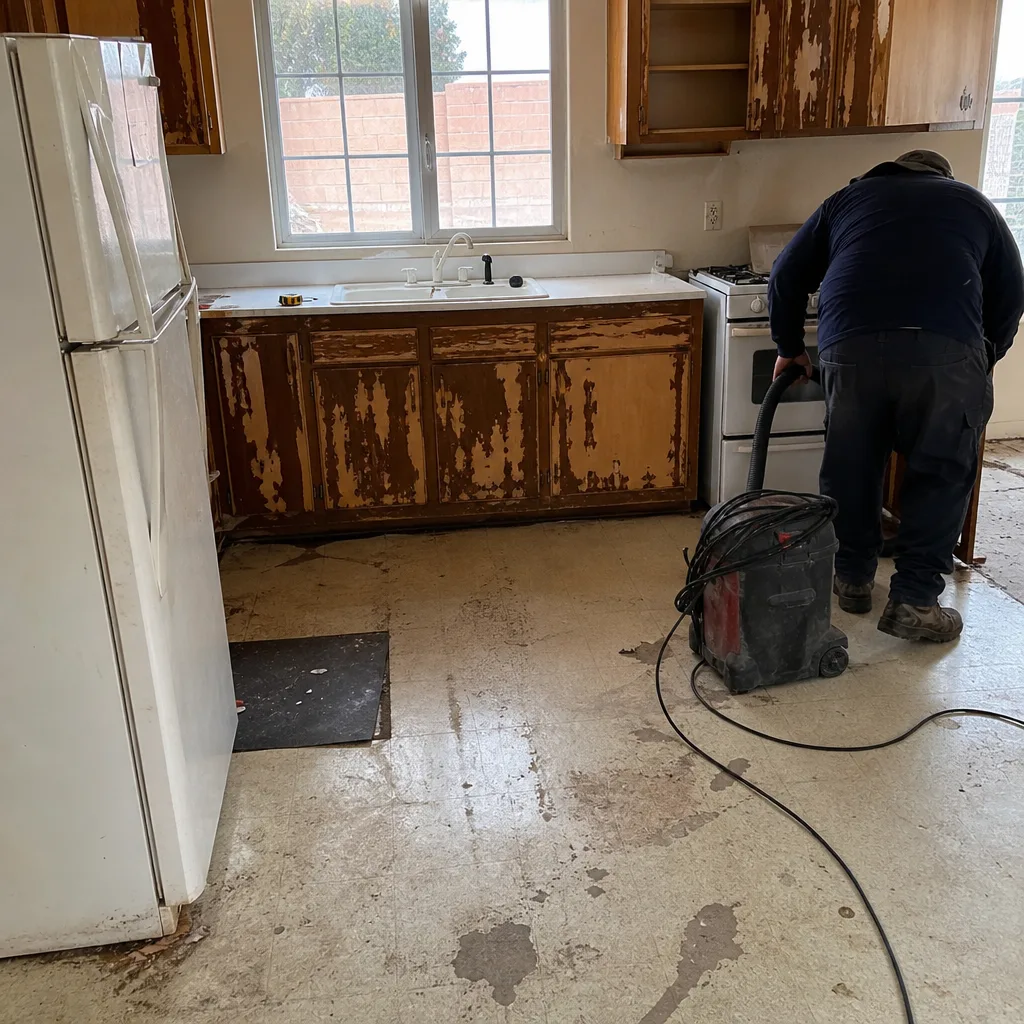 Before
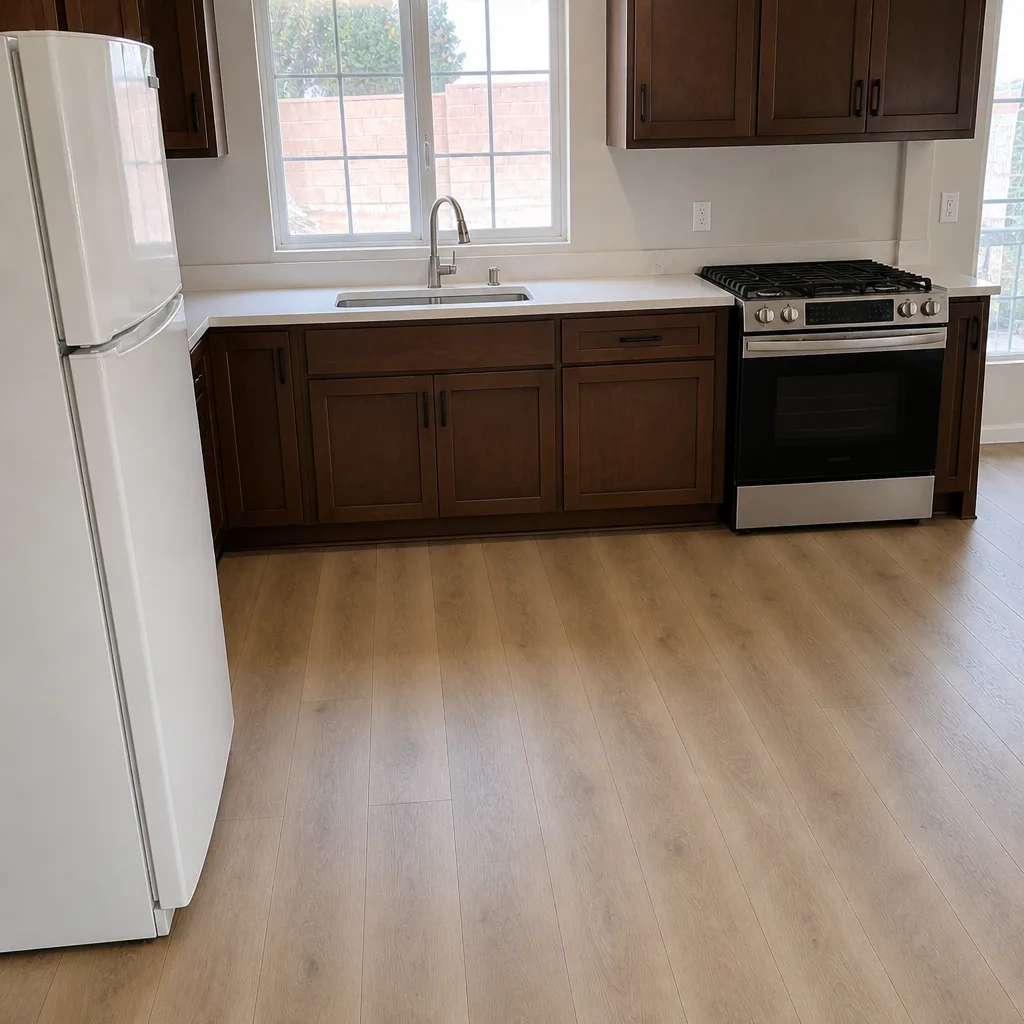 After
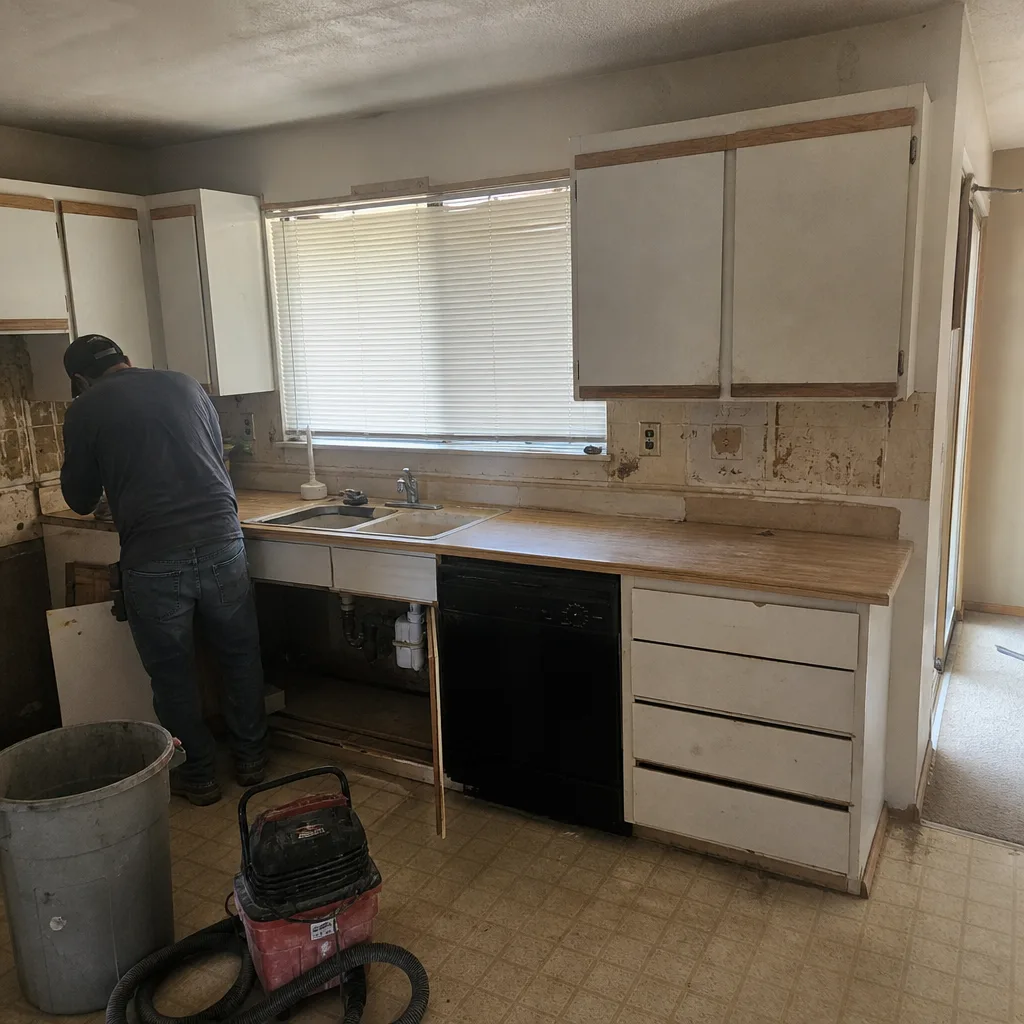 Before
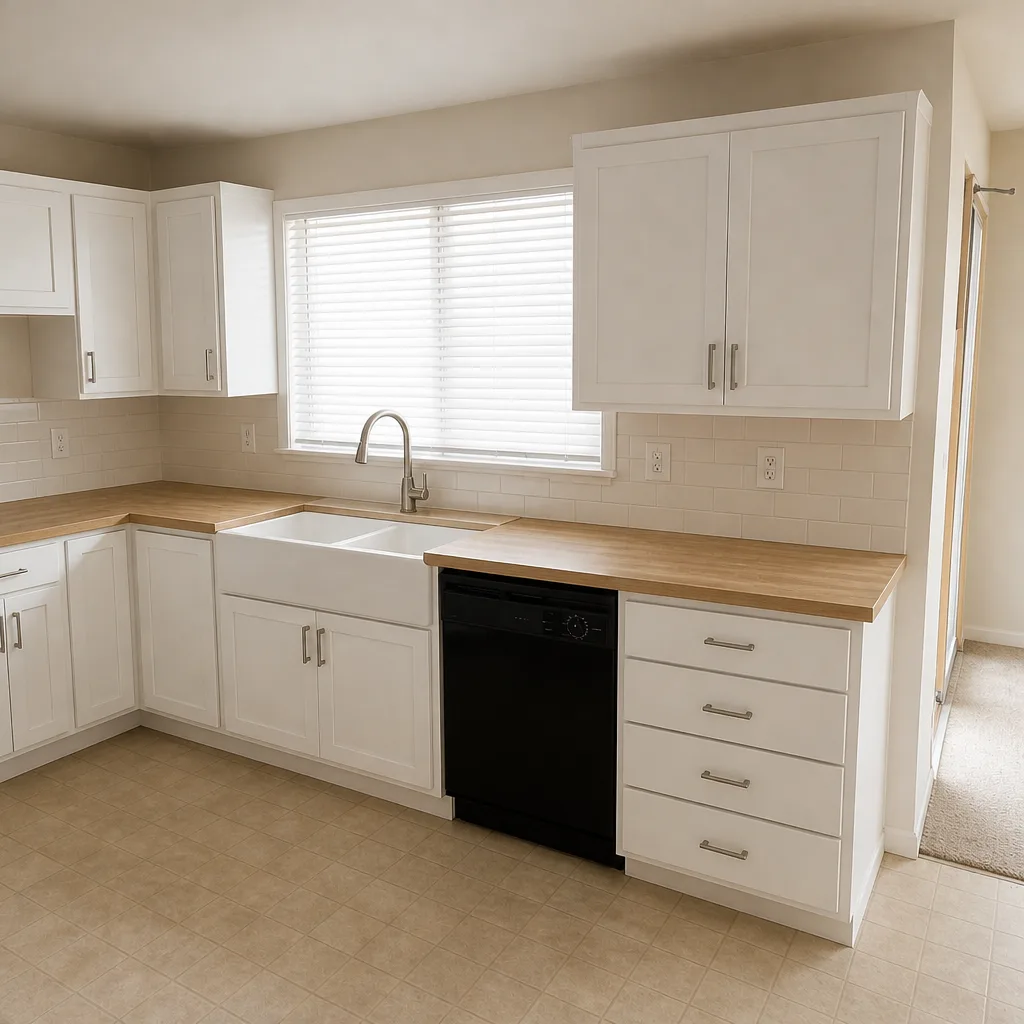 After
When to Call a Professional
Call a professional when any of the following are true: you see hollow-sounding or bulging stucco after a wind event; you find water stains on interior ceilings or walls; water is pooling against the foundation after a storm; roof tiles are cracked, missing, or slipped; a block wall or fence is leaning; or the FEMA flood map for your address changed and you’re unsure what it means for your property. Do not attempt roof work, electrical work, or gas work yourself, no matter how small the visible damage. Those are professional-only zones for good reason, and a short delay costs less than an injury or a secondary failure.
Groundwork Construction Co. of Boulder City offers free estimates in Boulder City, with upfront pricing and no surprises. Call (888) 282-1693 to schedule your free estimate, and know that calls are answered by a live person, 24/7. Our technicians have up to 12 years of experience, and every job is backed by the 730-Day Done Right Promise.
Frequently Asked Questions

Wind-driven stucco blow-off and monsoon drainage failure tied at the top, with roof membrane splits close behind. In our experience, most of the emergencies we see in Boulder City trace back to one of those three paths. If you’ve seen a hollow-sounding wall patch or water pooling at the base of your home, that’s your signal to get a professional inspection before the next event. Call (888) 282-1693 for a free estimate on repairs or prevention.
Look up your address on FEMA’s Flood Map Service Center to get your current zone and the effective date of the map. Then compare that to the zone on your insurance declaration page. If they don’t match, call your agent and ask what changed. Ten minutes now prevents a coverage surprise after a real event. If your property’s grading needs adjustment to match the new map, call (888) 282-1693 to schedule a free estimate.
Call a contractor for anything involving roof work, electrical, gas, or structural repair. Those are genuinely dangerous and often require permits. Cosmetic cleanup, moving damaged items, and photographing damage are safe to do yourself. When in doubt, photograph thoroughly first and then have a professional look before you remove or repair anything. Call (888) 282-1693 for a free estimate; estimates are free and there’s no obligation.
Keep them for as long as you own the home, and pass them to the next owner at sale. Permits, as-builts, and warranty paperwork stay relevant for the life of every system on the property, and they can make or break a claim. Store one digital copy in the cloud and one printed copy in a waterproof location. If you need help reconstructing a job history, call (888) 282-1693 and we can walk you through what to look for.
Workmanship warranties cover defects in installation, not storm damage, which is why you need both a workmanship guarantee and property insurance. Our 730-Day Done Right Promise covers the installation itself: if it’s not done right, we make it right. That’s one of the longest workmanship guarantees in residential construction, and it’s why we want you to plan the storm side separately. Call (888) 282-1693 for the details on the plans that apply to your project.
Most fence replacements complete in a single visit, particularly when the system is a stocked product like Barrette, Master Halco, or Ameristar. The variable is permit and inspection timing, and Boulder City runs on its own schedule. We can give you a realistic timeline in the free estimate. Call (888) 282-1693 to schedule yours.
The Bottom Line
Construction emergency preparedness in Boulder City isn’t complicated, but it has to be done before you need it. Check your current flood zone against the 2023 map. Walk your property after every storm, in the same order, and photograph everything. Keep one digital and one printed packet with permits, warranties, before photos, and two contractor contacts per trade. Vet contractors fast on the three questions that matter: license, insurance, and warranty length. And trust the safety line: roofs, electrical, and gas are professional-only after any event. Build the plan in a quiet week. It’s the cheapest insurance you’ll ever buy on your home, and it’s the reason the 11pm Sunday call doesn’t turn into a two-month headache.
Groundwork Construction Co. of Boulder City is here when you need a vetted contractor, with upfront pricing, no surprises, free estimates, and calls answered by a live person 24/7. Call (888) 282-1693 to schedule your free estimate and put a real contractor on your response plan before the next storm.
Written by the team at Groundwork Construction Co. of Boulder City.